A Candle Studio's Fennel Oil Trial: Six Soy Wax Batches, Logged
Fennel doesn't show up on many candle studio sample walls. It's a niche note, more common in soap and diffuser blends than in soy wax, and most of the scent throw data floating around online is anecdotal at best. When a small candle studio reached out asking whether fennel essential oil could hold up in a soy blend, the honest answer was: nobody seemed to have tested it in a documented way. So they ran their own trial. Six batches, one wax base, a handful of fragrance load percentages, and a notebook. This is a walkthrough of what they did and what they observed, written up as a case study rather than a verdict.
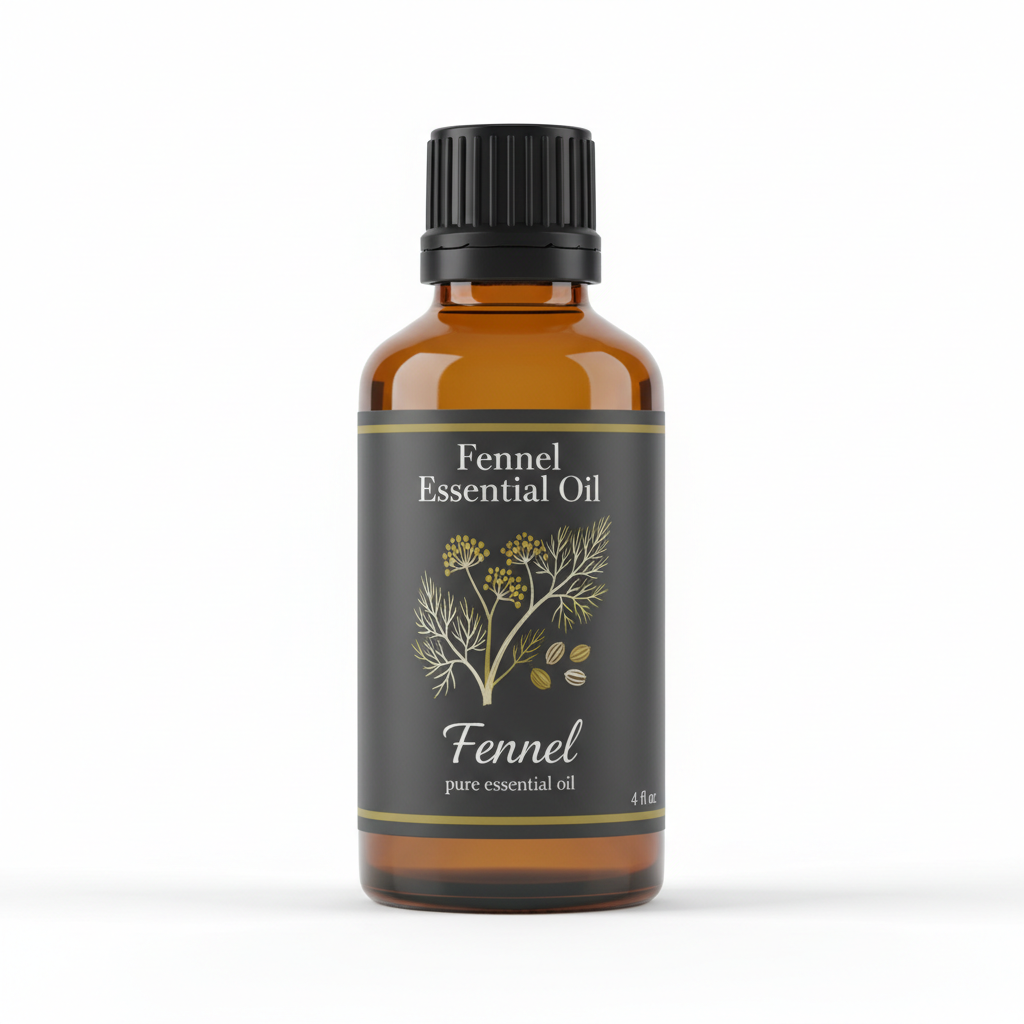
Fennel Essential Oil
Our own Fennel Essential Oil, in sizes from 0.5 oz to bulk.
From $11.99
Shop Now →The goal was narrow: figure out whether fennel essential oil in candles behaves anything like the fragrance oil blends the studio normally works with, and whether it's worth stocking as a standalone offering or blending partner. Essential oils and fragrance oils are chemically different animals. Fragrance oils are formulated specifically for wax, often with fixatives and binders that help scent molecules survive the heat of a melt pool. Essential oils are distilled plant material with no such engineering behind them. That mismatch is the whole reason this kind of small, logged trial is useful before committing shelf space to a new SKU.
Setting Up the Trial
The studio used a single-source soy wax (a standard container blend, no additives beyond what came in the bag) and kept every variable fixed except fragrance load: same wick size, same 8oz tin, same pour temperature, same cure window. That last part matters more than people expect. Soy wax candles are generally given a rest period after pouring so the fragrance oil (or in this case, essential oil) has time to bind with the wax crystals. The studio used a 10 day cure for every batch, checked in on day 3 and day 7 as informal progress notes, and did the real evaluation on day 10.
Six fragrance loads were tested, spaced out in half-percent increments from a conservative 3% up to a bolder 6.5%, sitting just under the wax manufacturer's stated maximum. This is a fairly standard range for exploring fennel fragrance load candle wax behavior without pushing into territory the wax isn't rated for. Going over a wax supplier's maximum fragrance load isn't just a scent question, it's a fire safety one, since excess oil can pool, seep, or affect how the wick burns. The studio stayed inside the printed guidelines throughout.
Each batch got a burn test on day 10: a four hour burn, a note on cold throw (how the candle smells unlit, at room temperature), and a note on hot throw (how it smells once a melt pool has formed). Melt pool diameter and depth were also logged, since that's a rough proxy for how much fragrance is actually being released into the air.
Batch-by-Batch Observations
Below is a condensed version of the studio's log. Descriptions of scent strength are subjective and were recorded by the same two people across all six batches to keep some consistency, but this is one studio's experience with one supplier's fennel oil and one wax blend, not a controlled lab result.
| Batch | Fragrance Load | Cold Throw | Hot Throw | Notes |
|---|---|---|---|---|
| 1 | 3.0% | Faint, mostly detectable up close | Light, noticeable within a few feet | Clean burn, no soot; scent felt more like a background note than a fill-the-room presence |
| 2 | 3.5% | Slightly more present than Batch 1 | Mild, anise-like sweetness came through more clearly | Still a subtle candle overall |
| 3 | 4.0% | Noticeable on entering the room | Moderate, filled a small space | Studio flagged this as the load where fennel's licorice-adjacent character became easy to identify |
| 4 | 4.5% | Clear and identifiable | Moderate to strong in a closed room | Melt pool reached full diameter slightly faster than Batches 1 to 3 |
| 5 | 5.5% | Strong | Strong, carried into an adjoining hallway | Minor wisping noted late in the burn; studio suspected the wick may have needed sizing up at this load |
| 6 | 6.5% | Strong, slightly sharper | Strong but described as less balanced, with the sweeter facets fading faster than the greener, more herbal ones | Some surface mottling on cooling; a possible sign the load was pushing against what this wax could fully absorb |
A few patterns stood out across the log. Fennel's scent throw soy wax profile seemed to build fairly linearly through the low and mid percentages, with the studio's team pointing to somewhere in the 4% to 4.5% range as the point where cold throw and hot throw both felt reasonably matched to each other. Below that, the scent read as more of a whisper than a fill-the-room fragrance. Above roughly 5.5%, the returns started to feel diminishing, at least in this studio's estimation, with the extra oil not translating into a proportionally stronger hot throw and instead introducing small performance quirks like the wicking and surface issues noted in Batches 5 and 6.
None of this should be read as a fixed rule for every soy wax or every fennel oil source. Fragrance load behavior depends heavily on the specific wax's oil-holding capacity, the wick, the container size, and even the chemotype and distillation batch of the essential oil itself. This is one fennel oil candle making case study, not a universal formula.
What the Studio Learned About Fennel's Character in Wax
Fennel essential oil brings an anise-like, licorice-adjacent sweetness with a green, slightly herbal undertone. In the lower fragrance loads, that green quality was more prominent; the sweetness only really rounded out and balanced as the load increased into the mid range. A few of the studio's testers described the overall effect at 4% to 4.5% as reminiscent of a spiced anise sachet rather than anything overtly "licorice candy" sweet, which the team saw as a workable, sophisticated profile for an apothecary-style or herbal candle line rather than a dessert-scent shelf.
One recurring observation across the trial: fennel didn't behave like a loud, top-note-forward fragrance oil. It built more slowly into the room and seemed to fade a touch earlier in a burn session compared to the studio's usual synthetic blends. That's consistent with what a lot of small-batch candle makers report anecdotally about essential oils in general: they can be lovely in character but sometimes ask for a slightly higher fragrance load, or a blending partner, to hold their own for a full burn.
Blending was something the studio flagged for a future round rather than something they tested here. Fennel's licorice note is often paired in perfumery and soap work with citrus, lavender, or other herbal notes to round out the sharper anise edge. That kind of pairing test would need its own separate log to be useful, since adding a second oil changes the fragrance load math and the burn characteristics all over again.
Practical Notes and Safety Considerations
A few practical points came out of running this trial that are worth passing along to anyone considering their own version of it.
- Stay within the wax manufacturer's maximum fragrance load. The studio's supplier listed a ceiling, and Batch 6 sitting close to it is likely part of why it showed the most performance quirks. Pushing past a listed maximum isn't a shortcut to more scent, and it can affect burn safety.
- Wick sizing may need to change with fragrance load. The wisping noted at 5.5% suggests the wick that worked cleanly at lower loads wasn't necessarily right once more oil was in the mix. A proper wick test series, burning each candle to full melt pool multiple times and watching for soot, mushrooming, or excessive flame height, is its own project separate from fragrance evaluation.
- Cure time matters and is easy to shortchange. The studio's 10 day rest period is on the longer side of common industry practice, and they noted that day 3 evaluations underrepresented how the scent eventually settled by day 10.
- Essential oils vary batch to batch. Because fennel oil is a distilled agricultural product, its exact aromatic profile can shift somewhat depending on harvest, growing region, and distillation method. A studio repeating this trial with oil from a different supplier should expect some variation rather than an identical result.
- Keep undiluted essential oil away from skin and eyes during handling, and work in a ventilated space when measuring and blending. This is general studio handling practice for concentrated botanical oils, not specific to fennel.
Where This Leaves the Studio
After the six batch trial, the studio's working conclusion (their own words, not a scientific finding) was that fennel essential oil is a workable niche note for soy wax in the 4% to 4.5% fragrance load range for this particular wax and wick combination, with the caveat that anyone recreating the trial should run their own wick series before selling anything. They plan to revisit fennel later as part of a blended anise-and-citrus line rather than as a standalone candle, mostly because the solo scent, while pleasant, read as more subtle than the studio's typical bestsellers.
The bigger takeaway for other small studios considering fennel oil in candles is less about the specific percentages and more about the method. Logging cold throw, hot throw, melt pool behavior, and burn quality across a controlled range of fragrance loads, with everything else held constant, turns a guess into something closer to informed judgment. It's not a substitute for supplier-specific testing or for basic candle safety fundamentals, but it's a reasonable way to figure out whether an unfamiliar botanical oil deserves a permanent spot in the studio's fragrance library.
Anyone experimenting with essential oils in candle making should also check their wax supplier's documentation and general fire safety guidance for maximum fragrance loads, since those numbers vary by product and are set for a reason.