How to Make Fennel Essential Oil Bath Salts: A Step-by-Step Recipe
There is something satisfying about mixing your own bath salts. You control what goes in, you know exactly how much oil you are using, and you end up with a jar that smells like something you would actually pay for at a market stall. Fennel essential oil, with its warm, sweet, faintly licorice-like aroma, makes a lovely base for a homemade soak. This fennel essential oil bath salts recipe walks through the whole process, from gathering ingredients to storing the finished jar, so you can put together a batch in about fifteen minutes.
Fennel Essential Oil
Our own Fennel Essential Oil, in sizes from 0.5 oz to bulk.
From $11.99
Shop Now →If you have never made bath salts before, do not worry. This is one of the more forgiving DIY projects in the natural body care world. There is no cooking, no curing time, and very little room for error as long as you follow the basic ratios below.
Why Fennel Essential Oil Works So Well in a Bath Soak
Fennel essential oil is steam distilled from the crushed seeds of Foeniculum vulgare, the same plant that gives us the crunchy, anise-scented bulb vegetable and the seeds used in cooking. The oil carries a scent profile that is sweet, herbaceous, and a little spicy, somewhere between licorice and fresh hay. It blends well with citrus oils like bergamot and sweet orange, and it also pairs nicely with warmer notes like cedarwood or lavender if you want to round out the fragrance.
In aromatic and cosmetic use, fennel oil has a long history in Mediterranean households, where the plant grows wild along roadsides and coastal paths. People have traditionally used fennel in bath preparations as part of an evening wind-down ritual, largely for its scent and the sense of atmosphere it brings to a soak. Some research on fennel's aromatic compounds is ongoing, but for the purposes of this recipe, think of fennel oil purely as a fragrance and skin care ingredient rather than anything medicinal.
A quick note on sourcing: not all fennel essential oil is created equal. Look for a supplier that lists the plant's botanical name, the country of origin, and the extraction method (steam distillation) on the label. A cloudy or off-color oil, or one sold in clear glass instead of amber or cobalt, is a sign the producer is not thinking about shelf life. Fresh, well-sourced fennel oil should smell bright and sweet, not flat or waxy.
What You Will Need
This recipe makes about two cups of bath salts, enough for four to six baths depending on how generous you are with each scoop.
- 1 cup Epsom salt
- 1 cup fine sea salt or coarse sea salt (fine salt dissolves faster; coarse salt looks nicer in the jar)
- 1 tablespoon fractionated coconut oil or sweet almond oil (this disperses the essential oil so it does not sit on top of the bath water as an undiluted film)
- 8 to 12 drops fennel essential oil
- 1 to 2 tablespoons baking soda (optional, for a softer feel in the water)
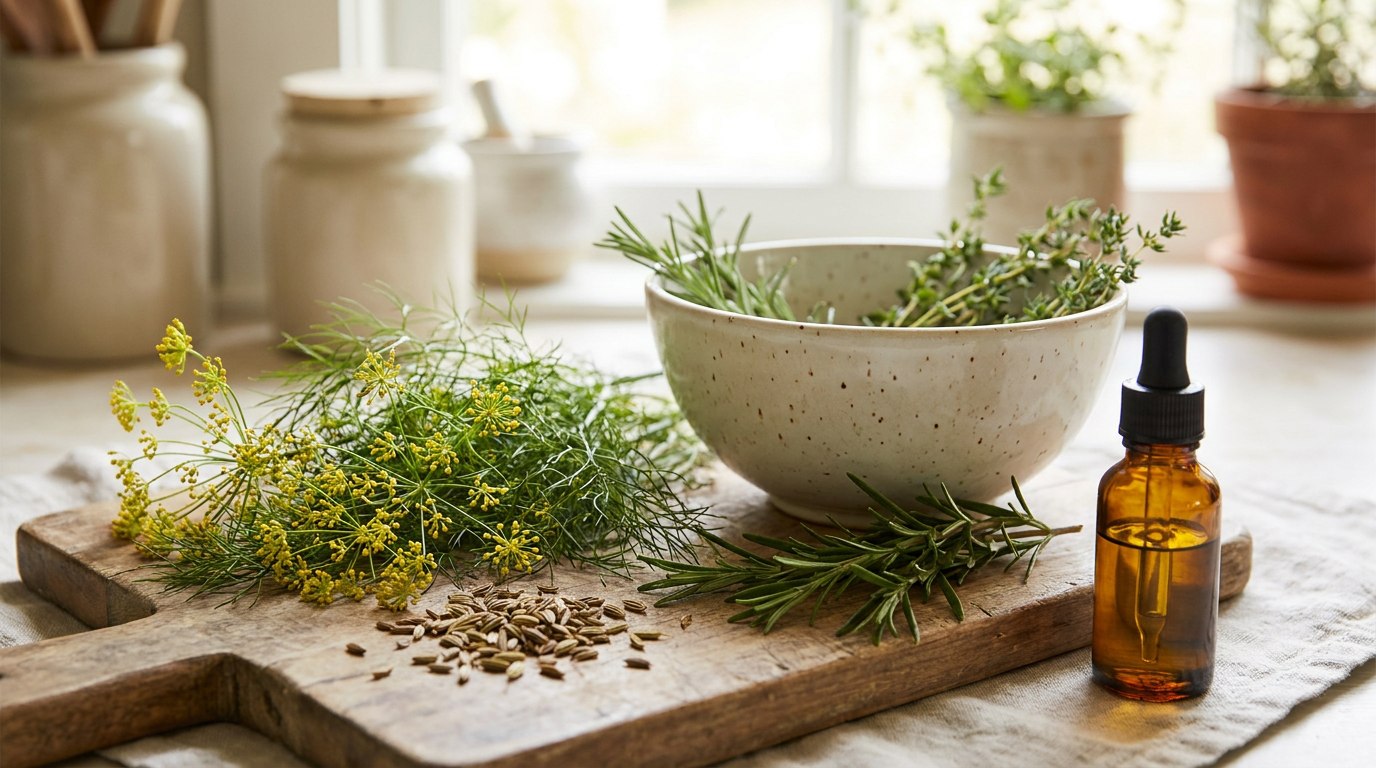
- 1 tablespoon dried fennel fronds or seeds (optional, mostly for visual appeal)
- A few drops of a complementary oil, such as sweet orange or lavender (optional)
- A large glass or stainless steel mixing bowl
- A whisk or fork
- A wide-mouth glass jar with a tight lid for storage
A word on the salts themselves: Epsom salt (magnesium sulfate) gives the mixture its familiar texture and is what most people picture when they think of bath salts. Sea salt adds a bit of trace mineral content and a coarser, more spa-like texture. You can use all Epsom salt if that is what you have on hand, but the blend of the two gives a nicer feel when you run your fingers through the jar.
| Ingredient | Amount | Purpose |
|---|---|---|
| Epsom salt | 1 cup | Base texture and dissolving action |
| Sea salt | 1 cup | Mineral content, coarser texture |
| Carrier oil | 1 tablespoon | Disperses essential oil evenly in water |
| Fennel essential oil | 8 to 12 drops | Fragrance and aromatic character |
| Baking soda | 1 to 2 tablespoons (optional) | Softens the overall feel of the water |
Essential Oil Bath Salts, Step by Step
Here is the full process for how to make bath salts with essential oil, broken into simple steps. Read through once before you start so you are not fumbling with measuring spoons mid-mix.
Step 1: Measure your salts into a bowl
Combine the Epsom salt and sea salt in your mixing bowl. If you are using baking soda, add it here too. Give the dry ingredients a quick stir with a whisk or fork so they are evenly distributed before you introduce any liquid. Doing this first matters more than it seems: if you add the essential oil to unmixed salts, you end up with oil pooling on top of the Epsom salt and never quite reaching the sea salt underneath.
Step 2: Mix the essential oil into the carrier oil first
In a small separate dish, combine your fennel essential oil with the tablespoon of carrier oil. This step is easy to skip, and it is also the single most common mistake in homemade bath salt recipes. Essential oils do not dissolve in water, and salt alone will not fully disperse them either. Pre-mixing the essential oil into a carrier oil first means the oil spreads through the bath water in tiny droplets instead of floating on the surface, where it can land directly on skin at full strength.
Step 3: Pour the oil mixture over the salt and stir thoroughly
Drizzle the oil and essential oil blend over the salt mixture a little at a time, stirring as you go. Work in sections rather than dumping it all in at once. You are aiming for salt crystals that look faintly damp and glossy, not wet or clumped into a paste. This usually takes about a minute of steady stirring with a fork, breaking up any small clumps as you find them.
Step 4: Fold in dried fennel or complementary oils
If you are using dried fennel fronds or seeds, fold them in now. This step is purely cosmetic. The dried plant material will not add meaningfully to the scent, since the essential oil is doing that work, but it does make the jar look considerably more like something from a specialty shop and less like a science experiment. If you are layering in a second essential oil like sweet orange or lavender, add those last few drops now and give the mixture one more thorough stir.
Step 5: Let the mixture rest for a few minutes
Spread the finished salts in a thin layer on a plate or tray and let them sit uncovered for ten to fifteen minutes. This short rest lets any remaining surface moisture settle and helps the fragrance mellow into the salt rather than sitting sharply on top. It is a small step, but skipping it tends to produce a batch that smells overpowering the moment you open the jar and much fainter a week later.
Step 6: Transfer to a jar and seal
Once the salts feel dry to the touch, transfer them into your storage jar and seal the lid tightly. Glass is a better choice than plastic here. Essential oils can degrade certain plastics over time, and a glass jar also does a better job of holding onto scent between uses.
Step 7: Label the jar
Write the date and the ingredients on the jar or a small tag. This sounds unnecessary until six months from now, when you have three unlabeled jars of pale salts on a shelf and no idea which one has fennel and which one has something else entirely.
How to Use Your Fennel Bath Salts
Run a warm bath and add roughly a half cup to one cup of the finished salts once the tub is filling, stirring the water with your hand to help them dissolve. Fennel's scent tends to open up gradually as the water warms the salts, so give it a minute or two before deciding whether you want to add more. Many people treat this as part of a calm evening ritual or a bedtime wind-down, drawing the bath a little earlier and dimming the lights rather than rushing through it.
Tips for Best Results
- Start with fewer drops than you think you need. Fennel oil has a strong, distinctive scent. Eight drops per two-cup batch is a good starting point; you can always make a stronger batch next time if you want more fragrance.
- Use a scale if you have one. Measuring salt by weight rather than volume gives you more consistent batches, especially if you are comparing coarse and fine sea salt, which pack very differently into a measuring cup.
- Keep the jar away from direct sunlight and steam. A bathroom windowsill looks charming but is one of the worst places to store finished bath salts, since heat and humidity both shorten how long the scent lasts.
- Buy fennel oil in small bottles. A quarter-ounce or half-ounce bottle from a reputable supplier will stay fresher through its whole life than a large bottle that sits open for a year.
- Test a new batch before gifting it. If you are making these for someone else, try the recipe yourself first so you know the scent strength and texture before it leaves your hands.
Common Mistakes to Avoid
A few missteps come up again and again with first-time batches, and almost all of them are easy to fix once you know what to look for.
- Adding essential oil directly to the salt without a carrier oil. This is the most frequent error. Undiluted essential oil floating on bath water can land on skin at full concentration, which is uncomfortable and unnecessary. The carrier oil step in this recipe exists specifically to prevent that.
- Using too much essential oil. More is not better with fennel oil. A batch made with double the recommended drops does not smell twice as nice; it just smells overwhelming and can make the bathroom feel more like a spice cabinet than a bath.
- Storing salts in a damp bathroom cabinet. Salt is naturally prone to absorbing ambient moisture, and a humid storage spot will turn your loose, scoopable salts into a solid brick within a few weeks.
- Skipping the patch test on a new oil. If you have never used fennel essential oil on skin before, apply a small diluted amount to your forearm and wait 24 hours before your first full bath, just to see how your skin responds.
- Forgetting that oils are flammable. Keep essential oils away from open flame, including candles you might normally light during a bath.
What You Can Expect
Homemade fennel bath salts are, first and foremost, a fragrance and self-care product. People who enjoy this kind of soak often describe it as a pleasant, grounding addition to an evening routine, something that turns an ordinary bath into more of an occasion. Some report that the warm, sweet scent of fennel helps set a calmer mood for winding down before bed. These are personal impressions rather than established outcomes, and results will vary from person to person depending on preference and skin sensitivity. This recipe is intended for cosmetic and aromatic use only, and it is not a substitute for guidance from a qualified healthcare provider.
Storage and Shelf Life
Stored in a sealed glass jar away from heat, light, and moisture, a batch of fennel bath salts will generally hold its scent for two to three months. The salt itself does not spoil, but the essential oil fragrance fades over time, so do not expect a jar from last winter to smell as vivid as one made last week. If you notice the scent has faded significantly, you can always freshen an old batch with a few additional drops of fennel oil premixed with a bit of carrier oil, following the same dilution approach as the original recipe.
Safety Notes and Dilution Guidance
Essential oils are concentrated plant extracts, and fennel oil is no exception. A few guidelines are worth keeping in mind whenever you work with it:
- Always dilute fennel essential oil in a carrier oil before adding it to bath water. Never pour it directly into a full tub.
- Keep the total concentration in this recipe at or below 12 drops per two cups of salt, which works out to a mild, well-diluted bath soak.
- Patch test on the inner forearm and wait 24 hours before your first full use, especially if you have sensitive skin.
- Keep bath salts and essential oils out of reach of children and pets.
- Avoid contact with eyes, and rinse thoroughly with water if contact occurs.
- If you are pregnant, nursing, or have any questions about whether fennel oil is appropriate for you, speak with a qualified healthcare provider before use.
- Discontinue use if you notice any skin irritation or discomfort.
Variations on the Basic Recipe
Once you have made the base recipe a couple of times, it is easy to build small variations around it.
- Citrus and fennel: Add 3 to 4 drops of sweet orange or bergamot oil alongside the fennel for a brighter, more uplifting scent profile.
- Herbal blend: Add a few drops of lavender oil for a softer, more floral background note that pairs surprisingly well with fennel's sweetness.
- Milk bath twist: Stir 2 tablespoons of powdered milk into the finished salts for a slightly creamier feel in the water.
- Coastal jar: Use coarse, unrefined sea salt and skip the dried fennel fronds for a simpler, more rustic-looking jar that leans into fennel's Mediterranean roots.
This fennel bath soak DIY is easy enough to make on a weeknight and forgiving enough that a slightly imprecise batch still turns out well. Once you have the base ratios down, from Epsom salt to sea salt to carrier oil to essential oil, you can adjust the scent strength, swap in complementary oils, and build a small rotation of jars that suit whatever mood you are after that evening.