Buying Fennel Essential Oil: The Complete Quality Guide
Key Takeaways
- Not all fennel oils are the same. Sweet and bitter varieties are chemically distinct, and confusing them is an easy and costly mistake.
- GC/MS testing is the single most reliable way to verify the purity and composition of any fennel oil you purchase.
- Country of origin matters. Mediterranean-sourced sweet fennel (Foeniculum vulgare var. dulce) tends to carry the warmest, most rounded aromatic profile.
- A fair retail price for pure sweet fennel oil sits in a predictable range. Prices that seem too low usually signal adulteration.
- Fragrance oils and essential oils are entirely different products, even when they smell similar.
- Wholesale buyers have specific considerations around bulk sizing, certificates of analysis, and supplier relationships.

1. What Is Fennel Essential Oil (and Why Does the Variety Matter)?
Fennel essential oil is steam-distilled from the seeds (technically the dried fruits) of Foeniculum vulgare, a flowering plant native to the Mediterranean basin. The warm, anise-like aroma that makes fennel instantly recognizable comes primarily from a compound called trans-anethole, which typically makes up the largest share of the oil's chemical profile.
But the words "fennel oil" on a label tell only part of the story. There are two main commercial varieties, and they behave very differently in the bottle and on the skin.
Sweet Fennel vs. Bitter Fennel: The Essential Distinction
Sweet fennel oil (Foeniculum vulgare var. dulce) is the variety most commonly found in cosmetic and aromatic applications. It has a mellow, rounded character with a sweetness that makes it approachable for blending. Bitter fennel (Foeniculum vulgare var. vulgare) carries a sharper, more medicinal edge and contains higher concentrations of certain compounds that place it in a different risk category for topical use.
For anyone interested in skin care, body products, candles, or home fragrance, sweet fennel is almost always the correct choice. The two varieties are not interchangeable, and any guide to buying fennel oil has to start with this distinction front and center.
For a detailed side-by-side comparison of the two, see our dedicated article: Sweet Fennel vs. Bitter Fennel Oil: Know Which Bottle You're Buying.
How the Oil Is Made
Steam distillation is the standard extraction method. Dried fennel seeds are loaded into a still, and steam passes through the plant material, carrying the volatile aromatic compounds with it. The steam condenses, and the essential oil separates from the floral water (hydrosol). A quality producer will control still temperature, distillation time, and seed quality carefully. Rushing any of those variables compresses the aromatic complexity of the finished oil.
Some producers distill fresh or partially dried seeds. Others work exclusively with fully dried seeds. The seed maturity at harvest influences the final aroma. Seeds harvested a little early tend to produce a greener, herbaceous note alongside the characteristic sweetness.
Chemotype Awareness
Even within the sweet fennel variety, individual batches can vary depending on soil, altitude, rainfall, and the specific seed stock the farmer uses. This is what aromatherapy professionals refer to as "chemotype variation." It is not a defect. It is the nature of a plant-derived product. A sophisticated buyer learns to expect and appreciate batch-to-batch differences rather than expecting every bottle to smell identical.
That said, a dramatically different aroma between batches from the same claimed source can signal sourcing inconsistency or adulteration. We will cover how to catch that in the purity testing section.
2. Reading a Fennel Oil Label Like a Professional
A lot of information is packed onto essential oil labels, and equally important things are sometimes missing. Knowing what to look for takes the guesswork out of a purchase decision.
The Latin Name
Every reputable fennel oil label should include the full Latin botanical name. For sweet fennel, that is Foeniculum vulgare var. dulce or Foeniculum vulgare Mill. (dulce). If a label reads only "fennel oil" or "fennel essential oil" with no Latin name, the supplier is not giving you enough information to make an informed choice. This is a minor but telling red flag.
Plant Part Distilled
Look for "seed" or "fruit" as the plant part. Some producers distill fennel leaves or stems, which produces a chemically different oil with a greener, more herbaceous profile and lower trans-anethole content. That is not inherently a problem, but it is not what most buyers expect when they search for fennel essential oil. If the label does not specify the plant part, ask the supplier directly before purchasing.
Country of Origin
Mediterranean countries produce the most widely respected sweet fennel oils. France, Spain, Italy, Egypt, and India are the most common origins you will encounter commercially. French and Spanish oils tend to command a slight premium based on reputation and aromatic character. Egyptian and Indian oils are often more affordable and vary more widely in quality, ranging from outstanding to mediocre depending on the producer.
Country of origin alone does not guarantee quality. A thoughtfully sourced Egyptian fennel oil can outperform a carelessly handled French one. But origin is context, and context helps you evaluate price and supplier claims.
Extraction Method
Steam distillation should be the listed method. If a label says "cold pressed" or "solvent extracted" for fennel oil, view that with skepticism. Fennel seeds do not yield meaningful essential oil through cold pressing. Solvent extraction produces an absolute, not an essential oil, and the two are different products with different aromatic profiles and use considerations.
Batch Number and Lot Code
Reputable suppliers assign a batch or lot number to every production run. This number links the bottle you hold to a specific harvest, distillation, and quality testing record. If a supplier cannot provide documentation tied to a batch number, there is no traceability. No traceability means no accountability.
Best By or Shelf Life Information
Fennel essential oil has a moderate shelf life, generally two to three years from distillation when stored correctly. A label that shows a "best by" date or a distillation date gives you useful information. One that does not leaves you guessing about how long the oil has been sitting in a warehouse before reaching you.
3. The Quality Markers That Separate Good Bottles from Great Ones
Purity is the baseline. But within the universe of pure, unadulterated fennel oils, there is still meaningful variation in quality. Learning to recognize those differences makes you a sharper buyer.
Aroma Profile: What Good Sweet Fennel Actually Smells Like
High-quality sweet fennel oil has a warm, sweet, anise-forward aroma with a subtle earthiness underneath. There should be a mild sweetness that stays rounded rather than sharp. A faint herbal green note is normal and pleasant. What you should not smell is a harsh chemical bite, a flat one-dimensional sweetness, or anything that reminds you of cheap candy flavoring.
When you first open a bottle, give it a moment before evaluating. Let the most volatile top notes dissipate slightly. The heart of the oil, the mid-note character, tells you more about quality than the first blast from the cap.
Color and Clarity
Pure sweet fennel essential oil is typically colorless to very pale yellow. It should be clear, not cloudy. Some cloudiness can develop in cold temperatures and may resolve when the oil warms to room temperature. Persistent cloudiness at room temperature, or a color that has shifted to amber or brown in a bottle that has not been exposed to excessive heat, may suggest oxidation or contamination.
Viscosity
Fennel essential oil is a thin, freely flowing liquid. It should pour easily and not feel syrupy or sticky. If an oil labeled as fennel essential oil feels noticeably thicker than water, something is off. Either it has been adulterated with a heavier carrier oil, or it is simply a different product entirely.
The Evaporation Test
Place a single drop of the oil on a piece of plain white paper or a coffee filter. Allow it to evaporate at room temperature for several hours. A genuine essential oil will evaporate cleanly, leaving little to no visible residue. If a greasy ring remains, the oil has likely been diluted in a carrier oil. Carriers do not evaporate the way essential oils do.
This is a simple at-home quality check that takes minutes and costs nothing. It is not a perfect scientific test, but it will catch the most obvious cases of pre-dilution.
Packaging Quality
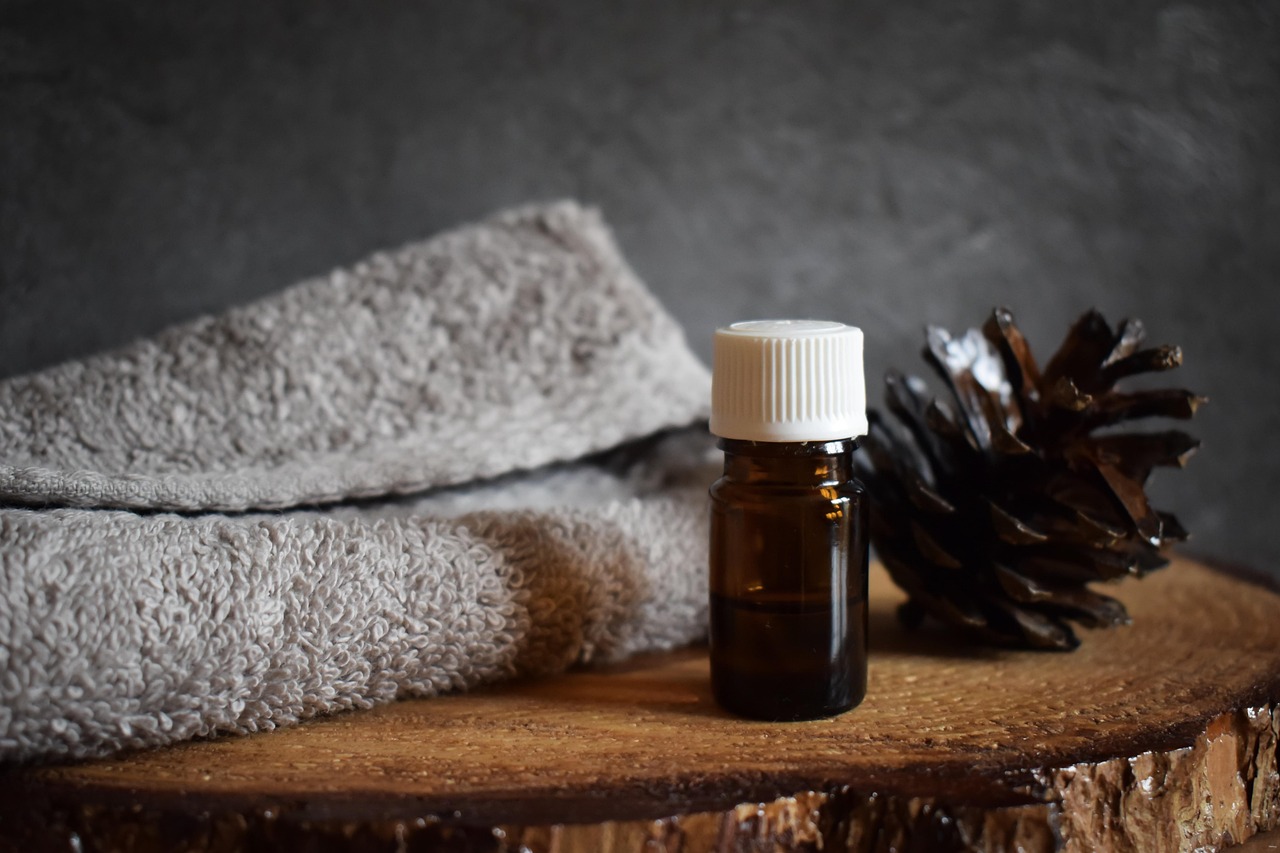
Quality fennel oil should always be stored in dark glass, either amber or cobalt blue. Essential oils degrade when exposed to UV light, and clear glass or plastic packaging accelerates that process. A supplier who bottles their oil in clear glass or, worse, plastic is either cutting costs in a way that compromises product integrity or does not understand essential oil chemistry well enough to be trusted.
The bottle should have a secure orifice reducer or dropper insert that controls dispensing. A bottle that pours freely without any flow control is a minor inconvenience in the short term and a waste and oxidation risk in the long term.
4. Purity Testing: GC/MS Reports, Certificates of Analysis, and What to Ask For
Smell and visual inspection can catch obvious problems, but they cannot confirm chemical purity. For that, you need documentation. This section explains what testing documents mean and how to read them.
What Is GC/MS Testing?
GC/MS stands for Gas Chromatography/Mass Spectrometry. It is the industry standard analytical method for identifying and quantifying the individual chemical compounds within an essential oil. A GC/MS report for sweet fennel oil will list compounds like trans-anethole, fenchone, limonene, and alpha-pinene, along with the percentage of each compound present in that specific batch.
This matters for two reasons. First, it confirms the oil is genuinely fennel and not something else entirely. Second, it tells you the relative concentrations of key compounds, which helps you evaluate whether the oil is within the expected compositional range for high-quality sweet fennel.
What Should a Sweet Fennel GC/MS Report Show?
Trans-anethole is the dominant compound in sweet fennel oil and typically accounts for 70 to 90 percent of the total composition in a quality oil. Fenchone, which gives bitter fennel its characteristic sharpness, should be present in very low percentages in sweet fennel, generally under 5 percent. Higher fenchone levels suggest either a misidentified variety or adulteration with bitter fennel oil.
Limonene, alpha-pinene, and estragole (methyl chavicol) are other compounds commonly found in smaller amounts. Elevated estragole levels beyond what is expected for the variety warrant careful attention and raise questions about the safety profile for topical use. A knowledgeable supplier should be able to discuss these figures with you directly.
| Compound | Typical Range | Notes |
|---|---|---|
| Trans-anethole | 70 to 90% | Primary aromatic compound; defines the sweet fennel character |
| Fenchone | Under 5% | Higher levels may indicate bitter fennel or mixed sourcing |
| Limonene | 2 to 5% | Contributes a light citrus undertone |
| Alpha-pinene | 1 to 3% | Adds subtle freshness to the overall profile |
| Estragole | 1 to 5% | Some variation is normal; significantly elevated levels are worth noting |
The Certificate of Analysis
A Certificate of Analysis (COA) is a broader quality document that typically includes not just GC/MS data but also physical property measurements: specific gravity, refractive index, optical rotation, and appearance. These physical parameters are additional checkpoints that help confirm the oil is what it claims to be.
Reputable suppliers make their COAs available on their website, usually searchable by batch number, or they provide them on request without hesitation. If a supplier deflects, claims the information is proprietary, or simply does not have COAs, move on.
Third-Party Testing vs. In-House Testing
Some larger essential oil companies conduct their own GC/MS testing in internal labs. Others send samples to independent third-party laboratories. Both can be legitimate. What matters is the credibility of the testing and whether the full report is shared transparently.
Third-party testing from a reputable independent lab adds a layer of objectivity. If a supplier uses third-party testing and names the laboratory, you can verify the lab's reputation independently. That kind of transparency is a meaningful trust signal.
ISO Standards and Other Certifications
The International Organization for Standardization publishes specifications for fennel essential oil (ISO 3475 covers bitter fennel; sweet fennel falls under related specifications). Some suppliers reference ISO compliance on their documentation. This is a positive indicator, though ISO compliance alone does not replace reviewing actual GC/MS data for a specific batch.
Organic certification from a recognized certifying body (USDA Organic, EU Organic, or equivalent) confirms that the fennel was grown without synthetic pesticides or fertilizers. It does not guarantee superior aromatic quality, but it does address a different kind of purity that matters to many buyers.
For a practical checklist approach to assessing purity before you commit to a purchase, see: How to Spot Pure Fennel Essential Oil Before You Pay.
5. Sourcing and Suppliers: Where Fennel Oil Comes From and Who Sells It Well
The essential oil supply chain is longer and more complex than most buyers realize. Understanding it helps you ask smarter questions and build more reliable supplier relationships.
The Supply Chain, Simplified
Fennel seeds are farmed, harvested, and dried. A distillery, which may or may not be on the farm itself, processes the seeds into essential oil. That oil may then pass through one or more wholesale brokers before reaching a domestic distributor or directly to a retail brand. Each step in the chain is an opportunity for quality to be preserved or compromised.
Some companies source directly from distilleries or farming cooperatives. They may visit farms, attend harvests, and have ongoing relationships with specific growers. This direct sourcing model is not automatically superior in every case, but it does tend to produce better traceability and more consistent quality.
Other companies source from brokers who aggregate oils from multiple producers. Quality can still be excellent in this model if the company has rigorous testing standards and holds suppliers accountable. The risk is that broker-sourced oil can change origins without the retail buyer knowing, making batch-to-batch consistency harder to guarantee.
What to Look for in a Supplier
A trustworthy fennel oil supplier will be able to answer the following questions without hesitation:
- What is the exact botanical variety and country of origin for the current batch?
- Can you provide the GC/MS report and COA for this batch?
- Who performed the testing, and can I see the lab name?
- What is the distillation date or harvest year?
- Is this oil organic, wildcrafted, or conventionally farmed?
- What is your return or satisfaction policy if the oil does not meet quality expectations?
A supplier who responds to these questions with defensiveness, vagueness, or delays is telling you something important about how they operate.
Evaluating Online Sellers
Online purchasing is the reality for most buyers. Evaluating a digital storefront requires a slightly different approach than walking into a specialty shop and smelling samples.
Look for suppliers who publish batch-specific GC/MS reports on their website, organized by product and lot number. Look for transparent policies on sourcing, testing, and returns. Read customer reviews with a critical eye, paying particular attention to comments from buyers who clearly understand essential oil quality (references to aroma profile, batch variation, documentation) rather than generic five-star enthusiasm.
Be cautious of marketplaces where many sellers offer the same product. On large general marketplaces, provenance is often impossible to verify, and counterfeit or adulterated oils appear regularly.
Fennel Oil vs. Anise Oil: A Sourcing Confusion Worth Mentioning
Because fennel and anise share a similar aromatic character, some buyers and even some sellers confuse the two. They are different plants producing different essential oils with different chemical compositions. This confusion shows up most often on general marketplaces where product listings are less rigorous.
If you are specifically looking for pure fennel oil, verify the Latin name. Anise oil comes from Pimpinella anisum, not Foeniculum vulgare. For a deeper look at how these oils compare, see: Fennel Oil vs. Anise Oil: Two Licorice-Sweet Oils Compared.
6. Pricing Decoded: What Pure Fennel Oil Actually Costs
Price is one of the most reliable quality signals in the essential oil market, and most buyers either ignore it or misread it. Understanding the economics of fennel oil production clarifies why certain price ranges make sense and why others should raise concerns.
Why Fennel Oil Has a Price Floor
Growing fennel, harvesting the seeds at peak maturity, drying them correctly, and running a steam distillation takes real resources. Good distilleries use quality equipment, control their process carefully, and validate their finished oil. These are not trivial costs. When you see fennel oil priced dramatically below the market range for a comparable size and purity, the most likely explanation is that something has been compromised: the sourcing, the validation, the concentration, or all three.
Typical Retail Price Ranges
Retail prices for sweet fennel essential oil vary by bottle size, brand positioning, organic certification, and country of origin. As a general reference point for pure, unadulterated sweet fennel oil:
| Bottle Size | Conventional | Certified Organic |
|---|---|---|
| 5 ml (approx. 0.17 oz) | $8 to $16 | $12 to $22 |
| 10 ml (approx. 0.34 oz) | $14 to $28 | $20 to $38 |
| 30 ml (approx. 1 oz) | $28 to $55 | $40 to $70 |
| 100 ml (approx. 3.4 oz) | $60 to $110 | $80 to $140 |
These ranges are approximate and shift with currency fluctuation, harvest yields, and global supply dynamics. A price within or above these ranges for a verified, validated product is reasonable. A price significantly below the lower end of the range for an equivalent size and quality claim deserves skepticism.
For a more detailed breakdown of what drives price variation and how to evaluate cost per milliliter across different suppliers, see: Fennel Essential Oil Price Guide: What a Fair Bottle Costs.
Organic Premiums
Certified organic fennel oil typically costs 20 to 50 percent more than conventionally sourced oil from the same region. The premium reflects certification costs, stricter growing standards, and often smaller production volumes. Whether that premium is worth it depends on your product positioning and your customers' expectations.
One nuance worth knowing: some small-scale farmers grow fennel with minimal or no synthetic inputs but cannot afford formal certification. Some suppliers will label these oils "wildcrafted" or describe them as "beyond organic." These claims are harder to verify independently. If a supplier makes them, ask for specifics about what "beyond organic" actually means in practice for that farm.
When Premium Pricing Reflects Value
Not all high prices are justified. But some are. A supplier who visits source farms, runs full GC/MS panels through an independent lab, publishes batch-specific results publicly, and stands behind their product with a transparent return policy is doing meaningful work that costs money. That investment shows up in the price, and it is a price worth paying for serious quality buyers.
7. Red Flags, Adulteration, and the Fragrance Oil Trap
This section is where honest buying advice gets a little uncomfortable. The essential oil market has real quality problems. Adulteration is common, mislabeling happens, and fragrance oils are frequently sold in ways that confuse shoppers looking for pure fennel oil. Knowing what to look out for protects your formulations, your reputation, and your customers.
Common Adulteration Practices
Adulteration of essential oils takes several forms:
- Dilution with carrier oils: Adding a fixed oil (like fractionated coconut or sunflower) to increase volume. The evaporation test catches this.
- Dilution with cheaper essential oils: Stretching fennel oil with less expensive oils that share aromatic similarities, such as anise or star anise oil. GC/MS testing will reveal unusual compound ratios.
- Synthetic anethole addition: Adding isolated synthetic trans-anethole to inflate the main compound percentage artificially. This can pass a basic GC/MS scan but may be detectable through isotope ratio analysis, a more advanced validation method.
- Mislabeling the variety: Selling bitter fennel oil as sweet fennel oil. GC/MS will catch this through elevated fenchone levels.
"The single most effective buyer protection against adulteration is demanding batch-specific GC/MS documentation from an independent laboratory and knowing the expected compound ranges for the oil you are purchasing."
The Fragrance Oil Confusion
Fragrance oils are synthetic or blended aromatic products designed to smell like something. They are used in candles, soaps, and perfumery, and they have legitimate applications in those contexts. But they are not essential oils. They do not come from distilling fennel seeds. They may contain dozens of synthetic aromatic chemicals, skin sensitizers, or compounds unsuitable for direct skin application.
A product labeled "fennel fragrance oil" or "fennel scented oil" is telling you clearly that it is not an essential oil. The problem arises when the labeling is ambiguous or when buyers search for "pure fennel oil" and receive fragrance oil results without realizing the distinction.
The clearest signal: a bottle with a very low price and no Latin botanical name, no country of origin, and no GC/MS documentation is almost certainly not a pure essential oil.
For a thorough explanation of the differences and when each product is appropriate, see: Fennel Essential Oil vs. Fennel Fragrance Oil: The Honest Comparison.
Other Red Flags to Watch For
- A supplier who sells a large number of different essential oils at uniformly very low prices. Quality sourcing and validation cost money. Uniform low prices across hundreds of SKUs is mathematically inconsistent with genuine quality investment.
- Labels that emphasize vague purity claims ("100% pure, natural, authentic") without supporting documentation. Claims are easy. Documentation is not.
- Bottles stored or shipped in non-dark glass or exposed to heat and light in ways that accelerate degradation.
- Sellers who cannot name the country of origin or who give different answers when asked at different times.
- Products with very long shelf life claims well beyond three years for a volatile oil without explanation.
8. Buying for Your Specific Use Case: Retail, Craft, and Bulk
The right bottle of fennel oil for a home user exploring personal care routines is different from the right product for a soap maker, and both differ from what a fragrance house or supplement manufacturer needs. Matching your purchase to your actual use case saves money and avoids headaches.
The Home or Personal Use Buyer
If you are purchasing fennel essential oil for personal aromatic use (diffusing, adding to a bath blend, incorporating into a homemade moisturizer), a retail-size bottle of 10 to 15 ml is usually sufficient to start. Look for a reputable supplier with accessible documentation, a reasonable price in the ranges discussed above, and good customer reviews that speak to quality consistency.
At this level, you do not necessarily need industrial-scale documentation. But you should still be able to access a GC/MS report if you want one. A supplier who makes that documentation available to retail buyers, not just wholesale accounts, is operating with a level of transparency that is worth supporting.
Safety note for all topical use: Fennel essential oil should always be properly diluted in a carrier oil before skin application. A commonly referenced dilution guideline for adults is 1 to 2 percent in a carrier oil, meaning 6 to 12 drops of essential oil per ounce of carrier. Always perform a patch test before applying any diluted essential oil blend to a larger area of skin. Certain populations, including people who are pregnant or nursing, children, and those with specific sensitivities, should consult a qualified healthcare provider before using any essential oil product.
The Craft and Small-Batch Maker
Soap makers, candle makers, body product formulators, and small cosmetic brands typically need more oil per project and need it to be consistent batch over batch. For this buyer, quality documentation becomes more important, not just for your own peace of mind but because your customers are relying on the consistency and quality of what you make.
Consider purchasing slightly larger sizes (30 ml to 100 ml) and prioritizing suppliers who offer batch-specific COAs. If your products are sold commercially, you will want to be able to trace every ingredient to a documented source. This is both good practice and an increasing regulatory expectation in markets like the EU where cosmetic ingredient traceability requirements are strict.
Blending notes for formulators: sweet fennel oil blends well with citrus oils (bergamot, lemon, orange), other Mediterranean herbs (lavender, rosemary), and warm spice notes (cardamom, ginger). It can add an unexpected sweet-herbal dimension to fragrance blends without pushing them in an overtly "anise candy" direction when used at moderate percentages.
The Wholesale and Bulk Buyer
Manufacturers, large cosmetic brands, and bulk resellers operate at a different scale. For these buyers, price per kilogram matters, supply consistency matters, and supplier relationships matter enormously. A supplier who can reliably deliver the same quality over multiple harvests is worth more than one who delivers a single excellent batch and then sources inconsistently thereafter.
Wholesale buyers should expect, at minimum:
- Batch-specific GC/MS reports and COAs for every shipment
- Clarity on whether the oil is sourced directly from distillers or through brokers
- Documented country of origin and distillation date for each batch
- Sample evaluation before committing to a large order
- Clear terms around minimum order quantities, lead times, and reorder consistency
Some suppliers offer contract pricing or standing order arrangements for buyers who commit to regular volume. These arrangements can offer meaningful savings and supply chain stability, but they require a high level of trust in your supplier's sourcing reliability.
For a guide specifically designed for bulk buyers, including what to look for in supplier agreements and what bulk size options typically exist, see: Wholesale Fennel Essential Oil: Bulk Sizes for Makers.
A Final Word on Building Supplier Relationships
The best buyers of essential oils, the ones who consistently get the best product at the best value, tend to be the ones who build real relationships with a small number of trusted suppliers rather than shopping purely on price across a large number of vendors.
When a supplier knows you, trusts your order history, and values your loyalty, you are more likely to receive early notification of a particularly excellent batch, priority access during short harvests, and honest conversation about when a batch is not their best. That relationship has value that does not show up in a price comparison spreadsheet but shows up in the quality of what you make.
Ask questions. Give feedback. Pay fairly and on time. Those simple things build the kind of supplier relationship that pays dividends in quality over years.
Bringing It All Together
Buying pure fennel essential oil with confidence is a matter of knowing what to look for and knowing what questions to ask. The botanical variety, the label information, the aroma profile, the documentation, the supplier's transparency, and the price relative to market norms: each of these signals carries weight. No single factor is definitive on its own, but together they give you a clear picture of whether a product is worth your trust and your money.
Start with the basics. Confirm the Latin name. Request the GC/MS report. Check the price against fair market ranges. Evaluate the supplier's willingness to be transparent. From there, your intuition and experience will sharpen with every bottle you evaluate.
Sweet fennel oil, when it is genuinely good, carries a warmth and aromatic richness that makes it one of the more distinctive Mediterranean oils in any collection. Finding the right source for it is worth the effort.
Related Reading
- Sweet Fennel vs. Bitter Fennel Oil: Know Which Bottle You're Buying
- Fennel Oil vs. Anise Oil: Two Licorice-Sweet Oils Compared
- How to Spot Pure Fennel Essential Oil Before You Pay
- Fennel Essential Oil Price Guide: What a Fair Bottle Costs
- Wholesale Fennel Essential Oil: Bulk Sizes for Makers
- Fennel Essential Oil vs. Fennel Fragrance Oil: The Honest Comparison