
Organic vs Conventional Fennel Essential Oil
An organic seal on a bottle of fennel oil describes how the seed was grown and handled. It does not describe what is in the bottle, and we found no published study that compares organic and conventional steam-distilled oils. We do not sell certified organic fennel oil and do not claim to, so this is an explanation of what the label can and cannot tell you, not a case for or against paying more. If your real question is how to judge any bottle, start with the complete quality guide to buying fennel essential oil.
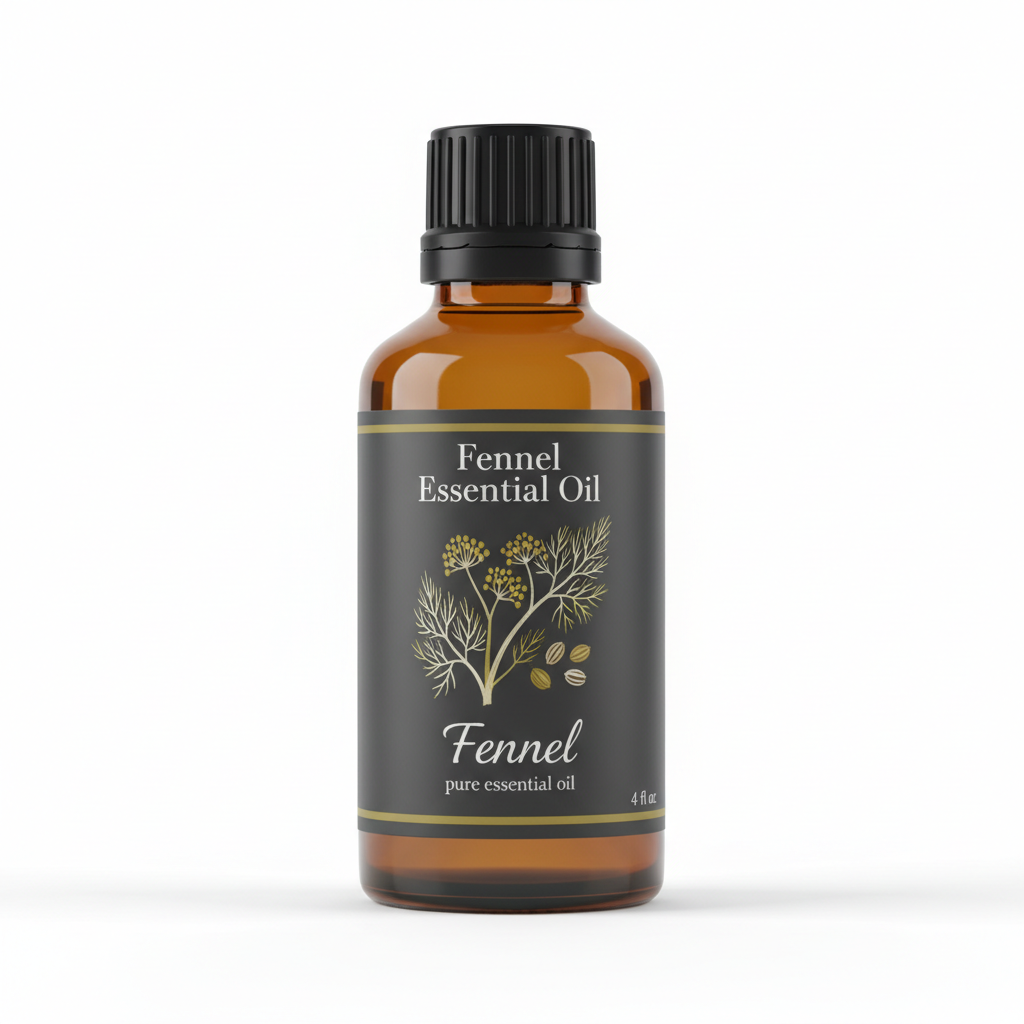
Fennel Essential Oil
Our own Fennel Essential Oil, in sizes from 0.5 oz to bulk.
From $13.99
Shop Now →What certification certifies
In the United States the word "organic" is a labelling term defined in the National Organic Program regulation, 7 CFR Part 205. The regulation defines organic production as "a production system that is managed in accordance with" the Act and its rules, and certification as a determination by a certifying agent that a production or handling operation is in compliance (7 CFR 205.2). The subject of the certificate is the operation and its system. The rules require products to be made without synthetic substances (apart from allowed ones), excluded methods, ionizing radiation or sewage sludge (7 CFR 205.105). That is a list of inputs and practices. It is not a purity specification and it contains no anethole figure.
We did not find a USDA statement written specifically for stand-alone aromatherapy oils, so we are not going to say how the rule applies to one. What follows holds regardless: whatever a seal covers, it covers the farm and the handler, and the way to check a seal is to ask the seller for the certificate and the name of the certifier.
Organic does not mean residue-free
The regulation expects residues to turn up sometimes, and sets a line. If testing finds a prohibited substance above 5 percent of the EPA tolerance for it, or above unavoidable environmental contamination levels, the product cannot be sold or labelled as organic (7 CFR 205.671). Certifying agents must sample and test at least five percent of the operations they certify each year (7 CFR 205.670). So the system includes testing, and it sets a threshold. A trace from a neighbour's spraying is a different matter from deliberate use, and the rule treats them differently.
Data on food bear this out in both directions. A 2021 paper summarising European and US organic-market residue data found that pesticide residues are much lower in organic than in conventional food, while also noting that the origin of a detected residue is often not investigated, and that sampling frequently cannot separate prohibited use from mixing, short-range drift or long-distance drift (Benzing and colleagues, 2021, Scientific Reports). That review is about food, not distilled oils. It is the reason we would not read an organic seal as a guarantee of zero.
What the data on essential oils say, and what they do not
Here the evidence is indirect, and the direction matters. A 2015 evaluation of a laboratory database for the European Pharmacopoeia covered 127,517 sets of data compiled over eight years. It found positive results in 1,150 cases (0.90%) and found the Pharmacopoeia or EU limits exceeded in 392 cases (0.31%), particularly in oils produced by cold pressing. The authors reported that distilled oils showed positive findings in only a few cases and concluded that a general pesticide test was not needed for most oils in medicinal products, though they proposed testing where the production process or the crop's pesticide use makes residues more of a concern (Klier and colleagues, 2015). A 2025 pilot study measured pesticide residues in twelve essential oils taken from the Italian market; citrus oils were the most contaminated, batch-to-batch variation was evident, and the preliminary consumer risk assessment found no risk to health, while still urging monitoring (Stefanelli and colleagues, 2025).
Three limits apply before anyone leans on those studies. Neither split its findings into organic and conventional. Neither singled out fennel in the abstracts we read. And the strong signal in both is for pressed citrus oils, a different production route from the steam distillation we use. So the careful reading is narrow: the pattern in that database is that distilled oils as a group carry residues less often than pressed ones, and that is a statement about a category, not about any one bottle of fennel oil. We also found no study asking whether organic farming changes the composition of fennel oil, such as its anethole or estragole share, so we make no claim either way.
What to ask instead of "is it organic?"
If the seal matters to you for how the crop was farmed, that is a legitimate reason to buy certified, and nothing here argues against it. If what you care about is what ends up on your skin or in a formula you sell, the more informative questions are about the lot:
- A GC-MS report for the lot you are buying, not a generic sheet for the product line. It should show anethole as the main constituent and an estragole figure. Our guide to reading a GC-MS report explains the lines.
- Which fennel it is. Sweet and bitter fennel oils differ in their anethole and fenchone content (EMA, 2024), and a seller who does not name the variety is giving you incomplete information.
- Harvest year, origin and distillation date. These say more about freshness and traceability than a seal does.
- A residue screen, if the use justifies it. It is a separate test from GC-MS. A manufacturer making a product for sale might ask for one, as the Pharmacopoeia database authors suggest for cases where residues are more of a concern. A person scenting a room does not need one in the way a formulator does, in our view, but that is a judgement, not a finding.
Our own guide on spotting pure fennel oil before you pay covers adulteration, which an organic seal also does not address.
What we do and do not claim
We do not claim our fennel oil is organic and hold no certification to show you. What we can document is process. The seed is bought whole to a screen size and moisture ceiling, with split, damaged, immature and off-colour seed rejected. The harvest year and country of origin are recorded for every lot, and the distillation date is on the bottle. The oil is steam-distilled from crushed seed, and an independent laboratory analyses each lot, quantifying anethole and estragole. We will send both figures for a lot on request through the contact page. We add no synthetic anethole, use no bitter fennel and boost nothing, and if a lot misses specification we go out of stock instead of filling bottles from it. Nothing in the lot data we publish is a residue result, so we make no residue claim.
On price, our price guide discusses what drives the cost of a fair bottle; whether an organic premium is worth it depends on why you want the seal.
Who should look elsewhere or ask a professional
If you need certified organic oil, we are not your supplier. Look for one that gives you the certificate and the certifier's name, and check them with the certifier. If you are pregnant, breastfeeding, have an oestrogen-sensitive condition or epilepsy, or are choosing for a child, our own guidance is to avoid fennel oil regardless of how it was grown, because the concern is the oil's compounds and not the farming. Ask your obstetrician-gynecologist, pharmacist or pediatrician about your own situation. For skin we publish 0.5% to 2% in a carrier, with a patch test for 24 hours first.
The seal tells you about the farm. The lot report tells you about the bottle. For a fuller list of what to ask a seller, the buying guide is the place to go next.
Fennel Essential Oil
Fennel Essential Oil from our own shop, in sizes from 0.5 oz to bulk.
From $13.99
Shop Now →Sources & Further Reading
- US Code of Federal Regulations, Title 7, Part 205. 7 CFR 205.2 Terms defined. law.cornell.edu
- US Code of Federal Regulations, Title 7, Part 205. 7 CFR 205.105 Allowed and prohibited substances, methods, and ingredients in organic production and handling. law.cornell.edu
- US Code of Federal Regulations, Title 7, Part 205. 7 CFR 205.670 Inspection and testing of agricultural products to be sold or labeled as organic. law.cornell.edu
- US Code of Federal Regulations, Title 7, Part 205. 7 CFR 205.671 Exclusion from organic sale. law.cornell.edu
- European Medicines Agency (HMPC), 2024. Assessment report on Foeniculum vulgare Miller subsp. vulgare var. vulgare, fructus and var. dulce, fructus (EMA/HMPC/240553/2016). ema.europa.eu (assessment report PDF)
- Benzing A, Piepho HP, Malik WA, Finckh MR, et al., 2021. Appropriate sampling methods and statistics can tell apart fraud from pesticide drift in organic farming. Sci Rep 11. pmc.ncbi.nlm.nih.gov/articles/PMC8292382
- Klier B, Knödler M, Peschke J, Riegert U, Steinhoff B, 2015. Pesticide residues in essential oils: evaluation of a database. pubmed.ncbi.nlm.nih.gov/26830163
- Stefanelli P, Buratti FM, Girolimetti S, Testai E, 2025. Determination of pesticide residues in essential oils and related risk assessment for consumers: a pilot study. pubmed.ncbi.nlm.nih.gov/41105862