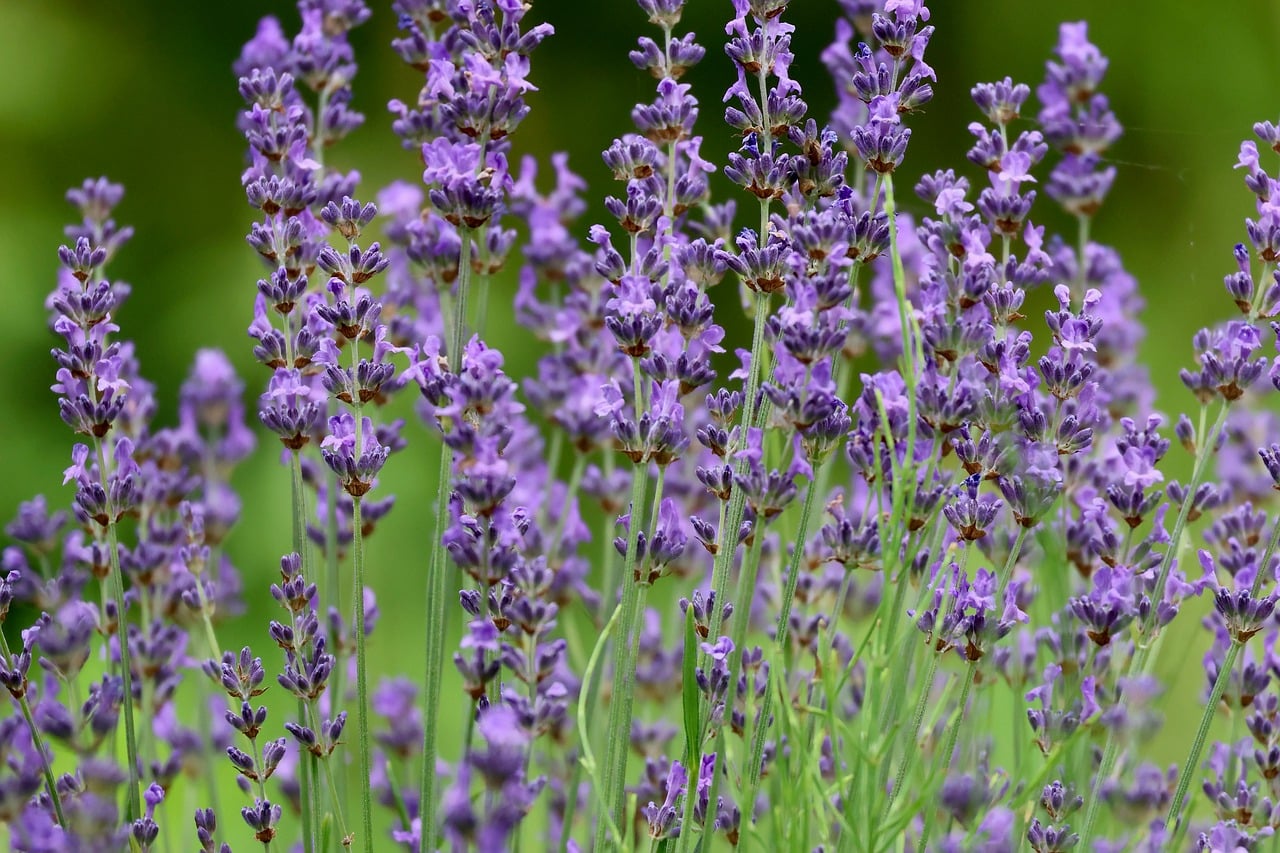
A Signature Sweet Fennel and Lavender Evening Blend
Some scent combinations feel almost inevitable. Sweet fennel's warm, anise-kissed brightness and lavender's familiar softness have long been paired in artisan perfumery, and for good reason: they balance each other with almost uncanny ease. Add a third voice, something resinous and contemplative, and the blend deepens into something worth coming home to.
This guide builds a signature fennel lavender blend around Boswellia serrata, the Indian frankincense variety, as its grounding base note. You will find the full recipe, step-by-step instructions, dilution guidance, storage advice, and several variations to make this evening diffuser blend your own.
Why Boswellia Serrata? The Case for Indian Frankincense in an Evening Blend
Not all frankincense oils smell alike. The genus Boswellia contains many species, each with a distinct aromatic personality shaped by soil, altitude, and extraction method. Choosing the right variety matters when you are building a layered sweet fennel blend, because frankincense will anchor the entire composition.
Boswellia serrata, sourced primarily from the dry forests of India and parts of North Africa, produces a resin that is softer and more balsamic than its East African cousins. Where Boswellia carterii leans citrusy and sharp, and Boswellia sacra carries a cool, almost medicinal lift, serrata stays warm. Its steam-distilled essential oil opens with a gentle, slightly woody sweetness, then settles into a creamy, almost vanilla-adjacent base that lingers quietly.
That creaminess is the key. In a fennel lavender blend, the anise facets of sweet fennel can read as bright to the point of sharpness if left unsupported. Lavender softens the top notes beautifully, but it too can drift toward the floral without something grounding it. Serrata's balsamic warmth fills exactly that role: it does not compete with fennel or lavender, it simply makes the blend feel complete. The overall effect is rounded, unhurried, and well-suited to the slower pace of an evening wind-down routine.
Sourcing quality matters here. Look for serrata oil with a GC/MS report confirming a high percentage of alpha-pinene and incensole acetate, the compounds most associated with its characteristic warm, resinous profile. Pale gold to amber in colour, it should pour freely and carry no sharp chemical top note. If the oil smells harsh or predominantly pine-like, it may have been adulterated with cheaper terpene fractions.
The Signature Blend: Full Recipe
This recipe is formulated for diffuser use. Quantities are given both in drops (for small-batch blending) and in millilitres (for making a pre-blended concentrate you can store and use over time). The drop counts assume standard dropper bottles with an orifice producing roughly 0.05 ml per drop.
Ingredients
| Oil | Drops (single session) | Millilitres (10 ml concentrate) | Role in blend |
|---|---|---|---|
| Sweet Fennel (Foeniculum vulgare var. dulce) | 3 drops | 1.5 ml | Heart note: bright, anise-warm |
| Lavender (Lavandula angustifolia) | 4 drops | 2.0 ml | Bridge note: floral, softening |
| Boswellia serrata frankincense | 3 drops | 1.5 ml | Base note: balsamic, grounding |
Total for a single diffuser session: 10 drops
Total for a 10 ml blended concentrate: 5 ml (use 10 drops of concentrate per session)
Dilution note for topical use: This blend is formulated for diffusion. If you wish to use any version of it on the skin (in a bath, massage oil, or body product), dilute to a maximum of 1% in a carrier oil for general adult use (roughly 6 drops of essential oil blend per 30 ml of carrier). Sweet fennel essential oil is not recommended for use during pregnancy, while breastfeeding, or with children under five. Always carry out a patch test before broader skin application. If you have any health concerns or take regular medication, speak with a qualified healthcare provider before adding new aromatic oils to your routine.
Step-by-Step Blending Instructions
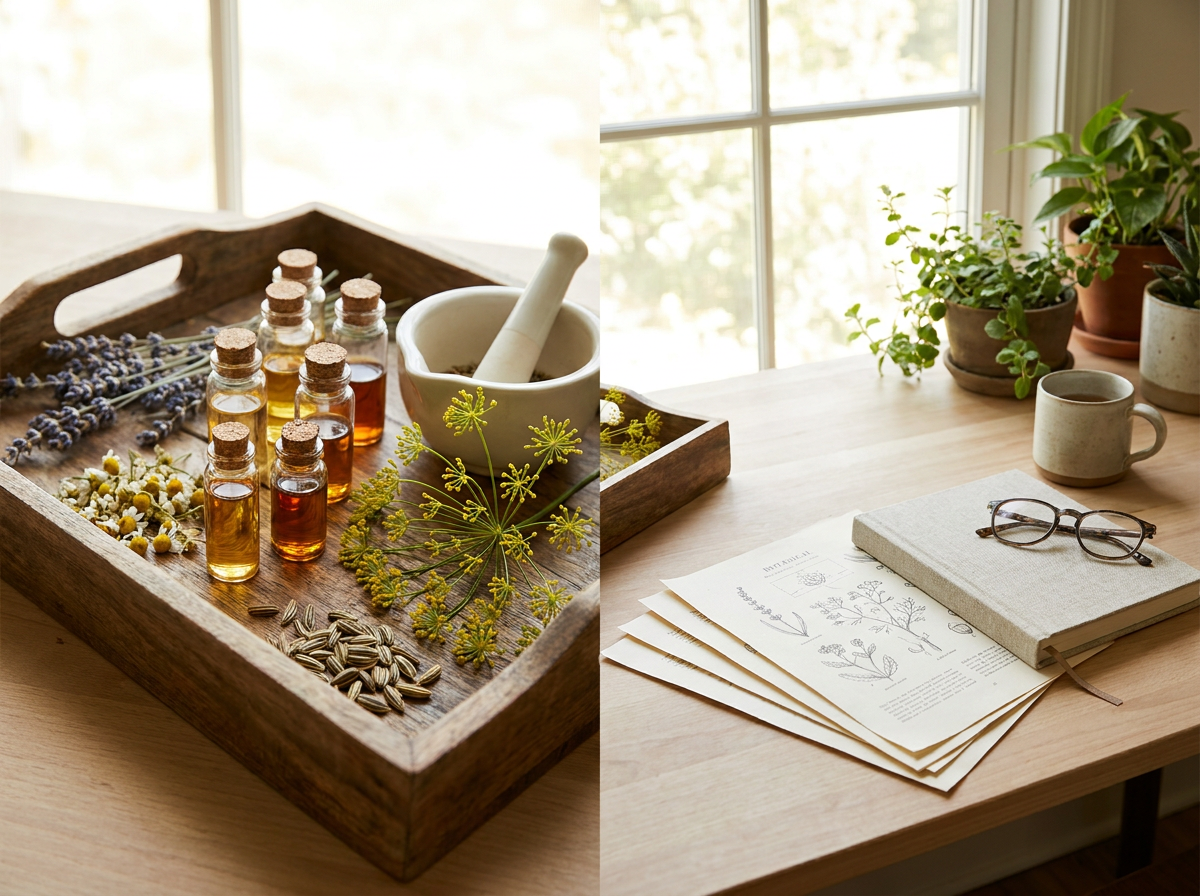
Option A: Single Diffuser Session (10 drops)
- Fill your diffuser reservoir to the manufacturer's recommended water line.
- Add 3 drops of sweet fennel essential oil directly to the water.
- Add 4 drops of Lavandula angustifolia lavender.
- Add 3 drops of Boswellia serrata frankincense.
- Run the diffuser for 30 to 60 minutes. Most aromatic professionals suggest taking a 30-minute break after each hour of diffusion to avoid scent saturation.
Option B: Pre-Blended Concentrate (10 ml bottle)
- Gather a clean, dark glass dropper bottle (amber or cobalt, 10 ml capacity) and ensure it is completely dry.
- Using a clean dropper or pipette, measure and add 1.5 ml of sweet fennel essential oil.
- Add 2.0 ml of lavender essential oil.
- Add 1.5 ml of Boswellia serrata frankincense essential oil.
- Cap the bottle, invert gently three or four times (do not shake vigorously), and allow the oils to meld for at least 24 hours before first use. This resting period noticeably smooths the blend's opening note.
- To use: add 10 drops of the concentrate to your diffuser reservoir per session.
- Label the bottle with the blend name, the date, and the constituent oils.
Patch Testing and Safety Notes
Diffusing this blend in a well-ventilated room carries a low risk profile for most healthy adults. That said, a few precautions are worth keeping in mind.
- Sweet fennel: Contains trans-anethole, which can be sensitising in high concentrations. Stay within recommended dilutions. Avoid topical use during pregnancy and while nursing. Keep away from children under five.
- Lavender: Well-tolerated by most people, but individual sensitivities exist. Some people with sensitivity to balsam of Peru may also react to certain lavender components.
- Boswellia serrata: Generally considered gentle and well-tolerated in diffusion. As with any resinous oil, quality and purity vary widely between suppliers, so source carefully.
- Patch test for topical use: Mix one drop of the concentrate into a teaspoon of carrier oil, apply to the inner forearm, and wait 24 hours before assessing for any skin response.
- Pets and children: Diffuse in a space where animals and young children can freely leave the room. Do not diffuse essential oils in enclosed spaces occupied by cats, birds, or very young children.
For a broader look at how to work safely and creatively with fennel in blends, the ultimate guide to blending and using fennel essential oil covers everything from note structure to dilution science in one place.
Storage and Shelf Life
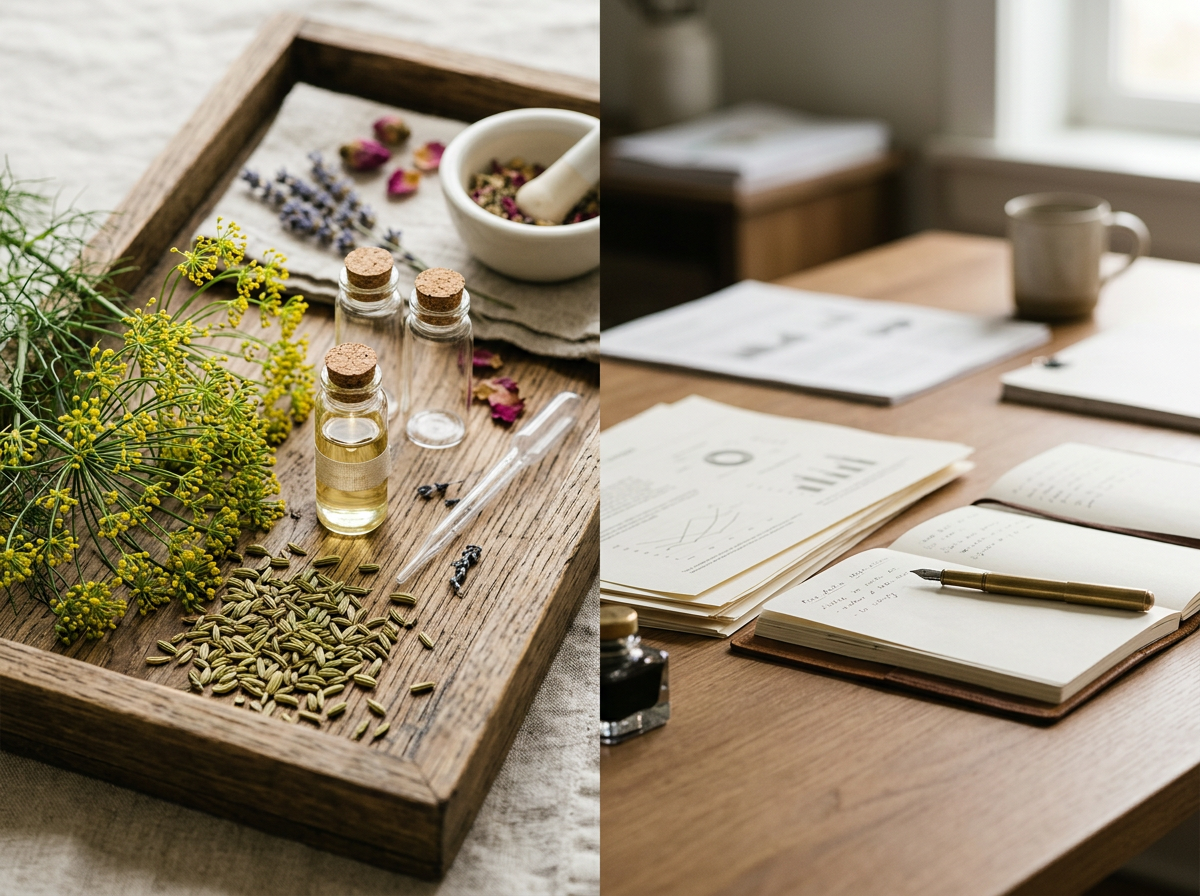
Store your blended concentrate in a sealed amber or cobalt glass bottle, away from heat and direct sunlight. A cool, dark drawer or cabinet is ideal. Properly stored, this blend should maintain its aromatic quality for 12 to 18 months. Sweet fennel and lavender are both relatively volatile, while serrata, as a resinous base note, is more stable. Over time you may notice the top notes (fennel first, then lavender) become slightly less bright as they oxidise. The blend remains pleasant well past this point, just warmer and more resin-forward.
If the concentrate develops a noticeably sharp, rancid, or off smell at any point, discard it. Oxidised essential oils can be skin sensitisers, even in diffusion at high concentrations.
Variations on the Signature Blend
Once you are comfortable with the core recipe, small adjustments open up quite different aromatic directions. Below are three tested variations worth exploring.
Variation 1: The Citrus Lift
Reduce serrata to 2 drops and add 2 drops of bergamot (Citrus bergamia, bergapten-free for any skin-adjacent use). The blend brightens considerably: fennel's anise note reads as almost effervescent alongside bergamot's floral citrus, while lavender holds the middle. Serrata is still present, still grounding, but further in the background. Good for an early evening session when you want something lighter.
Variation 2: The Woody Depth
Add 2 drops of cedarwood (Cedrus atlantica) alongside the original three oils, keeping all other proportions the same and running the diffuser with 12 drops total. Atlas cedarwood adds a dry, honeyed woodiness that partners beautifully with serrata's creaminess and gives the fennel something to push against. The result is noticeably more complex and stays present in a room longer than the base blend.
Variation 3: The Herbal Green
Swap 1 drop of lavender for 1 drop of clary sage (Salvia sclarea). Clary sage carries a rich, slightly nutty, almost wine-like quality that amplifies fennel's herbal character while softening lavender's floral sweetness into something more botanical and green. Note that clary sage is best avoided during pregnancy. This variation suits cooler months particularly well.
If you find yourself wanting to explore further recipe ideas, these ten sweet and herbaceous fennel diffuser blends offer a wide range of starting points across different aromatic families.
Getting the Most From Your Evening Ritual
Scent works best when it has a consistent cue. Using this fennel lavender blend at the same point each evening, perhaps while dimming lights, changing into comfortable clothes, or setting the table, can help your nervous system associate the aroma with a shift in pace. The blend does not do this by itself. But over time, a scent repeated in the same context becomes part of the ritual itself.
Start the diffuser 10 to 15 minutes before you want the room to feel settled. The opening note of sweet fennel arrives quickly and brightly, then lavender fills in behind it. Serrata appears last, quietly, and stays longest after the diffuser cycles off. That slow, resinous trail is part of why this combination works so well as an evening diffuser blend. It does not end abruptly.
If you are new to working with fennel in blends and want to avoid common formulation pitfalls, this guide to common blending mistakes with fennel is worth reading before you start experimenting with the variations above.
A Note on Ingredient Quality
A blend is only as good as its components. For this particular recipe, three sourcing points matter most. First, use sweet fennel (Foeniculum vulgare var. dulce), not bitter fennel. The bitter variety has a harsher, more intensely camphoraceous character that can overwhelm lavender at these ratios. Second, opt for true Lavandula angustifolia rather than lavandin (Lavandula x intermedia). Lavandin is sharper and more camphoraceous, which pushes the blend in a direction that can clash with fennel's sweetness. Third, as noted earlier, source Boswellia serrata with documentation. The frankincense market has significant adulteration challenges, and a supplier who provides GC/MS testing is worth the slight premium.
This blend rewards good materials. The ingredients are few, the ratios are simple, and with quality oils the result is genuinely beautiful: warm, sweet, grounded, and unmistakably Italian in its Mediterranean botanical character.