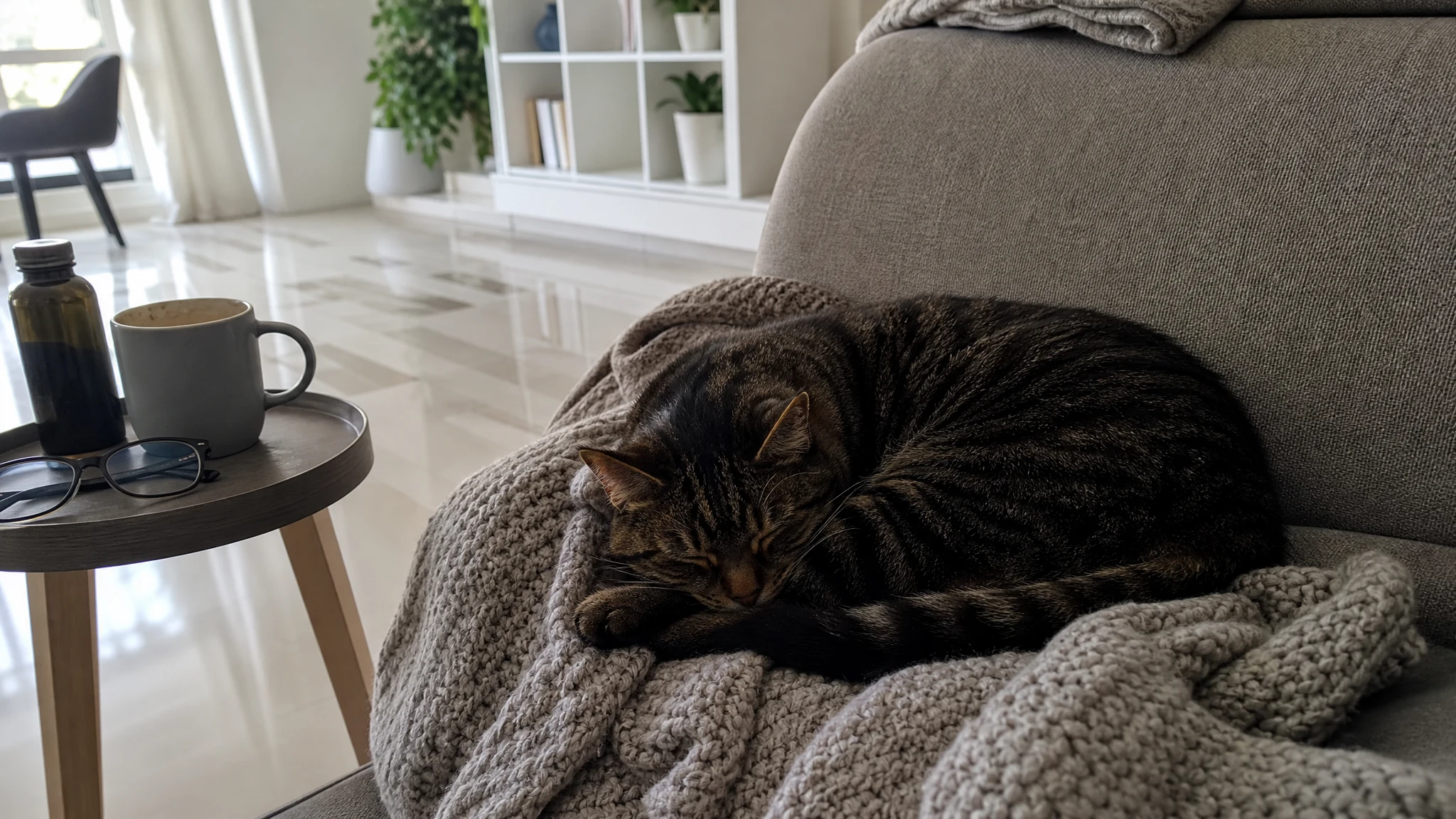
Fennel Oil Around Dogs and Cats: What the Evidence Covers
The fennel plant is on the ASPCA's non-toxic list for dogs, cats and horses; the concentrated oil is a different matter, and the evidence for it in pets is thin enough that we say to keep it away from them. Nobody has published a poisoning series for fennel oil specifically, which means two opposite claims you will find online, "fennel oil is toxic to cats" and "fennel oil is pet safe", are both going beyond what has been measured. This page separates the documented from the assumed, species by species. For the human side, start with is fennel essential oil safe.
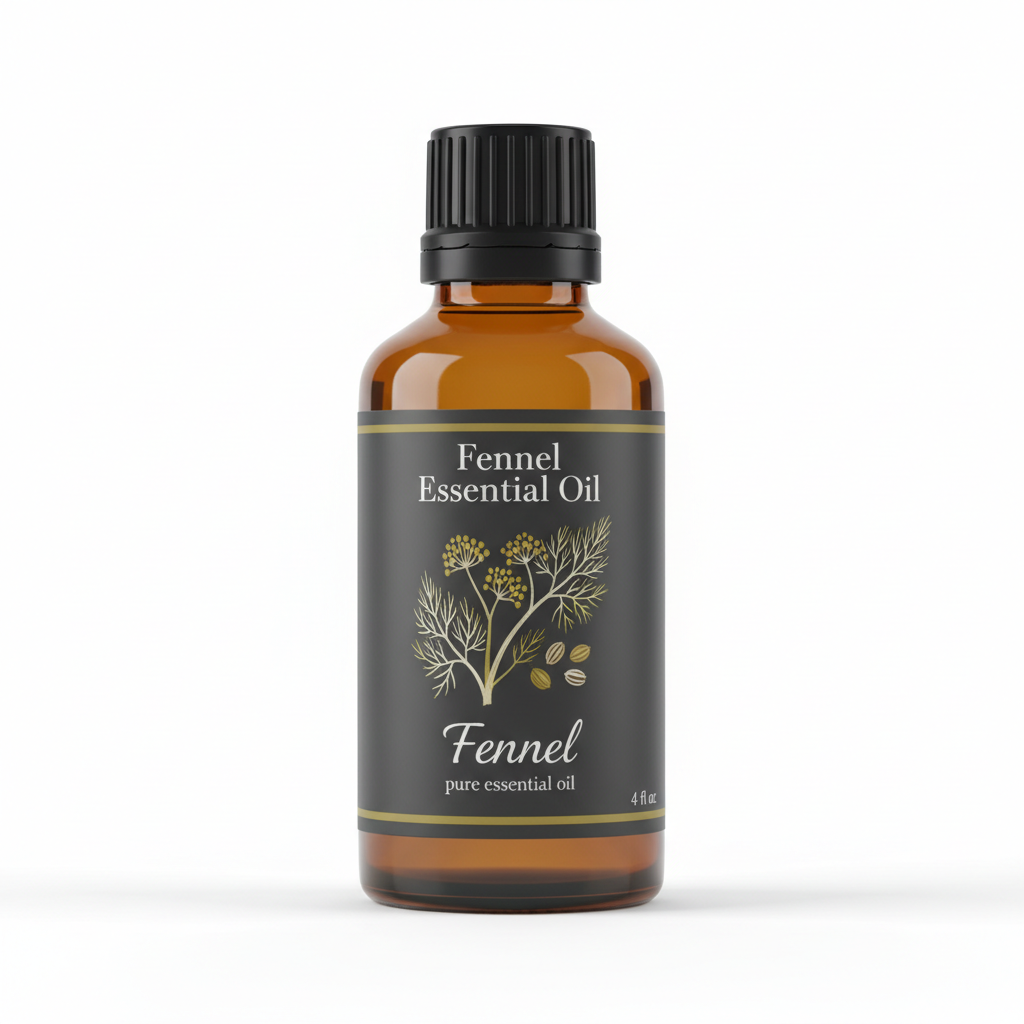
Fennel Essential Oil
Our own Fennel Essential Oil, in sizes from 0.5 oz to bulk.
From $13.99
Shop Now →What the ASPCA does and does not say about fennel
The ASPCA's plant database lists fennel (Foeniculum vulgare) as non-toxic to dogs, cats and horses, with no toxic principle identified. Its note on risk reads "low if consumed in small quantities in food," followed by "avoid concentrated oil" (ASPCA Animal Poison Control, plant listing). The page does not mention essential oil by name and does not list clinical signs. It describes a leafy herb a dog might nibble in the garden, not a bottle of concentrated oil.
The ASPCA's separate guidance on essential oils is general: concentrated oils can cause unsteadiness, depression and, in severe cases, low body temperature in dogs and cats, and ingestion may cause vomiting and diarrhea. It advises avoiding direct application to a pet altogether, and says short-term diffuser use in a secured area a pet cannot enter is generally acceptable (ASPCA, The Essentials of Essential Oils Around Pets, 2022).
The one regulator opinion on fennel oil and dogs and cats
Here fennel is unusual: a European safety panel has assessed sweet fennel oil as a flavouring added to dog and cat food. In a 2023 opinion, the EFSA panel on animal feed additives judged the oil of low concern at proposed levels of roughly 2 mg per kg of complete feed (2.2 mg/kg for dogs and 1.9 mg/kg for cats in the opinion's table; the abstract rounds the dog figure to 2.3), provided its estragole content did not exceed about 5%. At the highest proposed specification of 6.0% estragole, the same panel said the use was "of concern." Its specification for the oil gave estragole at 2.0 to 6.0% and trans-anethole at 60 to 82% (EFSA FEEDAP Panel, 2023). That differs slightly from the EMA's figure of 1.5 to 5.0% estragole in sweet fennel oil (EMA, 2023); the figures come from different compilations and specifications, so we quote both.
Do not read that as a green light for the bottle. Put the numbers side by side, as arithmetic and not as a trial. From the opinion's own table, a 15 kg dog on the proposed feed would take in about 0.7 mg of oil a day, and a 3 kg cat about 0.1 mg. One drop of oil (about 0.05 ml, which at the 0.975 specific gravity on our published certificate of analysis weighs about 49 mg) is roughly 75 times the dog's regulated daily amount and roughly 400 times the cat's. The regulators accepted a flavouring dose spread through a day's food. They said nothing about a pet licking, grooming or swallowing droplets of undiluted oil.
The same opinion also records that the oil should be considered "an irritant to skin and eyes, and a dermal and respiratory sensitiser," and that, because estragole exceeds 1%, fennel oils are classed as suspected mutagens and carcinogens under European labelling rules. Those are statements about handling the oil, and they apply in your living room as much as in a feed mill.
Why cats get singled out, and what that does not tell us
Pet Poison Helpline says cats are more vulnerable to essential oils because they lack a liver enzyme needed to metabolise and clear them, and that grooming adds to exposure (Pet Poison Helpline, Updates on Essential Oils). The molecular work behind that is a 2000 study showing that the gene for the cat's UGT1A6 enzyme is a pseudogene, which leaves the domestic cat with a significantly lower capacity to glucuronidate planar phenolic compounds than most mammals (Court and Greenblatt, 2000). That paper tested acetaminophen and similar phenolic substances. It did not test fennel's compounds, so "cats cannot clear essential oils" is a reasoned warning and not a measurement for fennel. There is a plausible link, though: EFSA's description of estragole metabolism lists conjugation with glucuronic acid among the detoxification routes. The panel acted on that, requiring a wider margin of exposure (above 500) for cats than for other species when it assessed sweet fennel oil for dogs and cats. Whether a cat's reduced capacity matters at the doses a diffuser or a licked coat could deliver has not been studied.
The case data we do have are for other oils. In a review of 443 dog and cat cases of 100% tea tree oil exposure (2002 to 2012), signs began within 2 to 12 hours and lasted up to 72, most often drooling, lethargy, weakness, loss of coordination and tremors; half of the exposures were on the skin and younger, lighter cats were at higher risk (Khan and colleagues, JAVMA, 2014). Earlier veterinary reports described the same pattern for melaleuca oil (Villar and colleagues, 1994). Fennel oil's chemistry is not tea tree's, so these tell you about the route (concentrated oil on skin or fur, then swallowed) rather than about fennel.
Species by species
| Animal | What is documented | What is not | What we would do |
|---|---|---|---|
| Dogs | ASPCA: plant non-toxic. EFSA 2023: oil acceptable as a flavouring at about 2 mg/kg feed when estragole is within spec. | Any poisoning series or safe applied dose for fennel oil. | Keep the bottle capped and out of reach. Do not put it on a dog. |
| Cats | Same two sources. Pet Poison Helpline and a gene-level study on reduced cat glucuronidation. | How cats clear fennel's compounds; any case reports for fennel oil. | Treat as the highest-risk pet. No oil on or near the animal; keep it out of any space the cat cannot leave. |
| Birds | ASPCA advises avoiding essential oil diffusers in homes with birds because their airways are very sensitive. | Anything fennel-specific. | Do not diffuse where a bird lives. |
| Rabbits, guinea pigs, hamsters | ASPCA says the same concerns as dogs and cats apply. | Anything fennel-specific. | Same as cats. |
| Horses | ASPCA: plant non-toxic. | Oil in horses; we found nothing. | Ask an equine veterinarian. |
| Fish, reptiles, others | Nothing we could verify. | All of it. | Ask a veterinarian who sees the species. |
Diffusing, skin and swallowing: where fennel oil would actually reach a pet
Pet Poison Helpline separates passive diffusers (reed sticks, candles), whose main hazard is airway irritation, from active ones (ultrasonic or nebulising), which release microdroplets that can settle on fur and be absorbed through skin or swallowed during grooming. It also notes that animals with feline asthma or chronic bronchitis are at greater risk of severe irritation, and that a coughing cat can be mistaken for one bringing up a hairball. If you diffuse fennel oil at all, which our diffuser blend ideas assume for people, the lowest-risk reading of these sources is a room the animal cannot enter, for a short time, which matches the ASPCA's wording of a short period in a secured area.
For skin, our own guidance is 0.5% to 2% in a carrier for people, with a patch test (skin basics). Nothing in this research supports carrying that range over to a pet. Swallowing is covered for people in can you swallow fennel essential oil; for a pet it is the same advice, and the ASPCA's list of signs is unsteadiness, depression, vomiting and diarrhea.
If your pet has been exposed
Call your veterinarian or the ASPCA Animal Poison Control Center at (888) 426-4435 straight away, as the ASPCA page advises, and have the bottle to hand so the species, oil and approximate amount can be reported. Do not wait for signs to worsen; the tea tree data show onset can take hours.
We sell one thing, undiluted sweet fennel oil, so we are not the right source for pet products. If you are looking for something to use around animals, a veterinarian is the right person to ask. Our own published rule is simple: keep fennel oil away from children and pets. The reasoning in estragole in fennel oil and our wider safety guide explains why that stays our position until someone publishes data that say otherwise.
Fennel Essential Oil
Fennel Essential Oil from our own shop, in sizes from 0.5 oz to bulk.
From $13.99
Shop Now →Sources & Further Reading
- ASPCA Animal Poison Control. Fennel (Foeniculum vulgare), toxic and non-toxic plants. aspca.org
- ASPCA, 2022. The Essentials of Essential Oils Around Pets. aspca.org
- EFSA FEEDAP Panel, 2023. Safety and efficacy of feed additives consisting of essential oils from the fruit and stems of Foeniculum vulgare Mill. ssp. vulgare: bitter fennel oil for all animal species and sweet fennel oil for dogs and cats. EFSA Journal 21(10):e08348. pmc.ncbi.nlm.nih.gov
- European Medicines Agency (HMPC), 2023. Public statement on the use of herbal medicinal products containing estragole. ema.europa.eu
- Pet Poison Helpline (Benson). Updates on Essential Oils. petpoisonhelpline.com
- Court, Greenblatt, 2000. Molecular genetic basis for deficient acetaminophen glucuronidation by cats: UGT1A6 is a pseudogene. Pharmacogenetics. pubmed.ncbi.nlm.nih.gov
- Khan, McLean, Slater, 2014. Concentrated tea tree oil toxicosis in dogs and cats: 443 cases (2002-2012). J Am Vet Med Assoc. pubmed.ncbi.nlm.nih.gov
- Villar, Knight, Hansen, 1994. Toxicity of melaleuca oil and related essential oils applied topically on dogs and cats. Vet Hum Toxicol. pubmed.ncbi.nlm.nih.gov
- Fennelessentialoil.com, certificate of analysis (specific gravity). fennelessentialoil.com