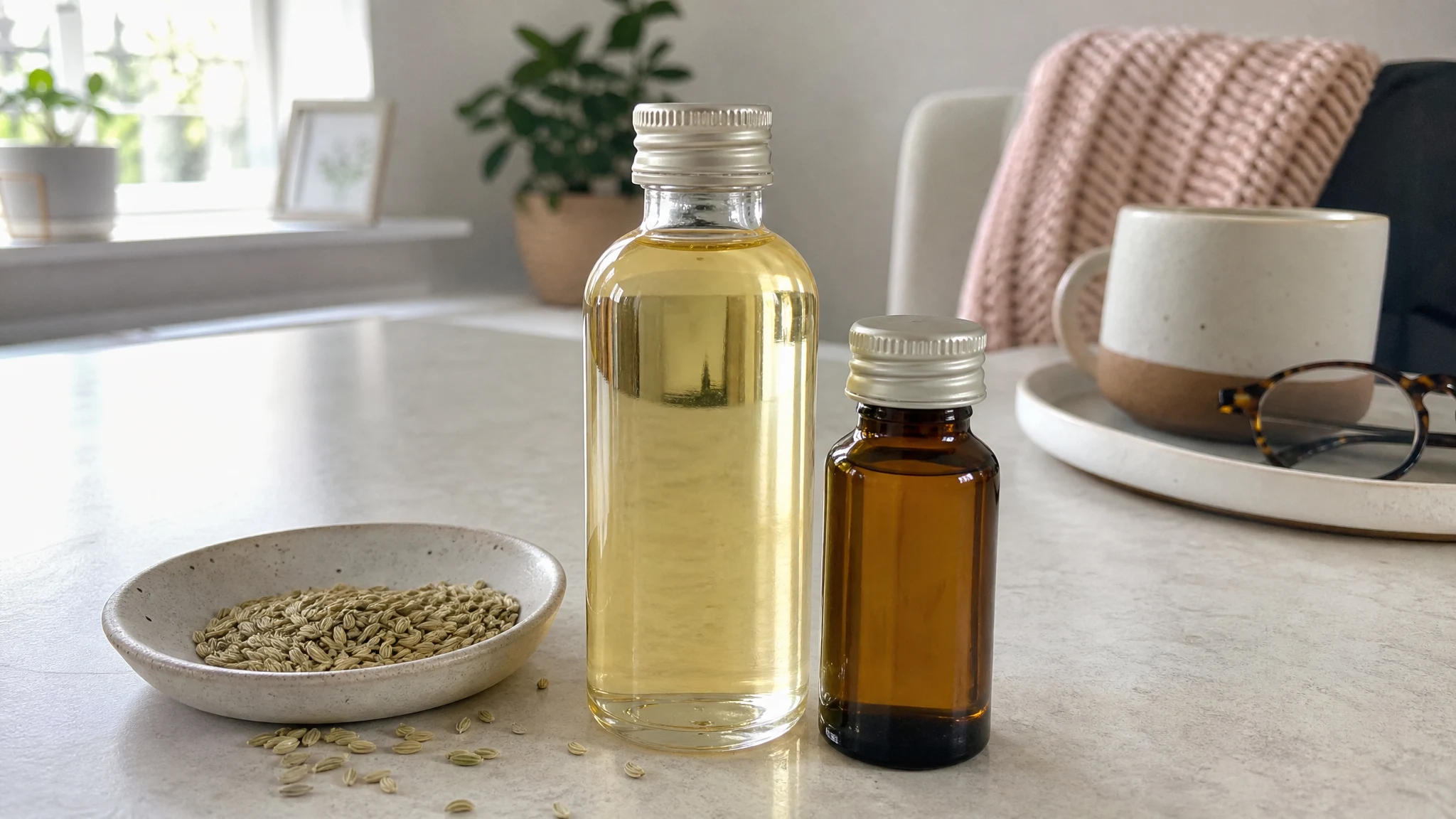
Fennel Seed Oil vs Fennel Essential Oil: Don't Mix Them Up
"Fennel seed oil" can mean two different bottles: a steam-distilled essential oil, or a fatty oil taken from the seed by pressing or solvent. The first is a concentrated volatile material that needs dilution and carries real cautions. The second is mostly fat, closer to a carrier oil in its chemistry. Buying one while expecting the other is an easy mistake and an avoidable one. This page shows where the two names overlap and how to tell which you are holding before you open it. For the wider buying checklist, see our complete quality guide to buying fennel essential oil.
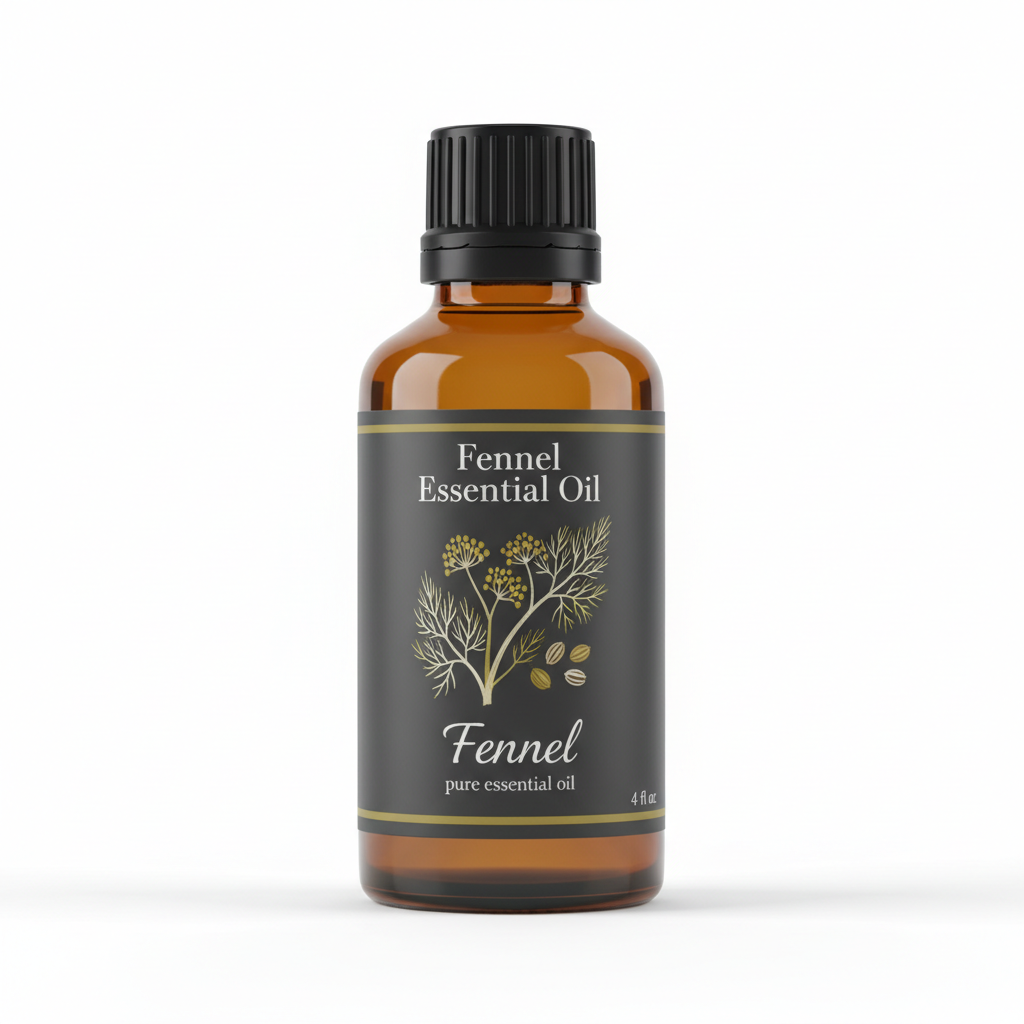
Fennel Essential Oil
Our own Fennel Essential Oil, in sizes from 0.5 oz to bulk.
From $13.99
Shop Now →Why the name does not settle it
You would hope the ingredient name on a label separates the two. In the cosmetic naming system it often does not. The COSMILE Europe cosmetic ingredient database lists "Foeniculum Vulgare Oil" and "Foeniculum Vulgare Dulce Fruit Oil" and describes the preparation type of each as "Fat or essential oil" without saying which (COSMILE, Foeniculum Vulgare Oil; COSMILE, Foeniculum Vulgare Dulce Fruit Oil). Both entries also list the function as fragrance. So an ingredient list alone cannot tell you whether a product contains distilled oil or pressed fat. Our own certificate of analysis lists the ingredient as "Foeniculum Vulgare (Fennel) Oil" and supplies the detail the name lacks: parts used, seed; extraction method, steam distilled (see the certificate). That is the pattern to look for. A name plus a stated process.
What is physically different
The seed holds both materials. The European Medicines Agency's 2024 assessment report describes fennel fruit as containing essential oil (a pharmacopoeia floor of 20 mL per kg for sweet fennel, with at least 80% anethole in that oil) alongside triglycerides made mainly of petroselinic, oleic and linoleic acids, wax esters, phytosterols and tocopherols (EMA, 2024). Steam distillation collects the first group. Pressing or solvent extraction collects the second.
The fat has a distinctive signature. In a 2015 analysis of spicy Apiaceae fruits, petroselinic acid was the major fatty acid in every sample, from 57% of total fatty acids in caraway up to 82% in fennel (Nguyen, Aparicio and Saleh, 2015, Molecules). That is a plain fatty acid profile of the sort you would see on a carrier oil's specification, and it has nothing to do with the sweet, anise-like smell of fennel oil. The scent compound, anethole, is in the volatile fraction.
This is also why a lab report separates them at a glance. A GC-MS report for a true essential oil is dominated by anethole (the EMA's pharmacopoeia floor of 80% is for the oil from sweet fennel fruit). A report for a pressed fat would show fatty acids, with petroselinic and oleic at the top. If a seller offers "fennel seed oil" with no report and no stated process, you have no way to know which of those two profiles you are buying.
A label table for telling them apart
| What you see | Points toward essential oil | Points toward pressed or extracted fat |
|---|---|---|
| Process on the label or product page | "Steam distilled", "distilled" | "Cold pressed", "expeller pressed", "solvent extracted", "carrier" |
| Ingredient or INCI name | Does not settle it: the same plant names are used for both (COSMILE, above) | Same: ask for the process |
| Quality documents | GC-MS with anethole as the main peak; specific gravity and refractive index on the certificate | Fatty acid profile; peroxide or acid value |
| Bottle size | Small, amber glass, often 0.5 oz to a few ounces (reasoning: a concentrated material is sold in small quantities) | Often larger, sold like other carrier oils (reasoning) |
| Instructions | "Dilute", "patch test", "not for internal use" | "Apply directly", "massage oil" |
| Behaviour on a paper towel | A drop spreads and the scent is strong; most of it evaporates over hours (reasoned from volatility, not a lab test) | A translucent mark that stays (reasoned from the fat content, not a lab test) |
The last row is a household check, not a standard, and it will not catch a fatty oil with a little essential oil blended in. The documents in rows three and four are the reliable ones. Our guide to reading a label and GC-MS report goes through them.
Where the wrong purchase hurts
There are three common ways to mix these up, and they fail in different directions.
- Using the essential oil like a carrier. This is the dangerous one. Applying a concentrated, anethole-rich oil undiluted is the opposite of using a massage oil. Our guidance for the essential oil is 0.5% to 2% in a carrier, roughly 3 to 12 drops per ounce, after a 24-hour patch test. See the guide to carrier oils for fennel oil for what to dilute it in.
- Treating a pressed fat as if it were the essential oil. You will not get the aroma, and anything you drip into a diffuser will not evaporate. The reasoning is simple: fatty acids are not volatile in the way the scent compounds are.
- Assuming a pressed "fennel carrier oil" is inert. We could not find a regulator or industry limit for a pressed or extracted fennel seed fat, and we did not find data on how much anethole, if any, stays in such a product. That is a gap, not a clearance. If you avoid fennel for a medical reason, do not use a fennel-derived fat as a "safe" carrier on your own judgement; ask a pharmacist.
A related fork we already covered: whether a bottle marked fennel is an essential oil at all, or a blended fragrance. That is a different question from this one, and the fennel essential oil vs fragrance oil post deals with it, so we will not repeat it here.
Neither one is food
People searching "fennel seed oil" are sometimes looking for something to swallow, because fennel seed is a kitchen spice. The oil in our bottle is not a food product, and a pressed fat sold as a cosmetic ingredient is not a supplement either. Whether to take any fennel oil by mouth is a decision for a pharmacist or doctor; the essential oil's own case is laid out in can you swallow fennel essential oil.
What our bottle is, so you can compare
Ours is the distilled oil. We steam-distil crushed seed, the whole seed having been bought to a screen size and moisture ceiling with split, damaged and immature seed rejected, and cracked coarse on site, typically within the hour before it goes into the still. Harvest year and country of origin are recorded for each lot and the distillation date is on the bottle. An independent laboratory analyses each lot and quantifies anethole and estragole; we send both figures on request via the contact page. It is bottled 100% pure and undiluted, in amber glass with a plain cap, from a 0.5 oz bottle up to 400 lb drums. We do not sell a pressed fennel seed oil, and if that is what you need, you want a carrier-oil supplier that publishes a fatty acid profile, not us.
Who should skip the essential oil either way
For the distilled oil, our published cautions are to avoid it entirely in pregnancy and while breastfeeding, not to use it with children, and to leave it alone if you have an oestrogen-sensitive condition or epilepsy. Keep it away from eyes and pets, and store it tightly capped away from heat and light. These come from the anethole and estragole in the volatile fraction, which is the part the pressed fat mostly lacks. For a pressed product, the honest answer is that nobody has published the equivalent list, so ask the seller what is in it.
The rule that keeps you out of trouble is short. Find the process, find the document, and match the instructions to the material. Then use the buying guide to check the rest of the label.
Fennel Essential Oil
Fennel Essential Oil from our own shop, in sizes from 0.5 oz to bulk.
From $13.99
Shop Now →Sources & Further Reading
- European Medicines Agency (HMPC), 2024. Assessment report on Foeniculum vulgare Miller subsp. vulgare var. vulgare, fructus and var. dulce, fructus (EMA/HMPC/240553/2016). ema.europa.eu (assessment report PDF)
- Nguyen T, Aparicio M, Saleh MA, 2015. Accurate mass GC/LC-quadrupole time of flight mass spectrometry analysis of fatty acids and triacylglycerols of spicy fruits from the Apiaceae family. Molecules 20(12):21421-21432. pmc.ncbi.nlm.nih.gov/articles/PMC4881421
- COSMILE Europe cosmetic ingredient database. Foeniculum Vulgare Oil. cosmileeurope.eu
- COSMILE Europe cosmetic ingredient database. Foeniculum Vulgare Dulce Fruit Oil. cosmileeurope.eu