Fennel Bath Salts Recipe: A 200 g Batch by Weight
Fennel makes a warm, sweet bath salt that smells a little like a spice cupboard and a little like a field. The craft is mostly in the arithmetic: how much oil, how to spread it through the salts, and how to keep the bath itself comfortable. Here is a 200 g batch worked out by weight, so you can scale it without guessing.
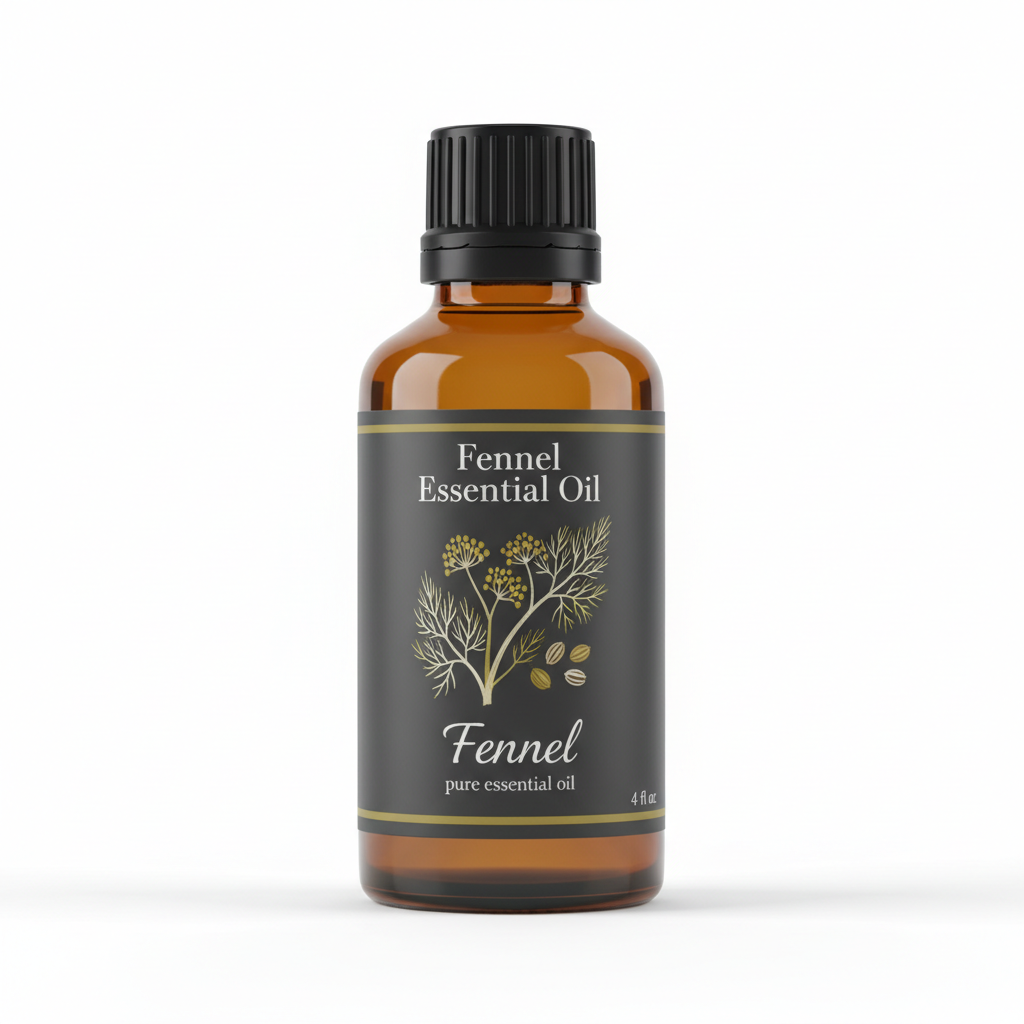
Fennel Essential Oil
Our own Fennel Essential Oil, in sizes from 0.5 oz to bulk.
From $13.99
Shop Now →Oil and water do not mix
The Tisserand Institute's bath safety page points out that essential oils float in tiny droplets on the surface of bath water, and that undiluted droplets can sting against skin. Its advice is to blend the oil thoroughly into a vegetable oil, or emulsify it, and it notes that neither full-fat milk nor Epsom salts properly dissolve oils. For a salts recipe, that means stirring fennel oil straight into dry salt does not solve the dispersal. The formula below blends the fennel into a carrier first, and the carrier carries it through the salts.
Setting the scent level
The fragrance industry's estragole standard caps estragole in bath salts and gels (IFRA Category 9) at 0.050% of the finished product. Divide that by the estragole share of the oil and you get the most fennel oil that fits: about 1.33% if the oil has 3.76% estragole, 0.83% at 6.0%, and 0.29% at 17.0%. Those figures come from an EFSA opinion on sweet fennel oil and a 2024 authentication study. We chose 0.25% of the finished salts, which sits inside all three. It is a gentle rate, and fennel is a strong, sweet oil that does not need more to be noticed.
The formula (200 g)
| Ingredient | Weight | Share |
|---|---|---|
| Fennel essential oil | 0.5 g | 0.25% |
| Carrier oil such as jojoba or fractionated coconut | 10 g | 5% |
| Dry coarse sea salt or Epsom salt | 189.5 g | 94.75% |
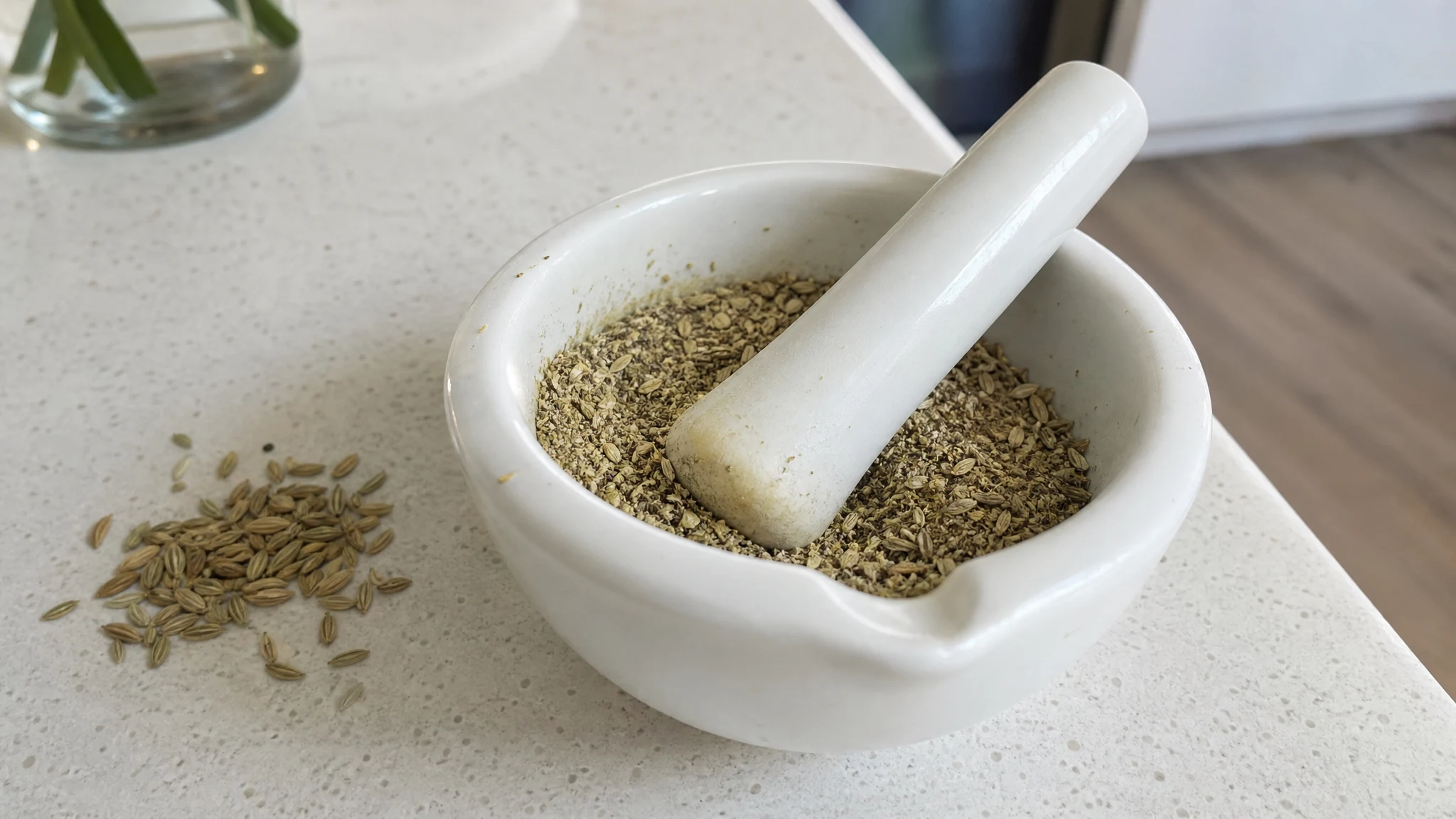
We sell the fennel oil only, so the carrier and salts come from a craft or bath supply shop. The 20-to-1 ratio of carrier to fennel oil is our own reasoning, enough fat to thin the oil without leaving a heavy film. Weigh on a scale that reads to 0.1 g, since drops vary: the Tisserand Institute's review of three studies found 20 to 40 drops per mL.
Method
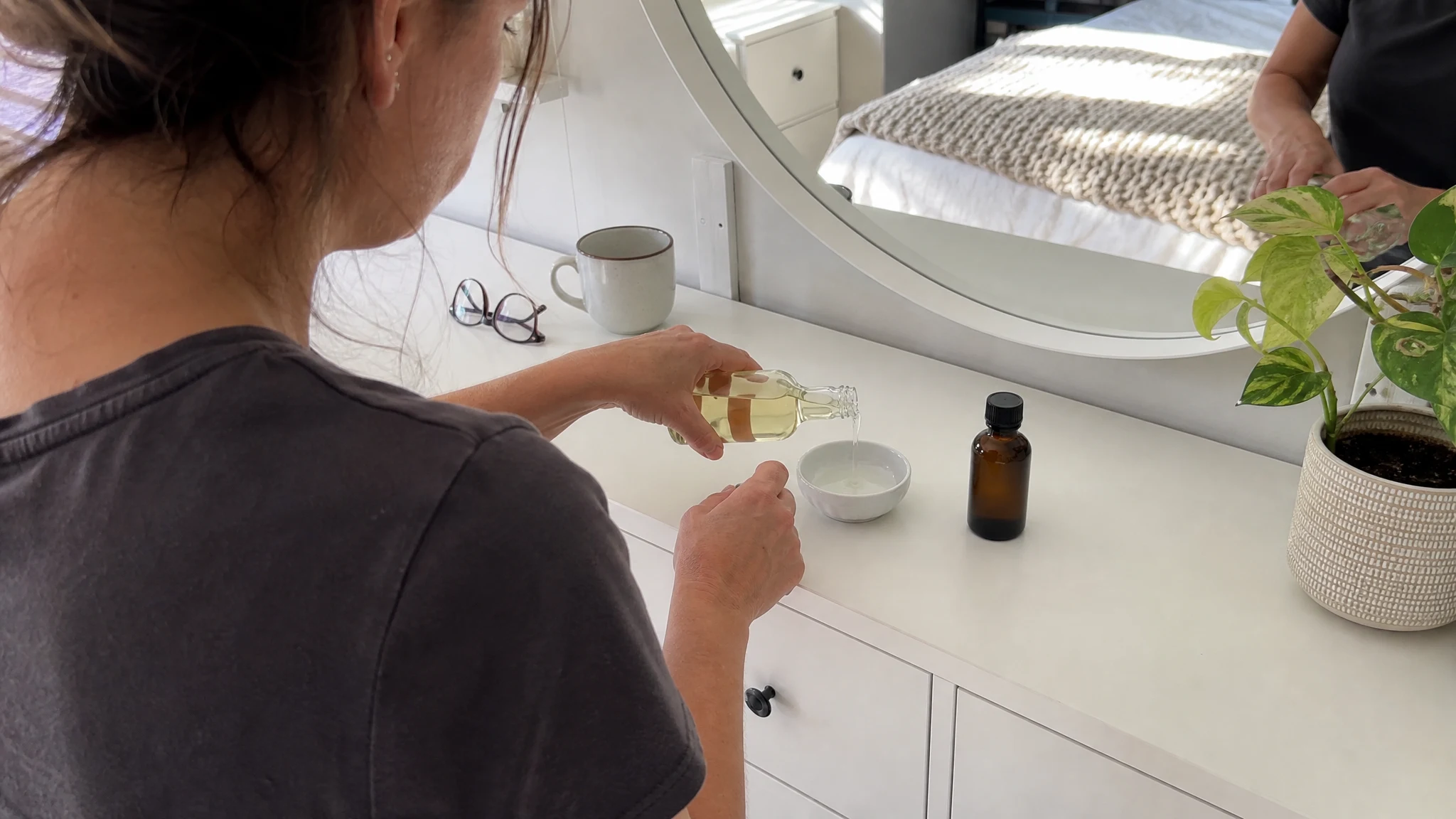
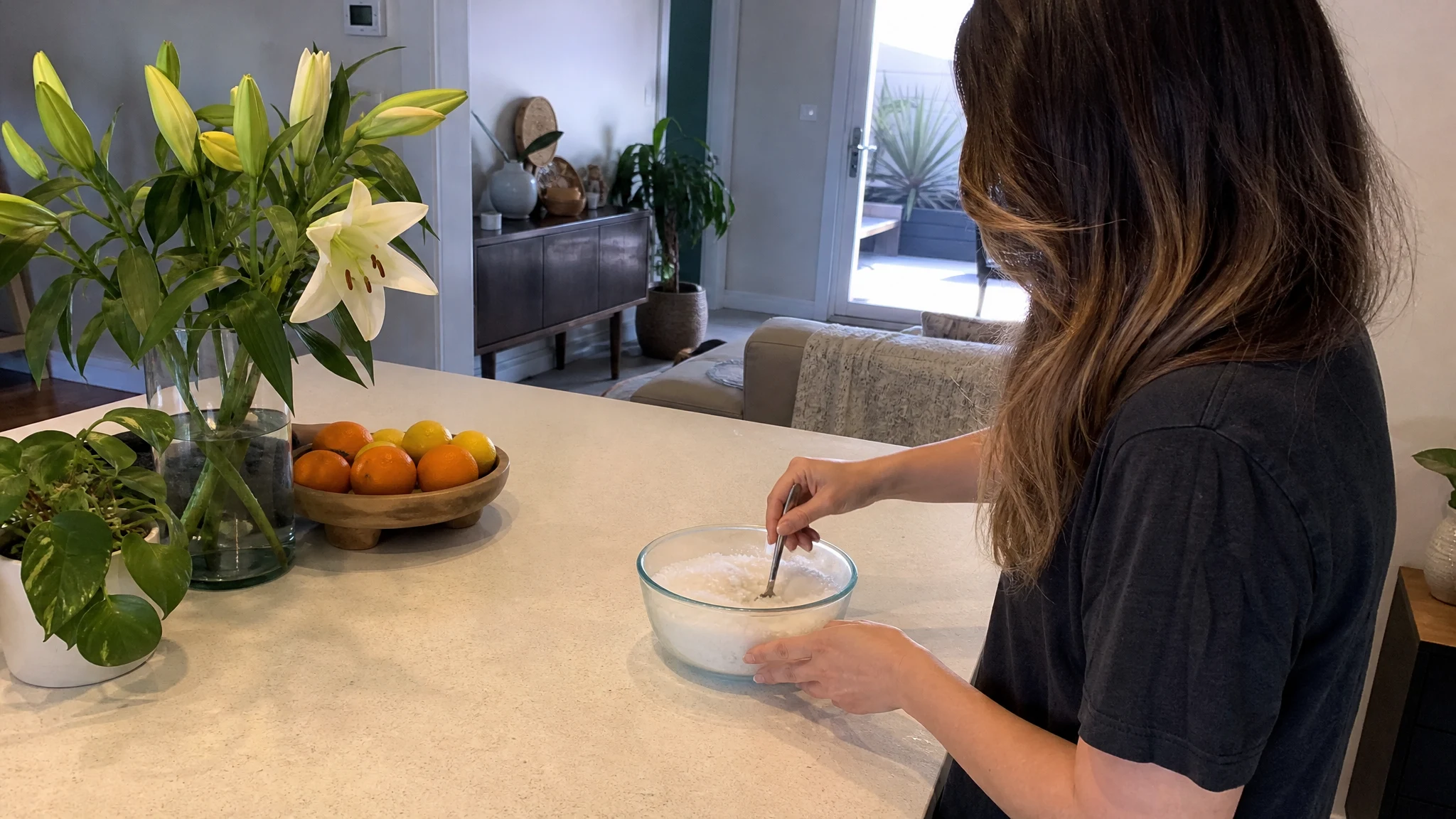
- Weigh the carrier into a glass bowl, add the fennel oil and stir for a full minute. This is the dispersal step, so do it first.
- Add the salts gradually, stirring so the oil coats the crystals instead of pooling at the bottom.
- Pack into a clean, dry jar with a tight lid. Label it with ingredients and date, and keep it out of reach of children and pets.
- Use 50 g of salts per bath, which carries 0.125 g of fennel oil, roughly 3 to 5 drops depending on the dropper.
Keep the jar dry, because moisture encourages oxidation. The carrier leaves a light film on the water, so rinse the tub afterwards and step out carefully.
Making the jar a pleasure to use
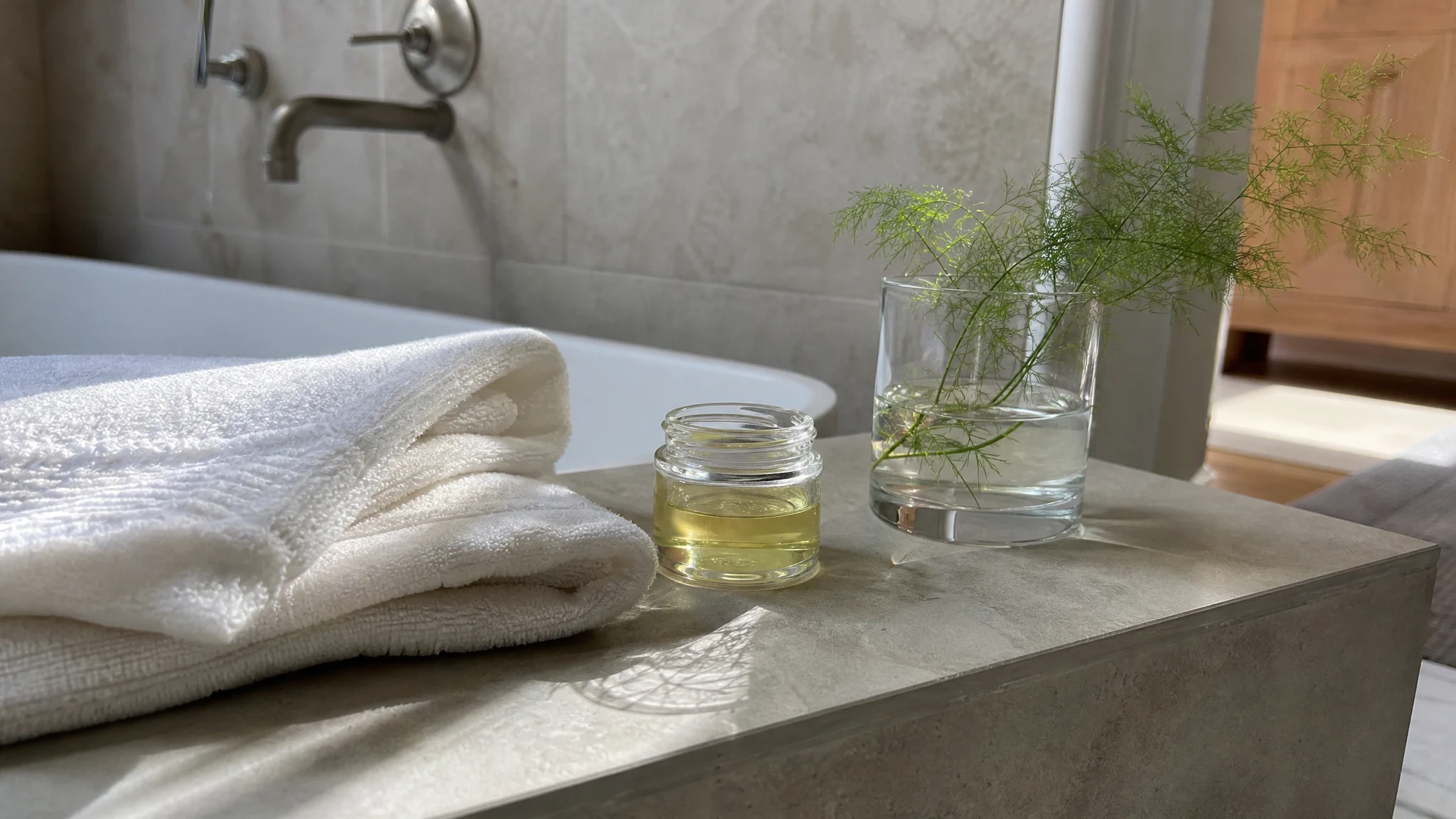
Salts are one of the nicest things to make at home because the finished jar looks as good as it smells. Coarse sea salt gives you chunky, glittering crystals, while Epsom salt looks finer and more like small shards of glass. Choose a wide-mouthed glass jar so a scoop fits easily, and tuck a small wooden or metal spoon in or beside it so no one dips wet hands into the salts.
When you open the jar, expect a sweet, anise-like first sniff that softens into something earthy and a little peppery. It is a quiet scent, which suits a bath, where the warm steam carries it for you. If you gift a jar, add a tag with the ingredients, the date and a line saying who should skip it, so the person receiving it has what they need.
Scaling it up
Keep the three shares fixed and scale the weights. A 500 g batch takes 1.25 g of fennel oil, 25 g of carrier and 473.75 g of salts. A smaller batch than 200 g makes the oil too tiny to weigh well, so make a bigger jar and share some. If you get a lot figure for estragole from us, the table above shows the limit would allow more, but we would still hold at 0.25%, since extra oil adds aroma and nothing else.
Who should skip it
We advise avoiding fennel oil entirely in pregnancy and while breastfeeding, and it is not appropriate for children. Anyone with epilepsy or an oestrogen-sensitive condition should leave it alone. EFSA treats the fennel oil it assessed as an irritant to skin and eyes, so it is better to skip the bath if your skin is eczema-prone or broken, and to get out at the first itch. The concentrated carrier and fennel mix is about 5% oil before it meets the salts, so never use it as a patch test blend. Our skin dilution guide explains the reasoning, and the blending guide explains why adding anise oils to the same salts shares the same estragole allowance.
Weigh carefully, mix thoroughly and the result is a jar of sweet, spicy salts that is well within its limits.
Fennel Essential Oil
Fennel Essential Oil from our own shop, in sizes from 0.5 oz to bulk.
From $13.99
Shop Now →Sources & Further Reading
- Tisserand Institute. Bath safety. tisserandinstitute.org
- Tisserand Institute. How big is a drop? tisserandinstitute.org
- Tisserand Institute. Oxidized essential oils. tisserandinstitute.org
- IFRA, 2020. IFRA Standard: Estragole, Amendment 49. perfumersworld.com copy
- IFRA, 2019. Guidance for the use of IFRA Standards (product categories). pimgrup.com copy
- EFSA FEEDAP Panel, 2023. Safety and efficacy of feed additives from Foeniculum vulgare (bitter and sweet fennel oil). PMC10613937
- Murphy BJ et al., 2024. Authentication of fennel, star anise and anise essential oils by GC/MS and GC/IRMS. Plants 13(2). PMC10818908