Blending Fennel Oil: How to Pick Partners and Amounts
Most advice on blending fennel oil opens with a list of oils that smell nice next to it. That is a fine second step. The first is deciding what you are making, because the product sets how much fennel it can hold, and only then does it make sense to choose a supporting cast.
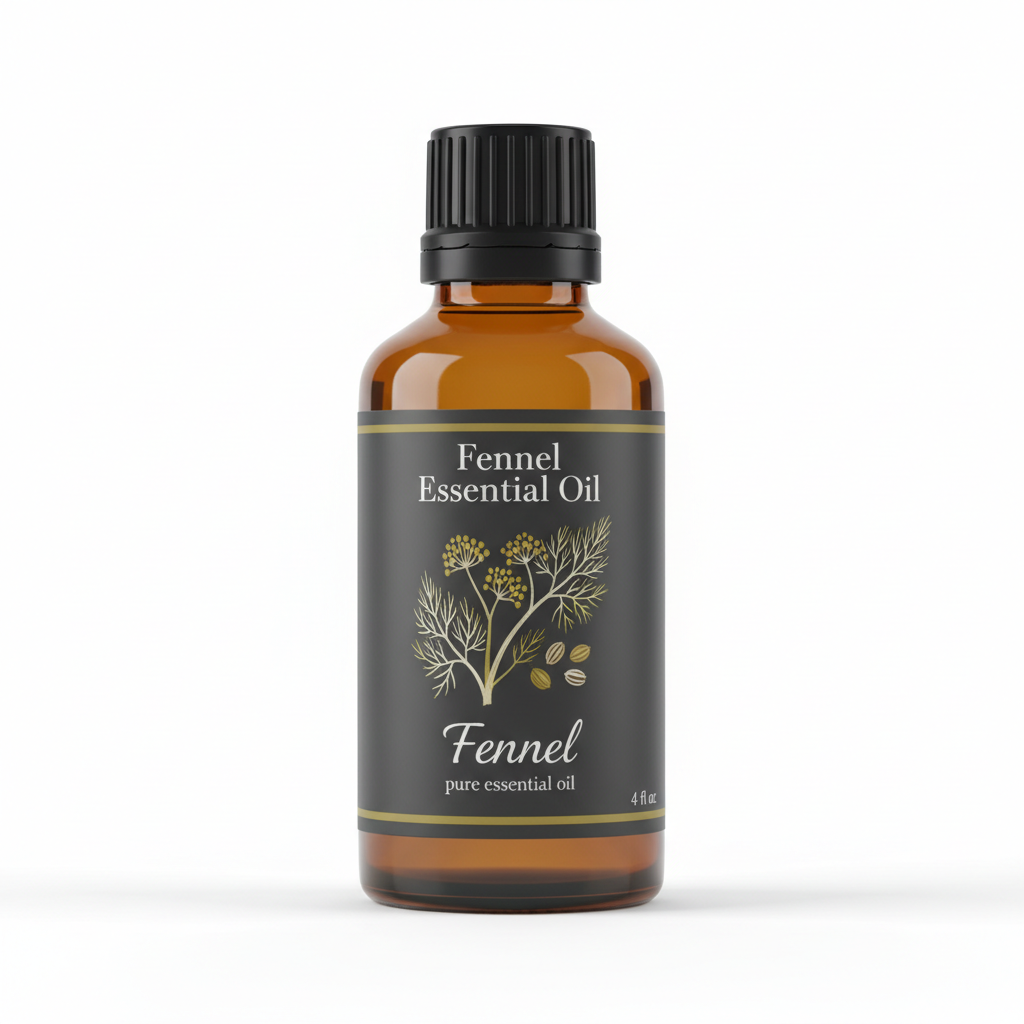
Fennel Essential Oil
Our own Fennel Essential Oil, in sizes from 0.5 oz to bulk.
From $13.99
Shop Now →Step one: find the ceiling for your product
IFRA sets a limit on estragole, a minor component of fennel oil, for each product category. Divide that limit by the estragole share of your oil and you get the most fennel oil the product can carry. It is our arithmetic on top of IFRA's numbers, it counts estragole only, and any other estragole source in the product shares the same limit. Here it is for a sweet fennel oil at 3.76% estragole (the mean of five batches in EFSA's 2023 opinion) and at 6.0% (the top of the sweet fennel range):
| What you are making | IFRA category | Estragole limit | Most oil at 3.76% | At 6.0% |
|---|---|---|---|---|
| Perfume, solid perfume | 4 | 0.42% | about 11% | about 7% |
| Body oil, cream, lotion | 5A | 0.075% | about 2.0% | about 1.25% |
| Bar soap, bath salts, bath oil | 9 | 0.050% | about 1.3% | about 0.83% |
| Reed diffuser, room spray | 10A / 10B | 0.050% | about 1.3% | about 0.83% |
Category assignments come from IFRA's guidance document, which places body oils and lotions in 5A, bar soap and bath products in 9, and candles in 12. Candles carry a much looser estragole limit of 1.5%, so for them other considerations lead. Later IFRA amendments may differ from the 2020 one we used.
Our general skin guidance is 0.5% to 2% in a carrier oil. The table shows why the top of that range suits only a lot with low estragole, and why keeping a leave-on product toward the low end is sensible. A 2024 study of authentic fennel distillates averaged 17.0% estragole, which would put a body oil near 0.44%. The only way to know where your bottle sits is the lot's report, and you can ask us for it in writing through the contact page.
Step two: do the blend arithmetic
The limit applies to fennel as a share of the finished product, not of the blend. Fennel in the product equals fennel's share of the blend multiplied by the blend's share of the product. Take 30 mL of body oil with a 2% total fragrance load, which is 0.6 mL or about 12 drops at the rough convention of 20 drops per mL. If 3 of those drops are fennel and 9 are partners, fennel is a quarter of the blend, so 25% of 2%, or 0.5% of the finished oil. That sits under the 5A ceiling for both the 3.76% and the 6.0% oil.
For soap, think in weight. A kilogram of finished bar can carry roughly 13 g of fennel oil at 3.76% estragole, and about 8 g at 6.0%. Every oil in a blend carries its own limits, so the most restricted ingredient sets the dose for the whole mix. Roller recipes with the math done live in fennel roller blend recipes, and carriers are in best carrier oils for fennel oil.
Step three: choose partners for a strong personality
Sweet fennel oil is largely anethole, so a little fennel goes a long way and a lot of it can flatten whatever sits beside it. That is a prediction from the chemistry, not a tasting note. We describe fennel as a top to middle note that blends well with lavender, rose, sandalwood, bergamot, black pepper and geranium, and citrus works nicely too. We sell fennel only, so those partners come from another supplier. For more pairing ideas read what blends well with fennel oil, and for the usual stumbles, common blending mistakes.

Let your nose have a say
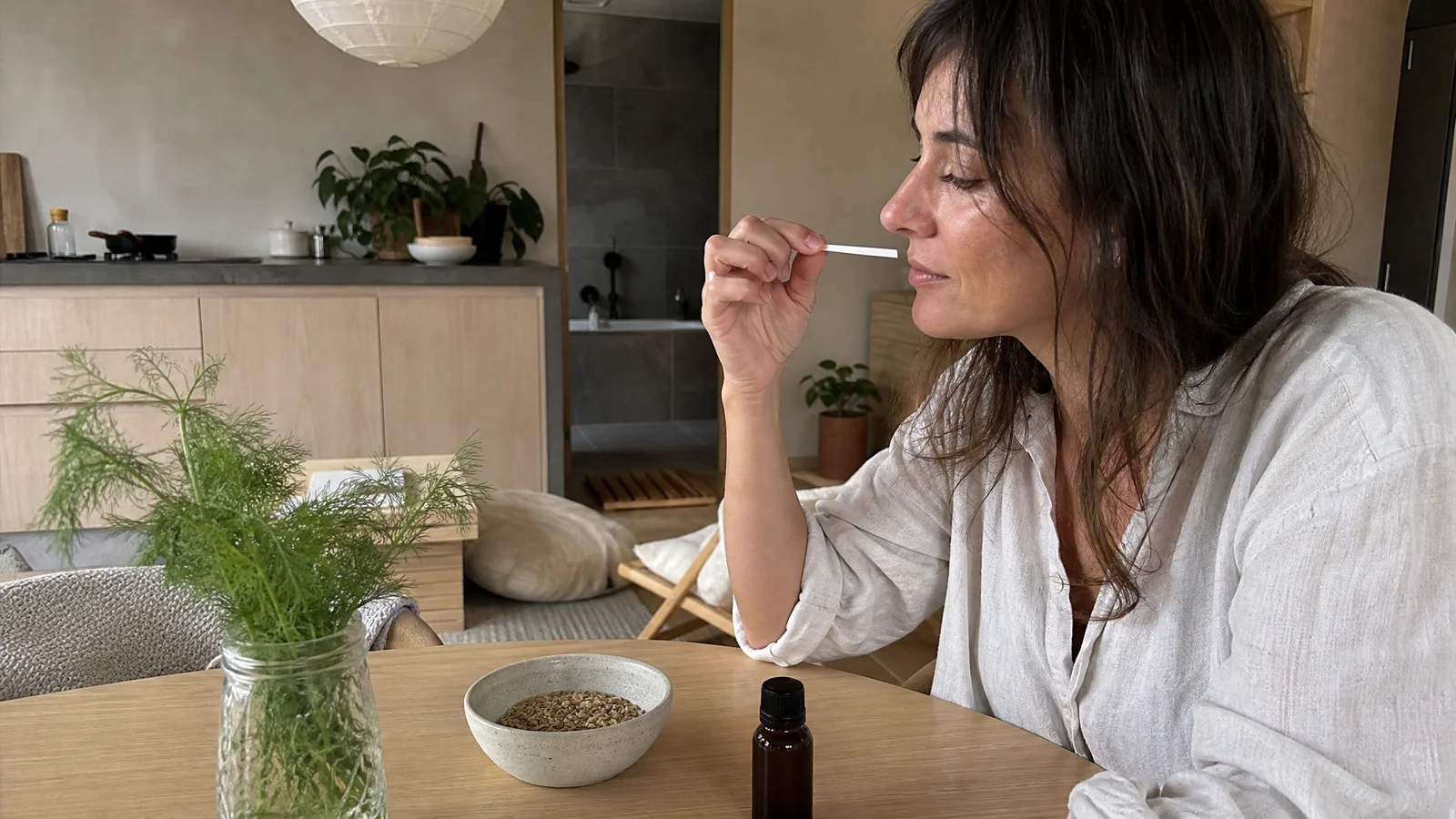
Numbers get you to a sensible amount. Your nose gets you to a blend you actually like. Put a drop of each oil you are considering on its own paper strip, wave them gently, then hold two strips together under your nose. Fennel opens sweet and anise-like, so pay attention to what happens when it meets a floral, a citrus or something peppery. Pairs that look lovely on paper sometimes fight, and pairs that seem odd can sit together beautifully.
Jot down what you notice before you mix anything, then come back to the strips an hour later. The scent keeps shifting as the brightest notes lift away, and the blend you settle on should be one you still enjoy at that second sniff.
Step four: check the use
- Skin: dilute, and patch test on a small area for 24 hours.
- Diffusing: IFRA's limits are skin limits and say nothing about diffuser timing. Tisserand Institute guidance suggests running a diffuser for 30 to 60 minutes and then pausing for the same, in a space with some air exchange.
- Soap and bath: category 9 is the tightest column above. See making cold process soap with fennel oil.
- Who should skip it: we say to avoid fennel oil entirely in pregnancy and breastfeeding and not to use it with children. Pets are covered in fennel oil around dogs and cats. A physician or pharmacist can speak to your own situation.
One recommendation from us, as people who love working with this oil: start every new blend at half the fennel you think you want. It is far easier to add a little more than to rescue a blend that has tipped into licorice.
The order is the whole point: product, ceiling, arithmetic, partners. Get the lot's figures first and every number above falls into place. If you want to try the oil, our shop lists the sizes we sell, bulk sizes have their own page, and our guide to buying fennel essential oil in bulk explains how bulk buying works.
Fennel Essential Oil
Fennel Essential Oil from our own shop, in sizes from 0.5 oz to bulk.
From $13.99
Shop Now →Sources & Further Reading
- IFRA, 2020. IFRA Standard: Estragole (Amendment 49). https://www.perfumersworld.com/documents/Project-Templates/IFRA-Standards/Estragole.pdf
- IFRA, 2019. Guidance for the use of IFRA Standards (list of product categories). https://pimgrup.com/wp-content/uploads/2021/01/List-of-IFRA-categories.pdf
- EFSA FEEDAP Panel, 2023. Safety and efficacy of feed additives from Foeniculum vulgare Mill. ssp. vulgare: bitter fennel oil and sweet fennel oil. https://pmc.ncbi.nlm.nih.gov/articles/PMC10613937/
- Murphy BJ et al., 2024. Authentication of Fennel, Star Anise, and Anise Essential Oils by GC/MS and GC/IRMS. Plants 13(2). https://pmc.ncbi.nlm.nih.gov/articles/PMC10818908/
- Tisserand Institute. Safety guidelines. https://tisserandinstitute.org/safety-guidelines/