What Blends With Fennel Oil? Pairings That Work
The usual answer to "what blends with fennel?" is a list of twelve oils and a compliment for each. A more useful answer starts with how fennel behaves: it is a strong, sweet, anethole-led oil, so the best partners either contrast with it or sit quietly beneath it. Our own pairing list is lavender, rose, sandalwood, bergamot, black pepper and geranium, along with citrus. Here is why those work, and where to take extra care.
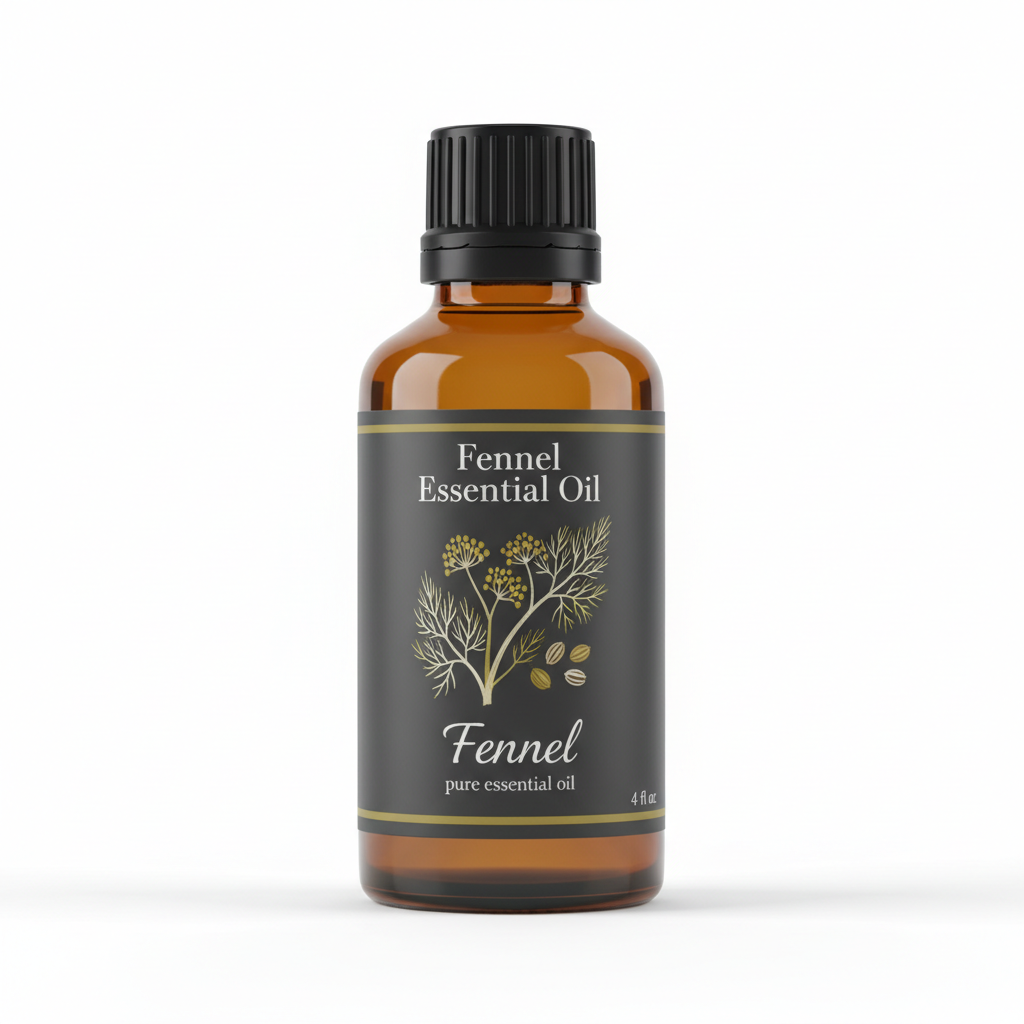
Fennel Essential Oil
Our own Fennel Essential Oil, in sizes from 0.5 oz to bulk.
From $13.99
Shop Now →Citrus: the easy, bright match
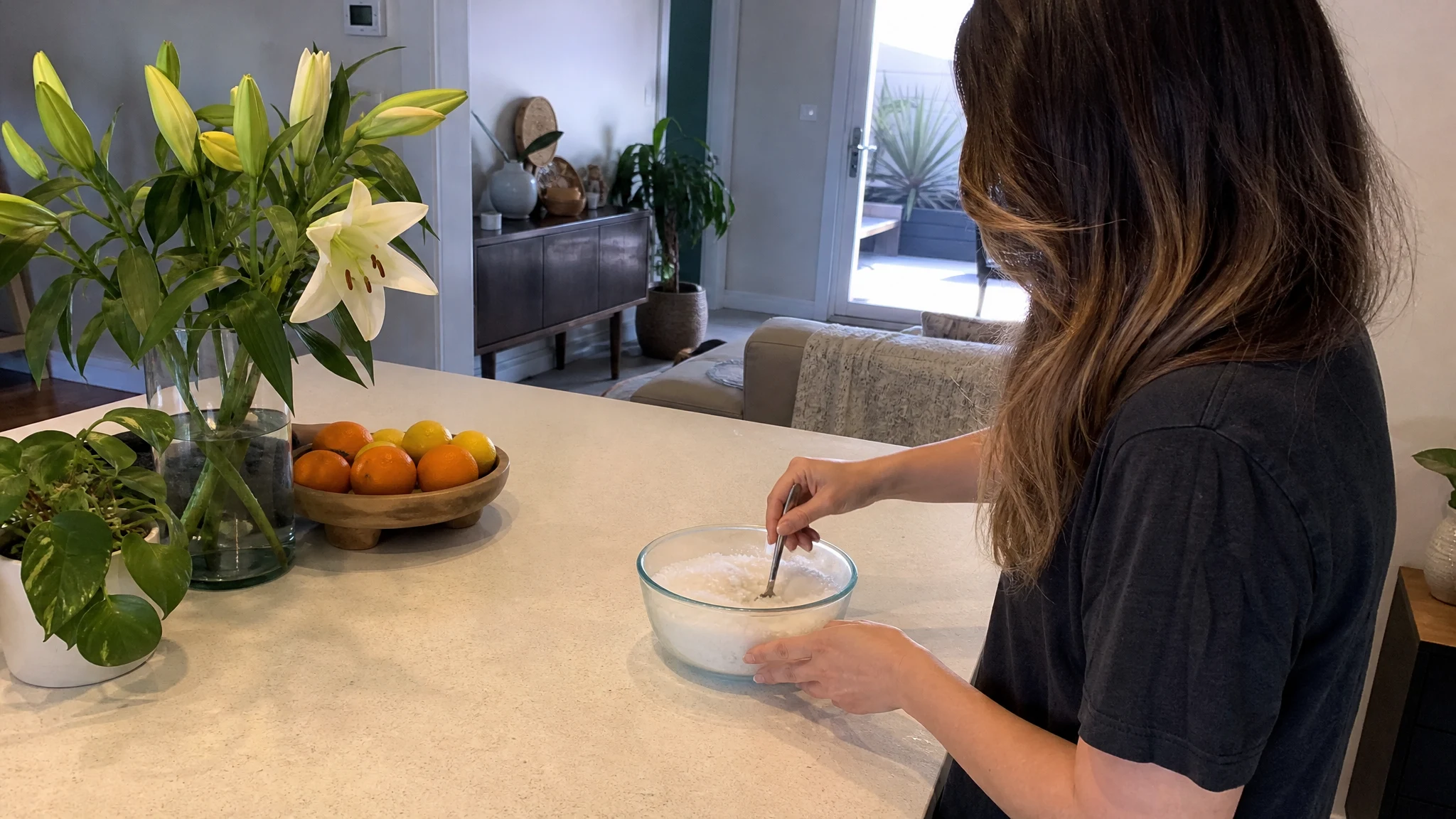
Citrus oils are mostly limonene, which shares almost no compounds with fennel's anethole. Expressed sweet orange oil is 93 to 97 percent limonene in the EFSA specification (EFSA FEEDAP Panel, 2021). That clean, sunny top sits happily over fennel's sweetness, and orange is the most forgiving place to begin.
Citrus is not all alike where light is concerned. The Tisserand Institute says sweet orange is generally thought not to be phototoxic even if expressed, expressed grapefruit generally contains bergapten and is slightly phototoxic, and bergamot FCF, the furocoumarin-free type, is not. Distilled citrus oils are not phototoxic (Tisserand Institute, citrus comparison). If a blend may touch skin, ask your supplier which type you are buying. Fresh bottles also matter, because limonene forms sensitising hydroperoxides in air.
Lavender and the florals
Lavender is mostly linalool and linalyl acetate, molecules with little in common with anethole, which is why we find it contrasts so nicely with fennel. Buy it from a seller who can show a report, since a 2026 study of four Cairo-market lavender oils found linalool anywhere from 10.9 to 33.6 percent, with two flagged as possibly diluted (Abouelela et al., 2026). A tightly capped, recent bottle is best, as linalool also oxidises into a hydroperoxide that sensitises: 3.1 percent of 6,719 patch-tested Danish patients reacted to it (Botvid et al., 2026).
Rose, geranium and sandalwood soften fennel in a different way, adding a creamy, rounded body. When buying "rose," check whether you are getting an absolute, an otto or a fragrance oil, because a small, cheap bottle can be any of them. For the fragrance question see essential oil versus fragrance oil.
Black pepper and the spice oils
Black pepper is on our list and is a natural fit: its dry warmth echoes fennel's peppery dry-down. Cinnamon bark and clove are tempting for autumn blends, but they ask for a lighter hand. The Tisserand Institute names them, with lemongrass, among the oils more likely to cause skin reactions (Tisserand Institute, safety guidelines). Keep them to a small share and take their limits from whoever sells them. We sell only fennel, so those partners come from another supplier.
The look-alikes to count carefully
Anise, star anise and caraway seem like natural partners because they share fennel's spice-seed character. They overlap with fennel more than they complement it, so we treat them as one pool.
Anise and star anise are also anethole-led, with estragole of their own: ISO ranges are 0.5 to 3.0 percent estragole for anise and 0.6 to 6.0 percent for star anise (Murphy et al., 2024). A fennel and star anise blend therefore draws on two sources of the same restricted compound. As a quick sum, at 0.5 percent each with both at 6 percent estragole, a body product holds 0.06 percent estragole, under the 0.075 percent IFRA limit for body oils and creams. At 1 percent each it holds 0.12 percent, over it (IFRA Standard: Estragole, Amendment 49, 2020). That is our arithmetic, and later amendments may differ. For the comparison between the cousins, see fennel versus anise oil.
Try a pairing on paper first
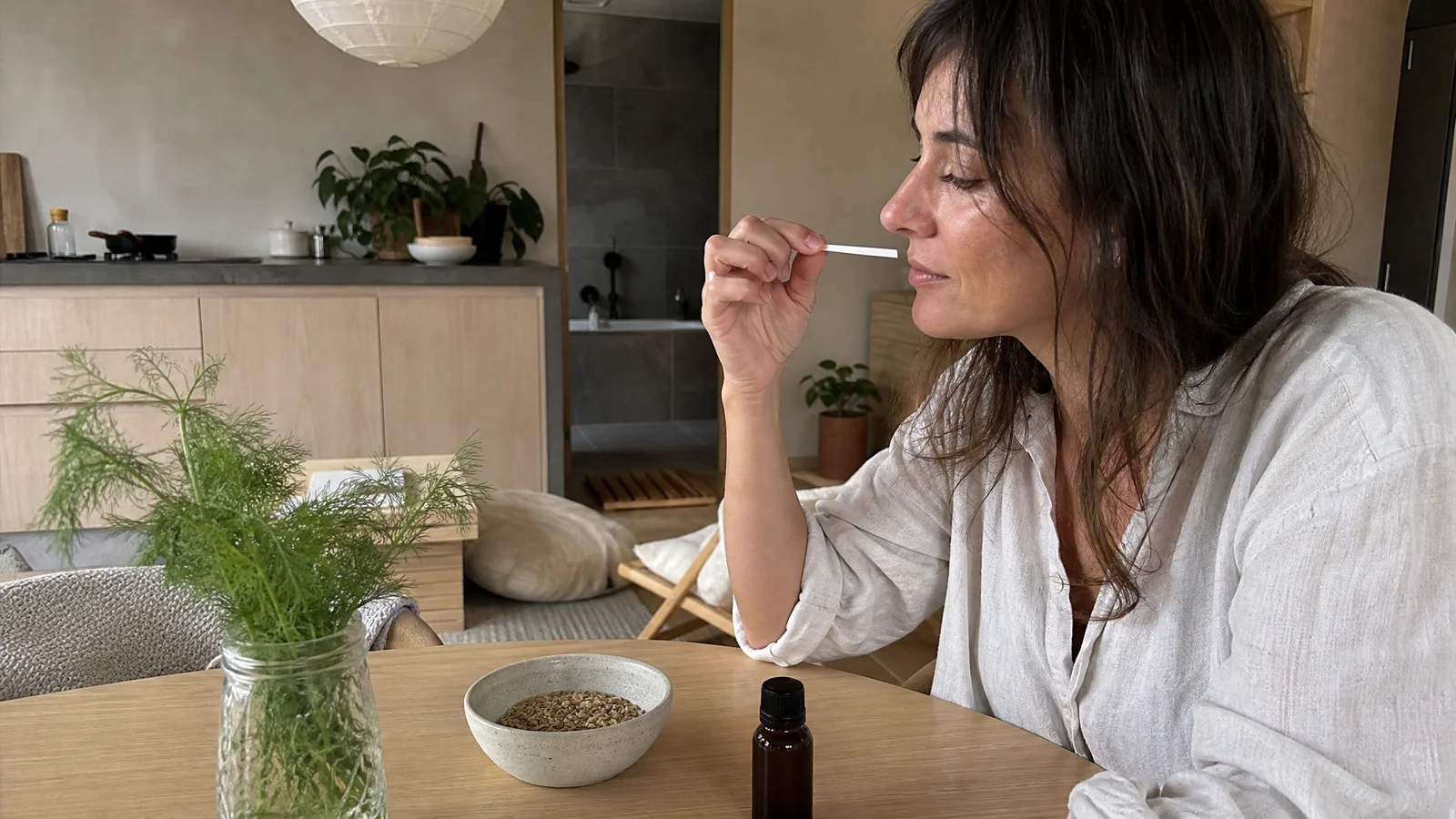
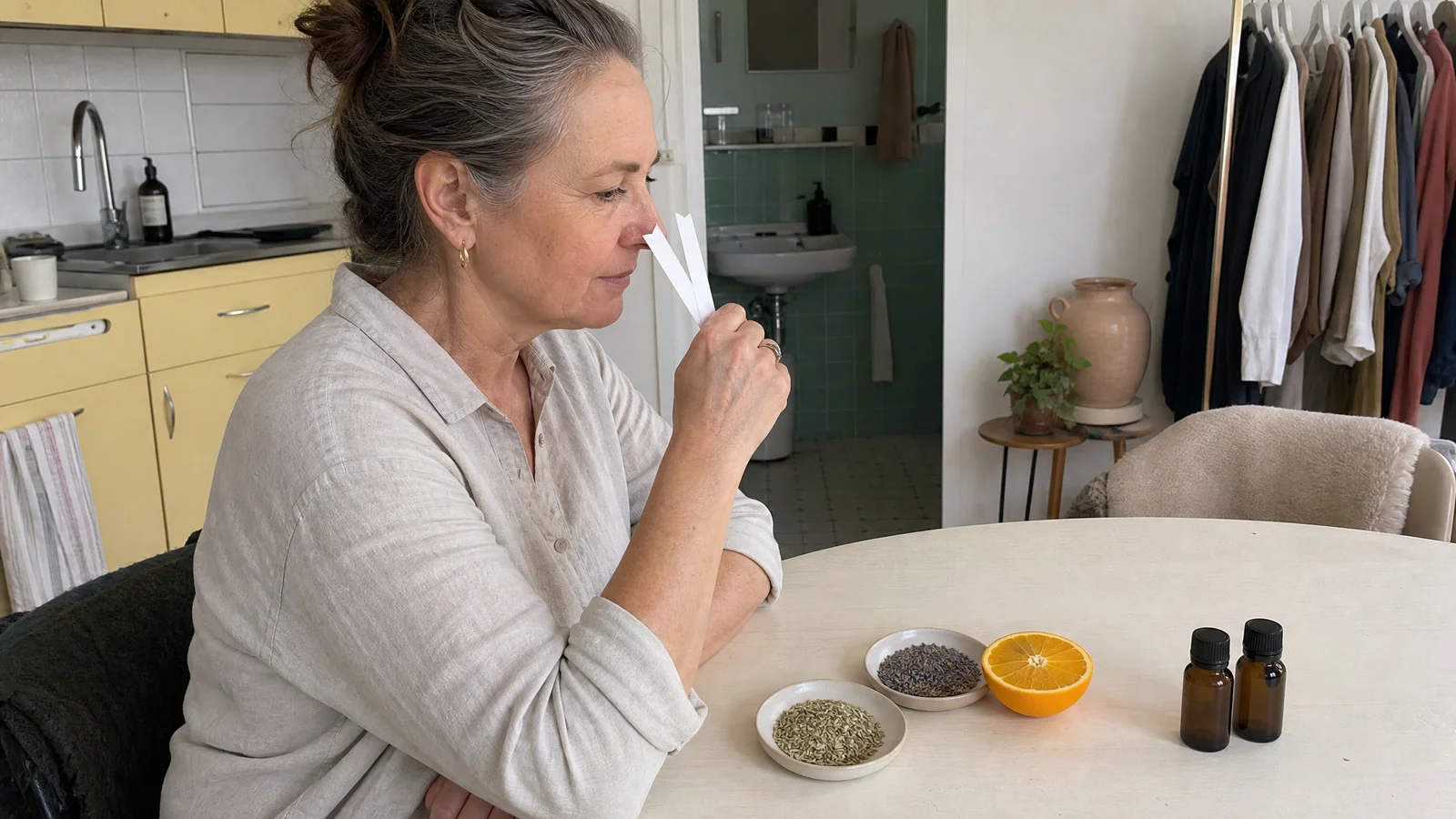
Before you commit a precious bottle to a blend, test the idea on paper strips. Put one drop of fennel on one strip and one drop of the partner on another, then hold them together a few centimetres from your nose and wave them gently. If you like the overlap, you have a pairing worth planning. If one oil buries the other, you have learned something cheaply.
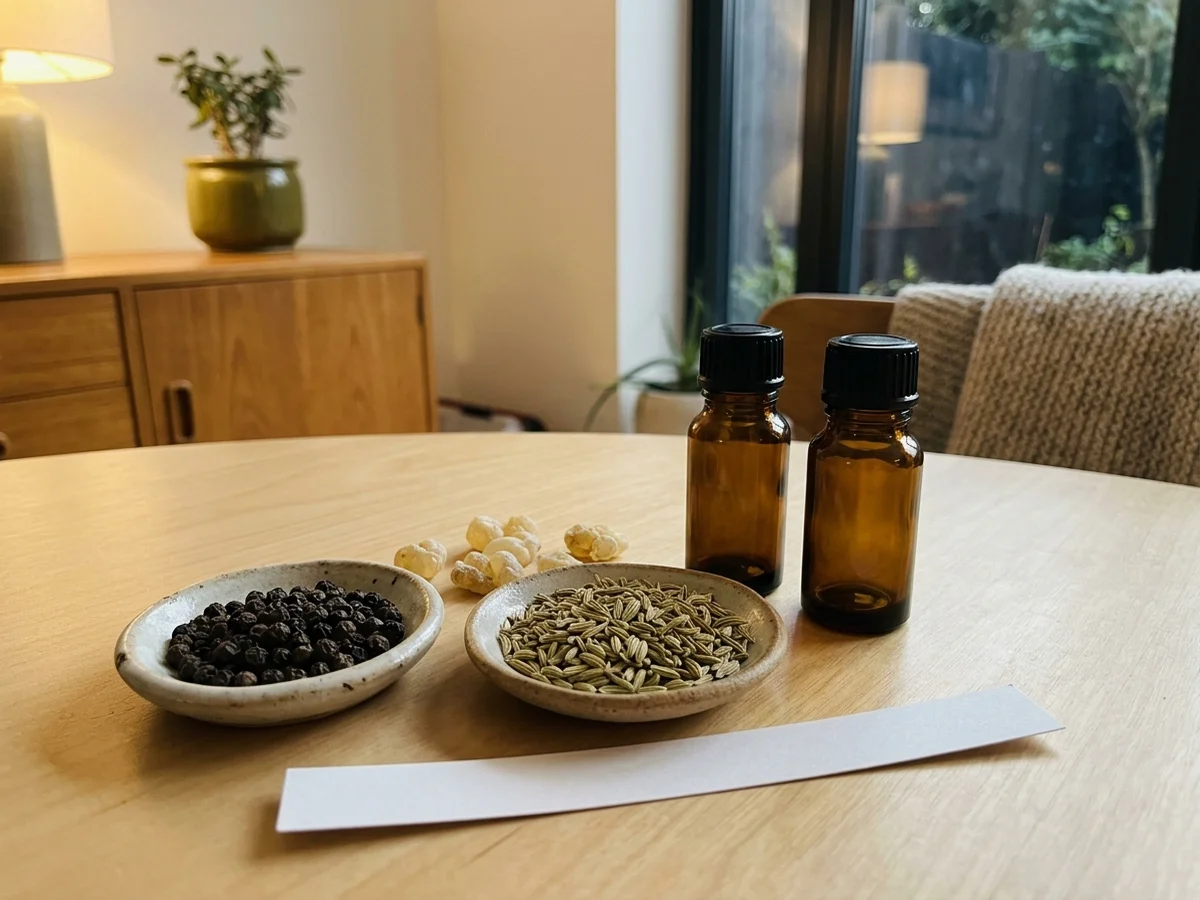
Give it time, too. Smell at the start, after ten minutes and again an hour later. Fennel opens sweet and anise-like and then shifts toward earthy, peppery layers, so a blend can read quite differently as it settles. Write down what you notice, in your own words, next to the date.
Think of fennel as the spice in the recipe
The mental picture that works for us is a cook's. Fennel is the pinch of spice, not the main ingredient. Lavender, citrus or a rose-type floral make up the body of the dish, and fennel gives it a sweet, warm accent. When a blend goes wrong, it is usually because the accent has taken over the plate.
Choosing in order
- Decide what you are making, since limits differ by product.
- Choose a lead from different chemistry: a citrus or a linalool-rich floral.
- Count any anise-family partner together with the fennel.
- Keep fennel to a minority share. Anethole averaged about 78 percent in five EFSA sweet fennel batches (EFSA FEEDAP Panel, 2023), so it carries a long way.
- Use fresh bottles, and buy partners with reports when you can.
When a blend smells off, the cause is usually somewhere in that list, and common mistakes when blending with fennel goes through the symptoms. Ready-to-mix ideas are in fennel diffuser blends.
A note for shared homes
Our How It's Made page says to avoid fennel oil entirely in pregnancy and breastfeeding, that it is not appropriate for children, and that people with an oestrogen-sensitive condition or epilepsy should leave it alone. No partner oil changes that. A physician or pharmacist can say whether it applies to you. If you need anethole and estragole figures for our oil before building a blend around it, ask us in writing through the contact page.
Pick a partner with a different personality from fennel and give it the larger share, and most of these pairings will work. When you are ready to order, the shop has our current sizes, the bulk page covers larger quantities, and how bulk buying works is set out in our fennel essential oil bulk guide.
Fennel Essential Oil
Fennel Essential Oil from our own shop, in sizes from 0.5 oz to bulk.
From $13.99
Shop Now →Sources & Further Reading
- EFSA FEEDAP Panel, 2021. Safety and efficacy of expressed sweet orange peel oil and its fractions from Citrus sinensis
- EFSA FEEDAP Panel, 2023. Safety and efficacy of feed additives from Foeniculum vulgare (bitter and sweet fennel oil)
- Tisserand Institute. Citruses: a comparison of different oils
- Abouelela MB et al., 2026. Adulteration and quality variations in commercial lavender essential oils from the Egyptian market. Sci Rep
- Botvid S, Sogaard R, Schwensen JFB, Johansen JD, 2026. Ten years of patch testing to hydroperoxides of limonene and linalool. Contact Dermatitis 94(5):504-514
- Tisserand Institute. Safety guidelines
- Murphy BJ et al., 2024. Authentication of Fennel, Star Anise, and Anise Essential Oils by GC/MS and GC/IRMS. Plants 13(2):214
- IFRA, 2020. IFRA Standard: Estragole (Amendment 49)