Fennel Oil Blending Mistakes: 7 Slips and Simple Fixes
Fennel is the oil that walks into a blend and takes over the conversation. That is a lot of its charm and also the root of most blending slips. Here are seven that are easy to make, and what to do differently.
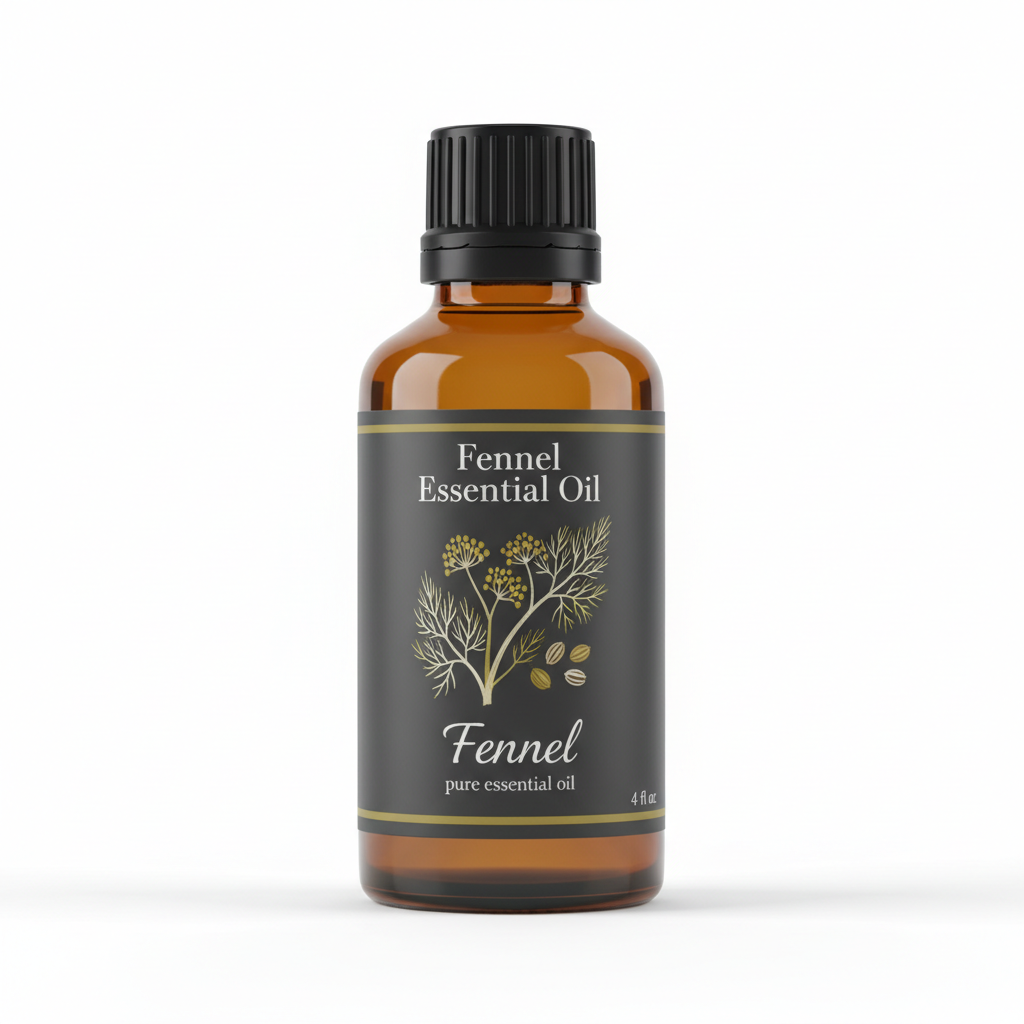
Fennel Essential Oil
Our own Fennel Essential Oil, in sizes from 0.5 oz to bulk.
From $13.99
Shop Now →1. Giving fennel a big share
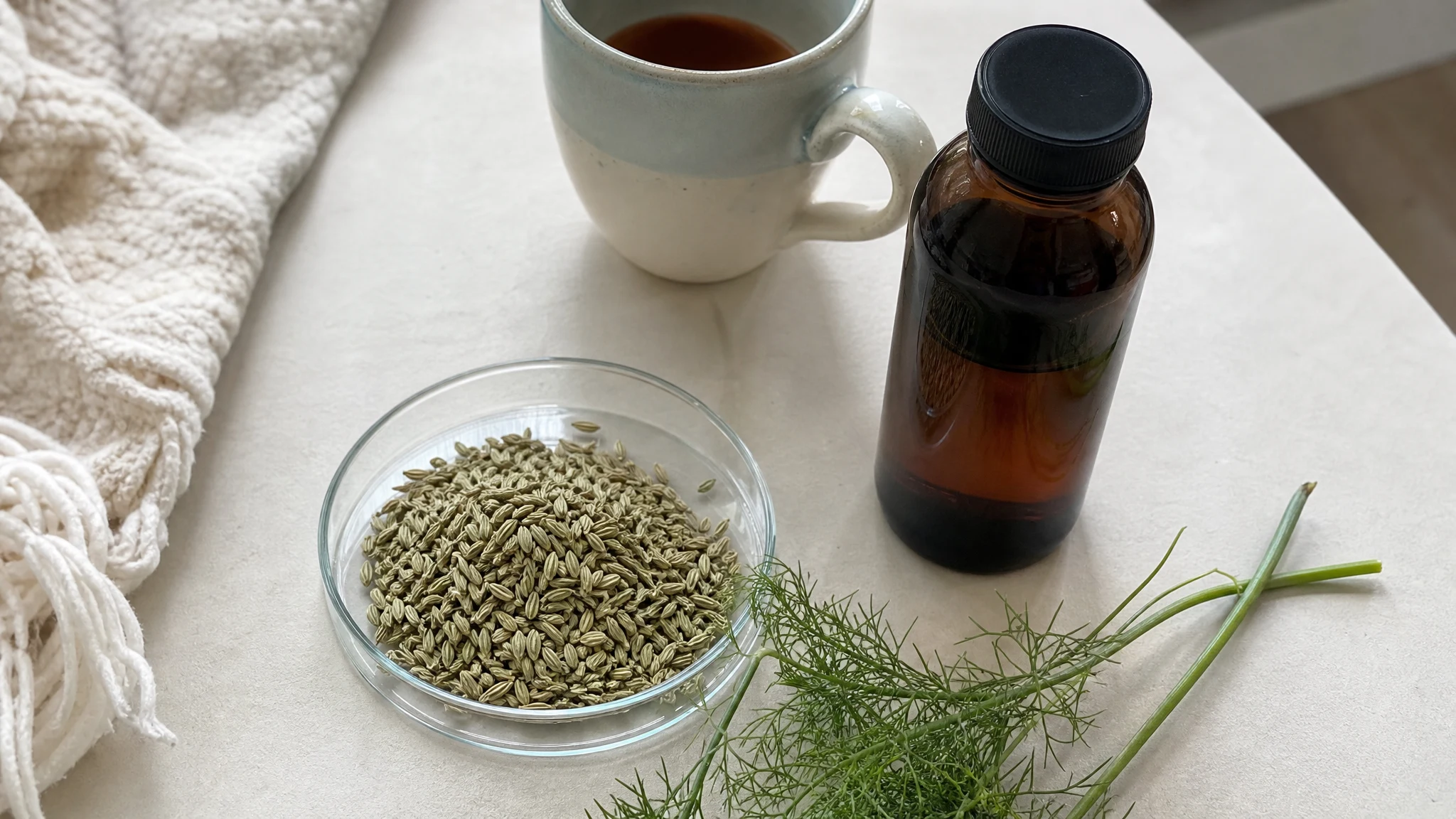
Fennel is mostly one molecule. EFSA's specification for sweet fennel oil is 60 to 82% trans-anethole, and its five analysed batches averaged 77.7% (EFSA FEEDAP Panel, 2023). An oil that is three-quarters one aroma will dominate at small shares. The fix is a smaller share, not a bigger supporting cast. We describe the aroma as sweet and anise-like, settling into earthy and peppery layers, and we like it with lavender, rose, sandalwood, bergamot, black pepper, geranium and citrus. If a draft is too sweet, halve the fennel and leave everything else alone.
2. Counting drops
Drops vary. The Tisserand Institute summarises three studies finding 20 to 40 drops per mL depending on the dispenser (How big is a drop?). For a bedside blend that is fine. For a dominant oil in a 10 mL bottle it means a one-drop difference moves you a third to a half of a percentage point. Weigh instead: our batch certificate gives a relative density of 0.975, so 1 g of oil is about 1.03 mL. Record weights, not drops. Fennel roller blend recipes shows the arithmetic.
3. Treating 2% as a universal ceiling
Our dilution guidance is 0.5% to 2% in a carrier oil, and for fennel we would begin at the low end. IFRA's estragole standard gives 0.075% for body oils and lotions and 0.050% for soap, bath products and air fresheners (IFRA Standard: Estragole, Amendment 49; later amendments not checked). Divided by the oil's estragole share, a body oil tops out near 2.0% at 3.76% estragole, near 1.25% at 6.0%, and near 0.44% at the 17.0% average found in a 2024 study of authentic distillates (Murphy et al., 2024). So the right number depends on the lot, and you can ask us for the estragole figure through the contact page.
4. Stacking the licorice oils
Fennel, anise and star anise smell related, so they get combined, and they share estragole. The 2024 study cites ranges of 2.0 to 6.0% for sweet fennel, 0.5 to 3.0% for anise and 0.6 to 6.0% for star anise. A body oil with 0.5% each of fennel and star anise at 6.0% estragole carries 0.06%, near the 0.075% limit; at 1% each it carries 0.12%, which is over. Count estragole across every oil, not per oil. We sell only fennel, so figures for the others come from their sellers, and fennel oil vs anise oil covers the comparison.
5. Assuming a variety name settles the chemistry
"Sweet" names a variety, not a guaranteed composition. The EMA's 2024 assessment report notes some chemotypes with under 50% anethole and over 30% each of fenchone and estragole (EMA/HMPC, 2024). We describe our oil as sweet fennel, and for variety-sensitive work, ask for the lot report and read it. Sweet vs bitter fennel oil goes deeper.
6. Keeping a blend too long
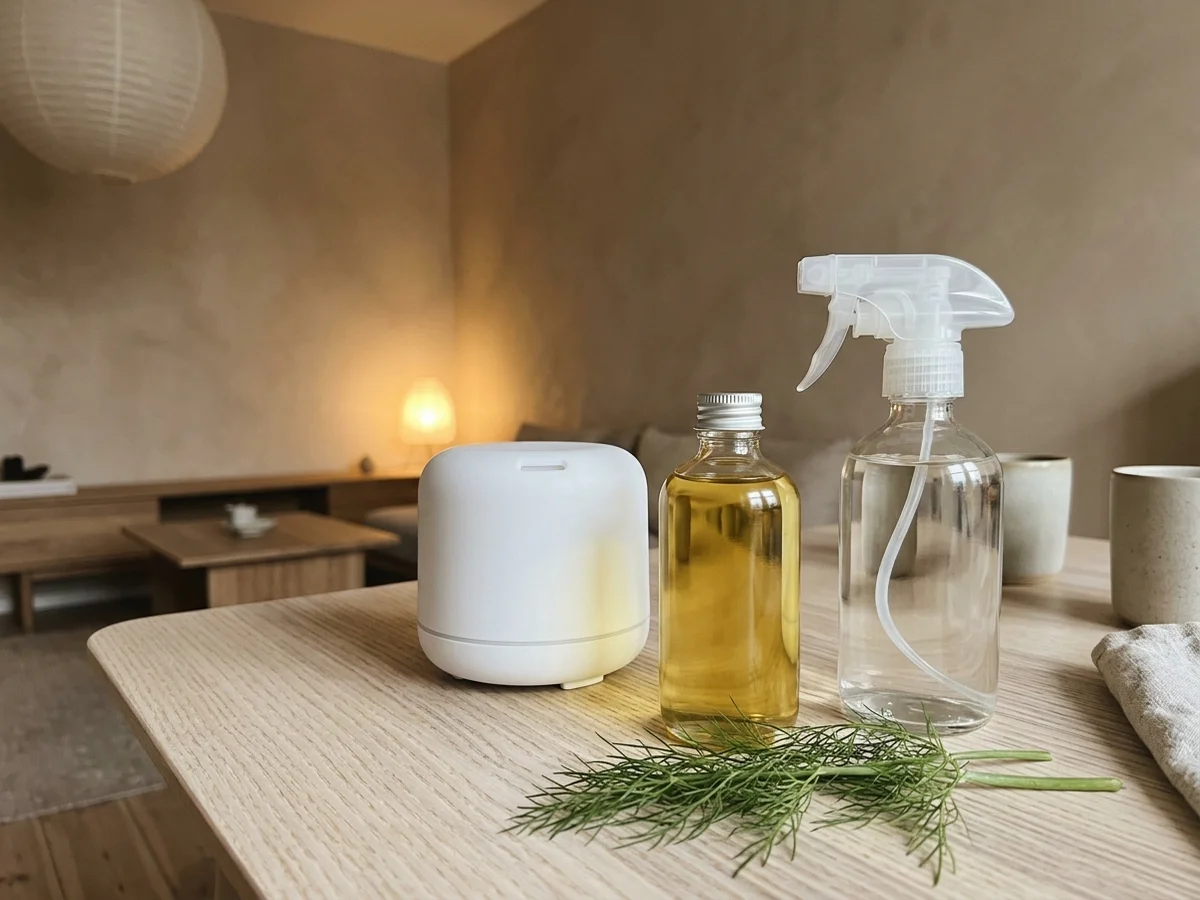
Fennel's main compound is sensitive to its surroundings. A review of essential oil stability reports that sweet fennel's trans-anethole was converted to other compounds after two months at room temperature under light, while fennel kept much better under nitrogen (Turek and Stintzing, 2013). In practice, make small batches, use amber glass, keep them cool and dark, label the date, and take the earliest best-by date of any ingredient as the blend's. More in how to store fennel oil.
7. Mixing oil with water
Oils do not dissolve in water. The Tisserand Institute's guidance on sprays says oils need 95 to 100% ethanol to be taken into water-based products, and that cheap vodka will not do (Effective Use of Alcohol for Aromatic Blending). Keep blends oil-in-oil unless you are following a formula built for water, like our room spray.
If a blend goes wrong, do not pour it away in frustration. Note what tipped it, make a half-batch with less fennel, and compare the two side by side. Mistakes in blending are cheap teachers, and each one makes your next vial better.
A habit that prevents most of them
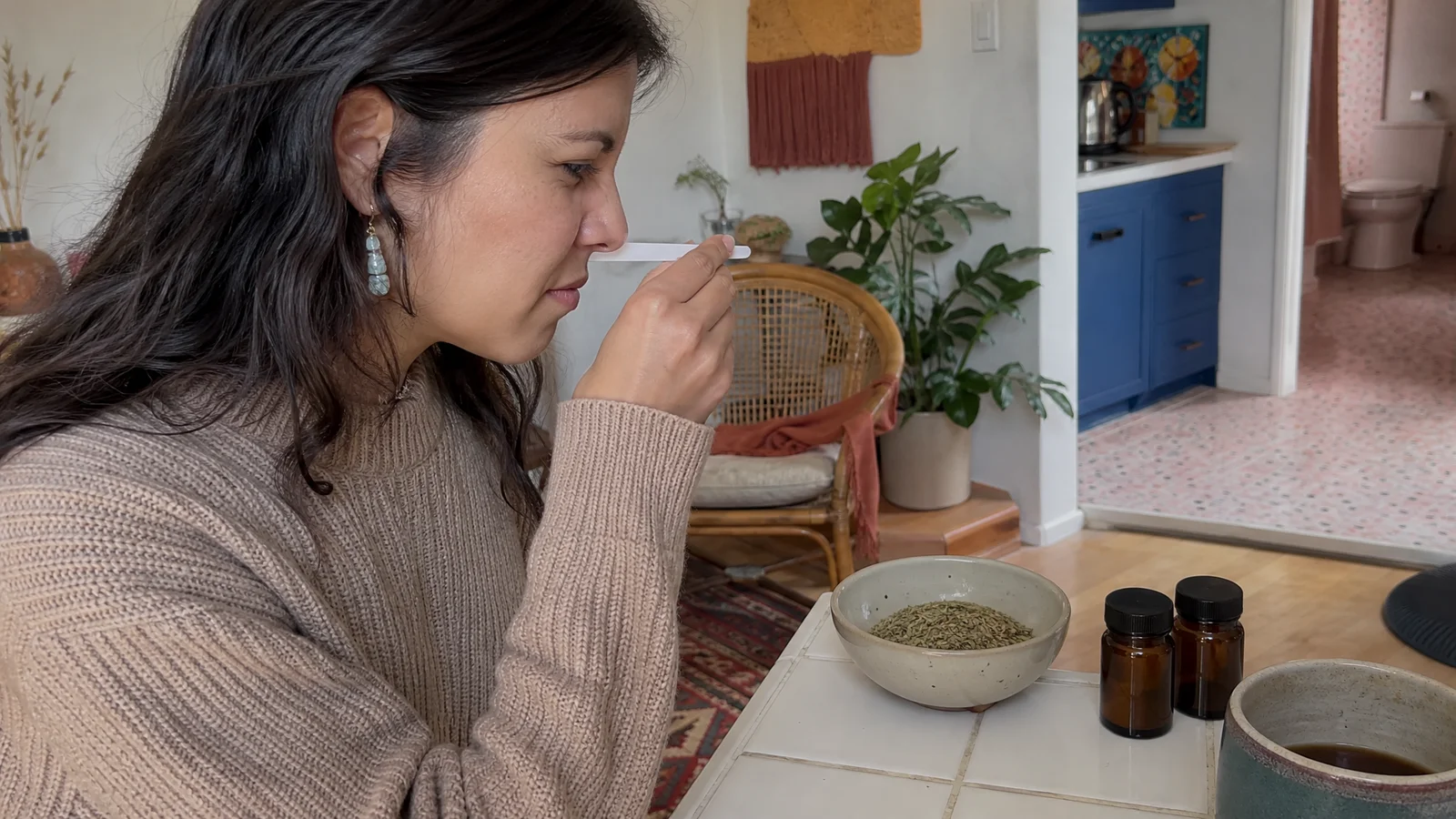
Keep a small notebook next to your oils. For each blend write the parts, the date and one honest line about how it smelled. Then smell it again the next morning with a fresh nose, because your impression after several minutes of sniffing is not reliable. Over a few weeks the notebook becomes the best guide you own: you will see which shares worked, which partners you reach for again, and where fennel started to take over.
It is also a kind way to treat your own enthusiasm. Fennel is easy to love, and the notebook gently reminds you that a smaller amount is usually the better one.
One last point about who a blend is for. Our How It's Made page says to avoid fennel in pregnancy and breastfeeding, that it is not for children, and that people with an oestrogen-sensitive condition or epilepsy should leave it alone. A gift or shared diffuser reaches people you have not asked, so keep fennel out of those, and check with a physician or pharmacist for specific cases.
Blend small, weigh everything, and let fennel be the star in a short cast.
Fennel Essential Oil
Fennel Essential Oil from our own shop, in sizes from 0.5 oz to bulk.
From $13.99
Shop Now →Sources & Further Reading
- EFSA FEEDAP Panel, 2023, essential oils from Foeniculum vulgare
- Tisserand Institute, How big is a drop?
- IFRA Standard: Estragole, Amendment 49 (2020), copy
- Murphy et al., Authentication of Fennel, Star Anise, and Anise Essential Oils, Plants, 2024
- EMA/HMPC, Assessment report on Foeniculum vulgare fructus, 2024
- Turek C, Stintzing FC. Stability of essential oils: a review. Compr Rev Food Sci Food Saf, 2013
- Tisserand Institute, Effective Use of Alcohol for Aromatic Blending