Does Fennel Oil Help You Lose Weight? What Studies Say
It starts with a cup of tea. A small Korean study found that fennel tea made some women feel fuller, and within a few steps that became "fennel oil melts belly fat". Following the trail is a good lesson in how a modest finding can grow.
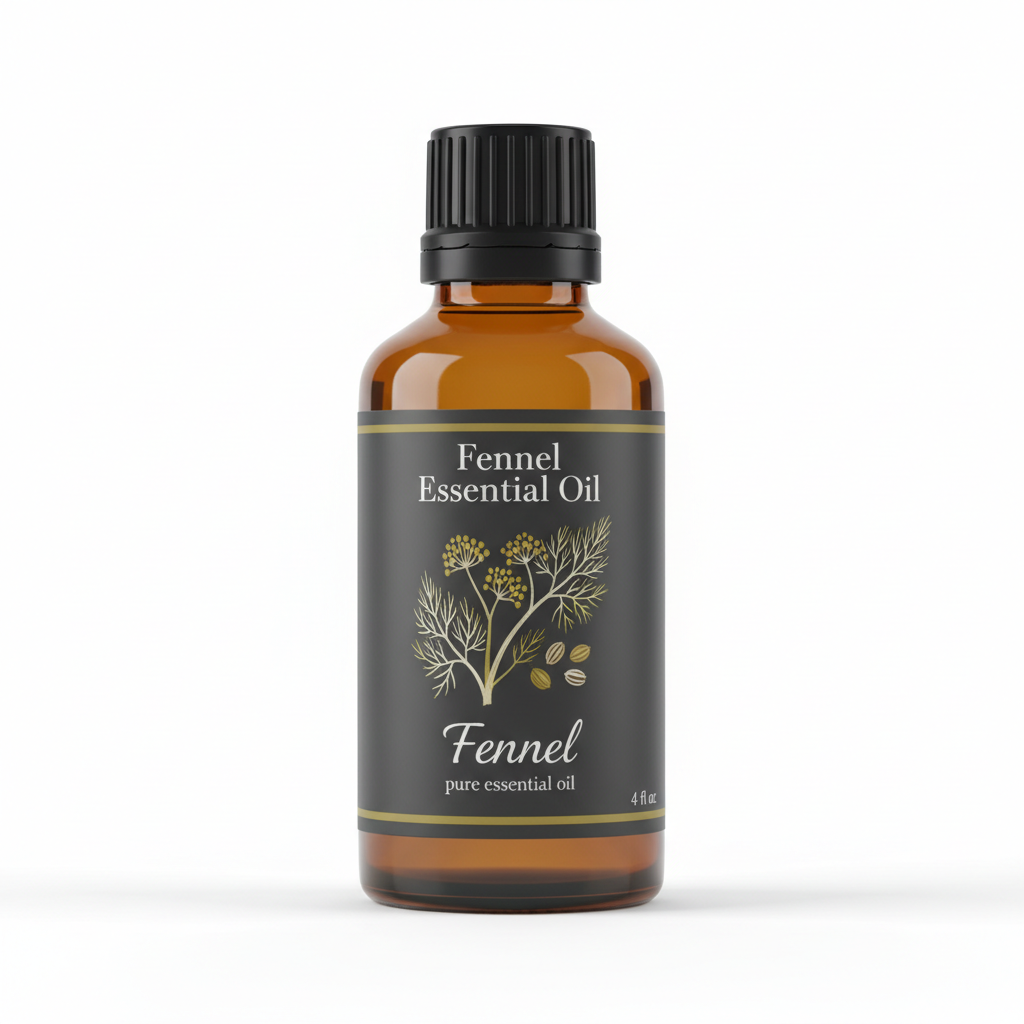
Fennel Essential Oil
Our own Fennel Essential Oil, in sizes from 0.5 oz to bulk.
From $13.99
Shop Now →The study at the start
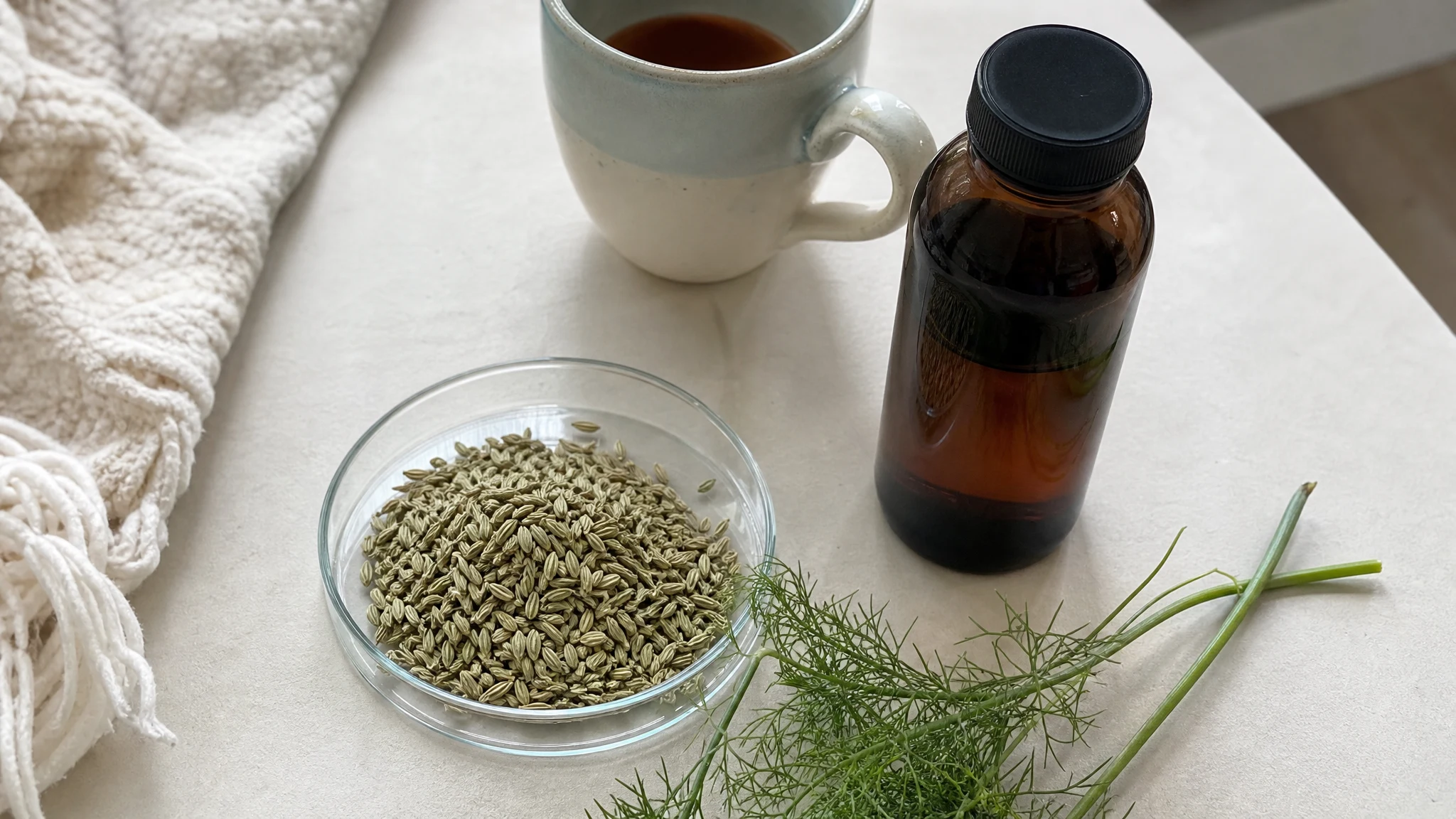
In a 2015 trial, nine women took part in a three-way crossover: fennel tea, fenugreek tea or a placebo tea, each followed by a lunch buffet. Food eaten at the buffet did not differ between teas. On hunger and fullness scales, though, fennel tea lowered hunger and raised fullness compared with placebo (Bae et al., 2015). It is an appealing result and a small one. Nine people, one session each, feelings rather than food intake, and a water infusion rather than an essential oil.
The test that looked at weight
Later, researchers followed up in postmenopausal women with excess weight, in a double-blind, placebo-controlled trial. Among 47 women in the analysis, 22 on fennel and 25 on placebo, the groups did not differ on body weight, BMI, waist, hip or fat distribution. The fennel group saw a slight, non-significant rise (Saghafi et al., 2017). It was a small study of oral capsules, but it was a direct test of the claim, and it came out flat.
How a tea study became a skin claim
Each step stretches the evidence. Feeling fuller is not eating less, and eating less is not losing weight over months. Tea is not oil. Swallowing is not rubbing on skin or breathing a diffuser. And none of it turns into a marketing line without help.
The US Federal Trade Commission is blunt about the last step: "Nothing you can wear or apply to your skin will cause you to lose weight. Period." It lists "lose weight with this patch or cream" among the false promises to watch for (FTC, The truth behind weight loss ads, 2025). That settles the skin question for us.
Three questions for any weight-loss claim
Fennel is not the only plant that gets stretched this way, so it helps to carry a short checklist. Next time you see a bold line on a bottle or a product page, ask:
- What was actually studied? A tea, a capsule, a seed extract and a bottle of essential oil are four different things.
- What was measured? Feeling full for an afternoon, food eaten at one meal and weight over many weeks are three different results.
- Who is making the claim? A page that cites its study and says what it did and did not find is a good sign. A page that only repeats a slogan is not.
Run fennel's story through those three questions and the claim loses its footing quickly.
Why we steer away from swallowing
People chasing the appetite effect usually think of drinking fennel, and our oil is not meant for internal use. Our guidance is clear on that, and our guide to swallowing fennel oil explains the thinking. The tea studies above used a water infusion of the fruit, which is a different material from the concentrated oil, and extrapolating from one to the other is not something we would do.
What we say about our bottle
We sell a steam-distilled fennel essential oil, bottled undiluted, in amber glass. It is for aroma and diluted skin use, and we make no weight claim for it. If you enjoy a fennel-scented belly rub, that is a pleasant ritual, not a weight-loss method, and our abdominal massage guide covers the practical side. Our guidance is 0.5% to 2% in a carrier with a patch test, and we recommend avoiding it entirely in pregnancy and breastfeeding. Anyone with an oestrogen-sensitive condition or epilepsy should leave it alone, and it should be kept from children and pets.
If weight is a medical concern, a physician or registered dietitian can look at the whole picture, including medicines. Neither will ask you to rely on an essential oil. For the wider set of claims, our benefits evidence review and myths and facts lay them out.
What the oil is good for
Open a bottle of fennel oil and you will notice a sweet, anise-like opening, a little like the licorice note of a candy jar, before earthy and peppery layers settle in. That is the real reason to own it. It sits happily in a diffuser blend with citrus or lavender, and it can lend a warm, spicy sweetness to a body oil or a bar of cold process soap when you dilute and formulate carefully.
If what you love is the taste of fennel, the kitchen has plenty to offer: a roasted bulb with olive oil, a pinch of seeds in a sausage or a loaf, a handful of seeds to chew after a meal. Those are food, and they are a lovely way to enjoy the plant. The oil in our bottle is a different thing for a different job.
A fennel tea habit can be a pleasant one. A fennel oil habit works best when it is about the scent.
Fennel Essential Oil
Fennel Essential Oil from our own shop, in sizes from 0.5 oz to bulk.
From $13.99
Shop Now →Sources & Further Reading
- Bae J et al., 2015. Fennel and fenugreek tea drinking suppresses subjective short-term appetite in overweight women (Europe PMC record)
- Saghafi N et al., 2017. The effect of Foeniculum vulgare (fennel) on body composition in postmenopausal women with excess weight
- US Federal Trade Commission, 2025. The truth behind weight loss ads