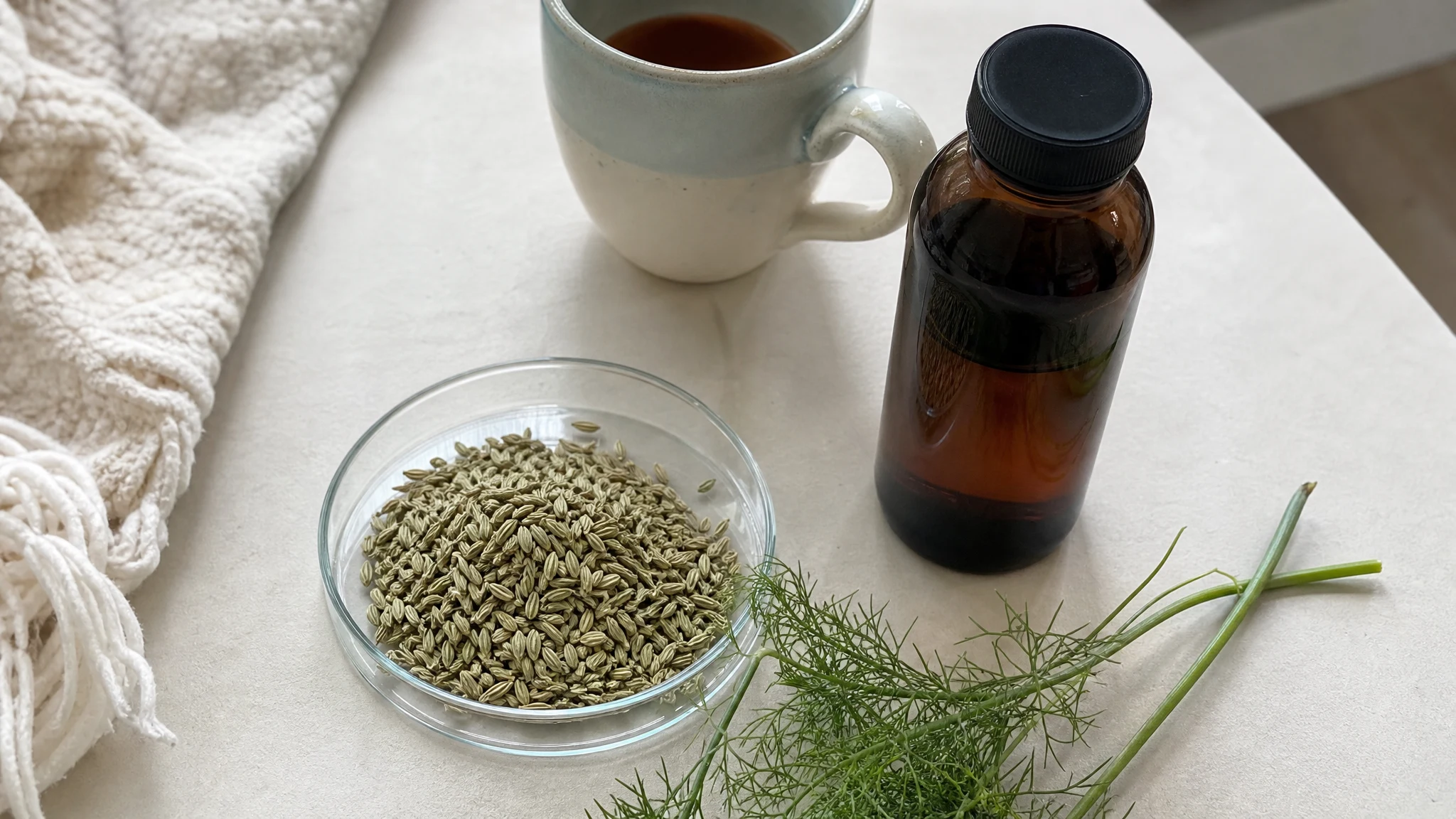
Can You Swallow Fennel Oil? Why We Say No
Fennel is a flavour people love: the sweet, licorice note in sausages, breads and after-dinner seeds. So it is a fair question whether the oil in our bottle can go the same way. Our answer is no. We sell fennel essential oil for fragrance and external use, and our bottle is not meant for internal use. Here is the reasoning, so it makes sense and does not just sound like a rule.
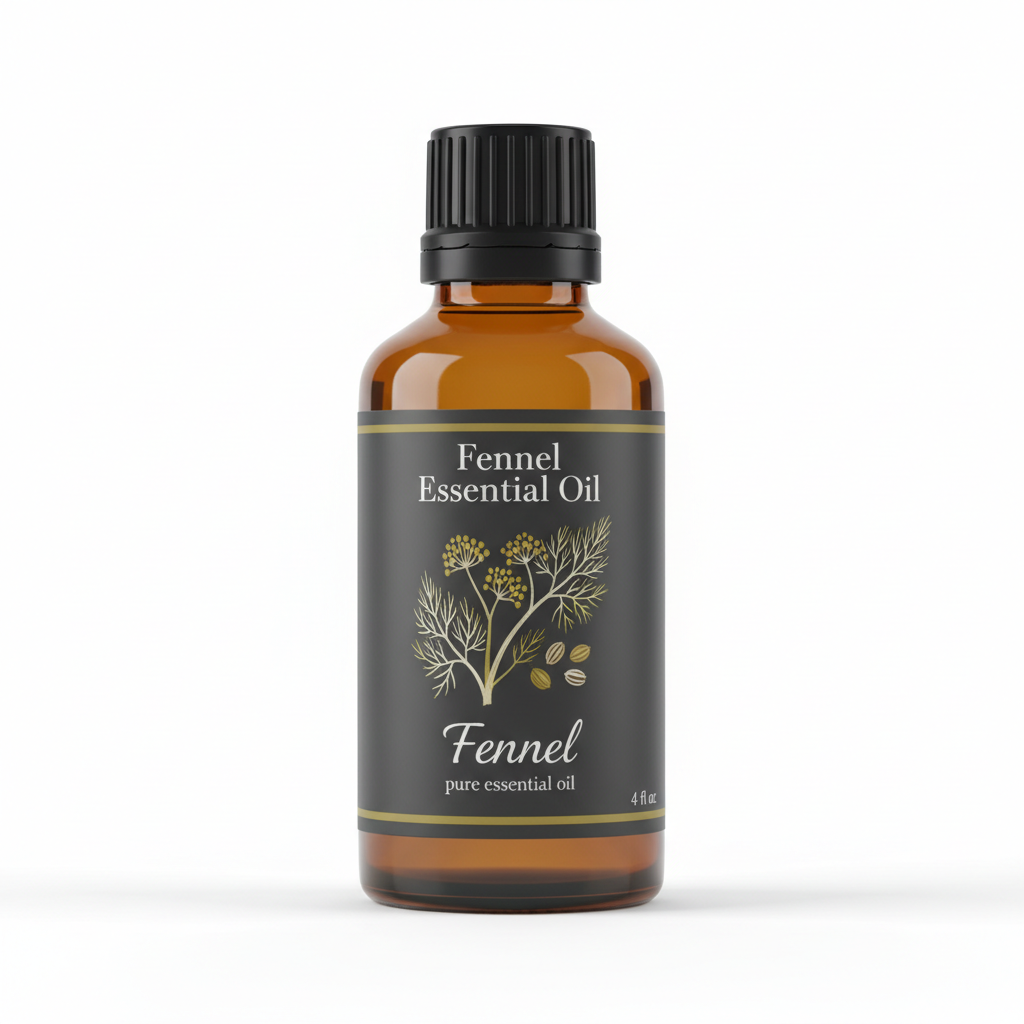
Fennel Essential Oil
Our own Fennel Essential Oil, in sizes from 0.5 oz to bulk.
From $13.99
Shop Now →Flavouring is a trace, a drop is a dose
When fennel oil appears in food, it appears as a flavouring: a tiny amount, spread through a whole portion, measured by a manufacturer working to a formula. A drop of neat oil from a bottle is something else entirely. One drop is about 0.05 mL, roughly 49 mg of oil at the density on our batch certificate. At the 3.76% average estragole in the sweet fennel batches EFSA analysed (EFSA FEEDAP Panel, 2023), that is about 1.8 mg of estragole in one drop. Those are our calculations from published figures, and any lot will differ, but they give a sense of scale. Estimating a dose by eye from a bottle is also hard to do consistently, since drop size varies from dropper to dropper.
It is worth noting that the EFSA opinion we cite is about essential oils as animal feed additives, assessed in milligrams per kilogram of feed. That says nothing about a person swallowing the neat oil.
What European regulators decided
Europe offers the clearest history. The European Medicines Agency's herbal committee had once supported a traditional use of bitter fennel oil as an expectorant. On 29 May 2024 it adopted a public statement concluding that a monograph for it could not be supported any longer, because new data on estragole's genotoxicity and carcinogenicity, set against the estragole intake at the traditional dose, tipped the benefit-risk balance. The committee also noted that carcinogenicity studies had not been carried out on fennel oil itself (EMA/HMPC public statement, 2024).
Three notes keep that in proportion. It concerns bitter fennel oil taken as a medicine at a defined dose. The European Pharmacopoeia caps estragole in bitter fennel oil at 6.0%. And it is a benefit-risk judgement for a cough product with alternatives, not a statement about one particular swallow. What it does show is that regulators who looked closely chose caution about swallowing the oil, which is the same direction we lean.
Fennel tea is a different thing
If you drink fennel tea and enjoy it, nothing here changes that. An infusion of fennel fruit and a bottle of concentrated oil are different products, with different amounts of everything in them, and the rules for one do not carry to the other. Medicines agencies have their own guidance on fennel fruit for people who want the details, and a pharmacist can talk through teas and supplements.
What poison centers and case reports say
America's Poison Centers notes that essential oils can be poisonous if swallowed, and that breathing one into the lungs while trying to swallow and choking can lead to pneumonia. It advises storing oils out of reach of children and calling a poison center on 1-800-222-1222 if someone swallows one (America's Poison Centers, Essential oils). For fennel in particular, a 2011 case report describes a 38-year-old woman with well-controlled epilepsy who had a generalized seizure after eating cakes containing an unknown amount of fennel essential oil; the authors suggested people with epilepsy should probably avoid it (Skalli and Soulaymani Bencheikh, Epileptic Disorders, 2011). A single case cannot establish how common this is, but it is why our How It's Made page tells readers with epilepsy to leave fennel oil alone.
Where fennel flavour belongs
The nicest way to enjoy the taste of fennel is in food that was made for eating. Think of a roasted bulb with olive oil, a slice of sausage with fennel in it, a loaf with a scatter of seeds. Whole seeds and fresh bulbs come with a long tradition of being eaten, and that is a different matter from a bottle of concentrated oil.
A simple test for any "food grade" claim
If you meet a claim that an essential oil is safe to swallow, from us or anyone, ask who stands behind the dose, which named standard the oil meets, and what the estragole content is for your lot. "Food grade" has no single meaning on a bottle. Without three clear answers, it is a label, not an assessment.
Enjoying the bottle the way it was meant
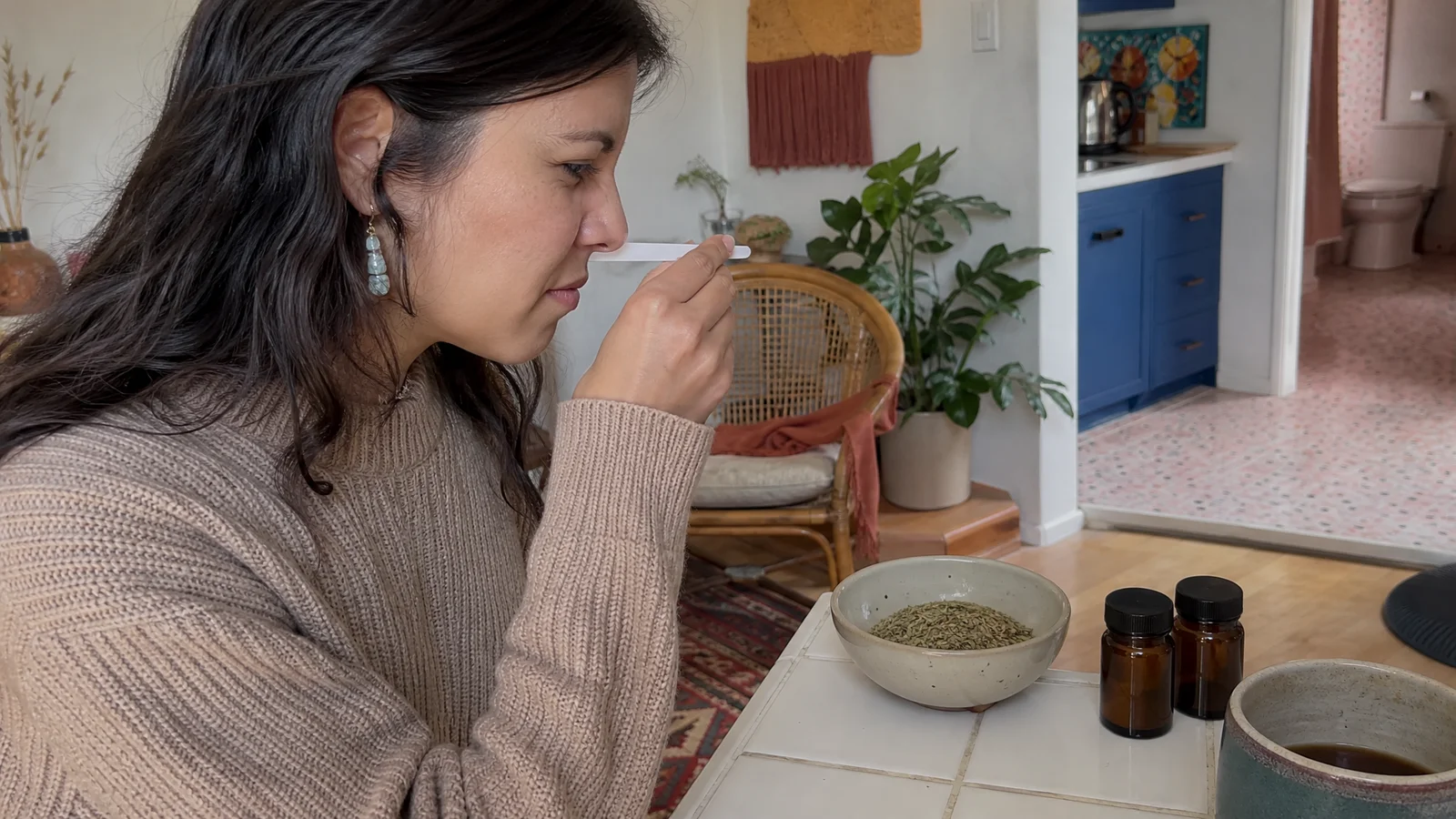
When you open a bottle of our oil, expect a sweet, anise-like opening and then earthier, peppery layers. It is a pleasure to smell, which is why people like it in a diffuser, in soap and in bath salts. If you want a little in the air, start small and let the room tell you when it is enough. If you want it on skin, dilute it in a carrier, patch test, and keep it away from eyes.
Keep the bottle tightly capped and out of reach of children and pets, as you would any concentrated oil, and write the date on it when you open it.
If you are curious about fennel's flavour, the kitchen and the spice shelf are the right places. For our oil, enjoy it in the air and, diluted, on skin, with the guidance in is fennel essential oil safe and estragole in fennel oil. Questions about swallowing anything belong with a physician or pharmacist.
Fennel Essential Oil
Fennel Essential Oil from our own shop, in sizes from 0.5 oz to bulk.
From $13.99
Shop Now →Sources & Further Reading
- EMA/HMPC, Public statement on Foeniculum vulgare var. vulgare, aetheroleum (2024)
- EFSA FEEDAP Panel, 2023, essential oils from Foeniculum vulgare
- America's Poison Centers, Essential oils: Poisonous when misused
- Skalli S, Soulaymani Bencheikh R. Epileptic seizure induced by fennel essential oil. Epileptic Disord 2011