Fennel Oil for Acne? Why the Carrier Matters More
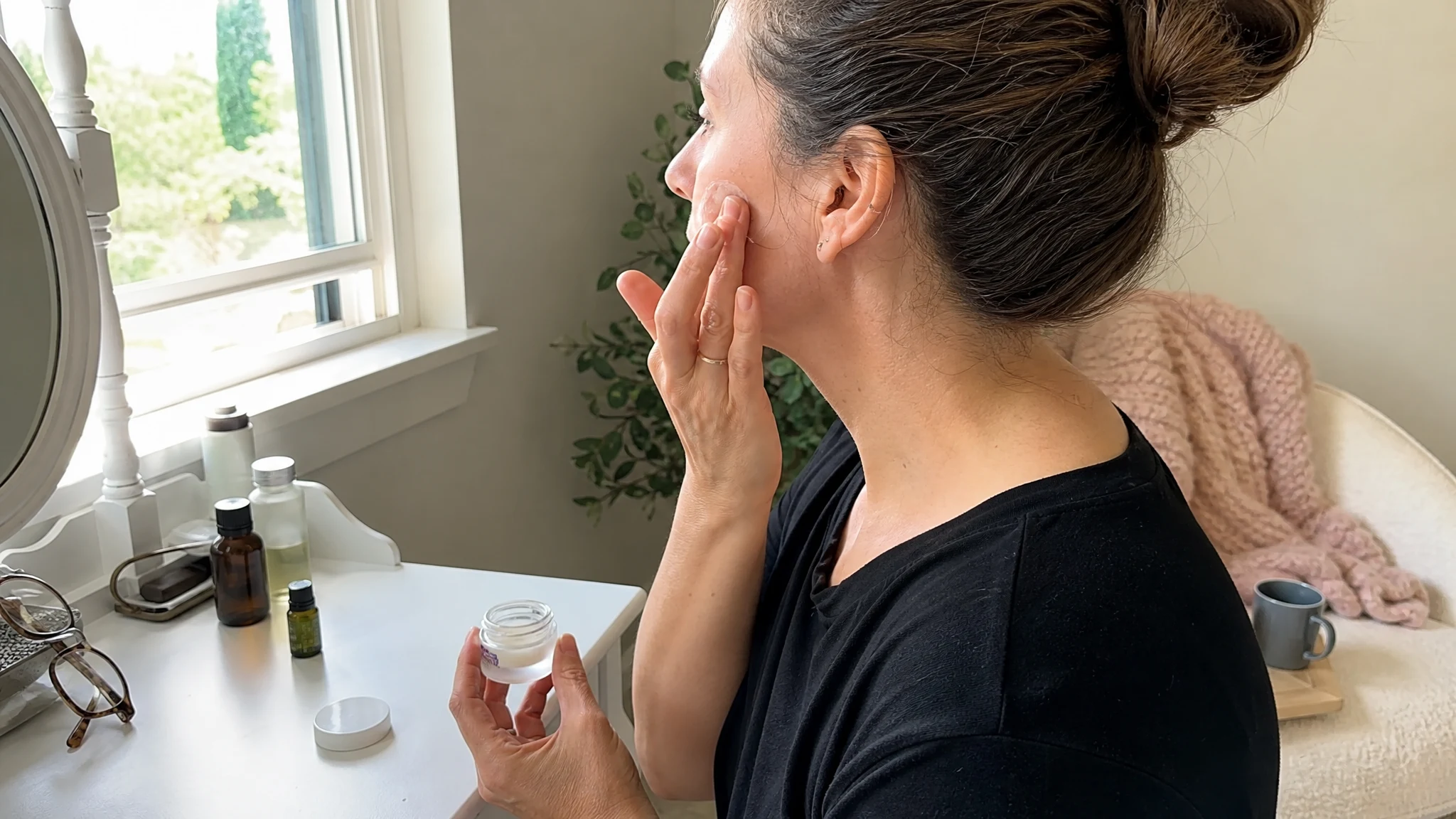
Search for fennel oil and acne and you will find plenty of confident pages. What you will not find is a dermatology guideline that mentions it. We think that gap is worth a few minutes, because it points you toward the choices that really do matter for a breakout-prone face.
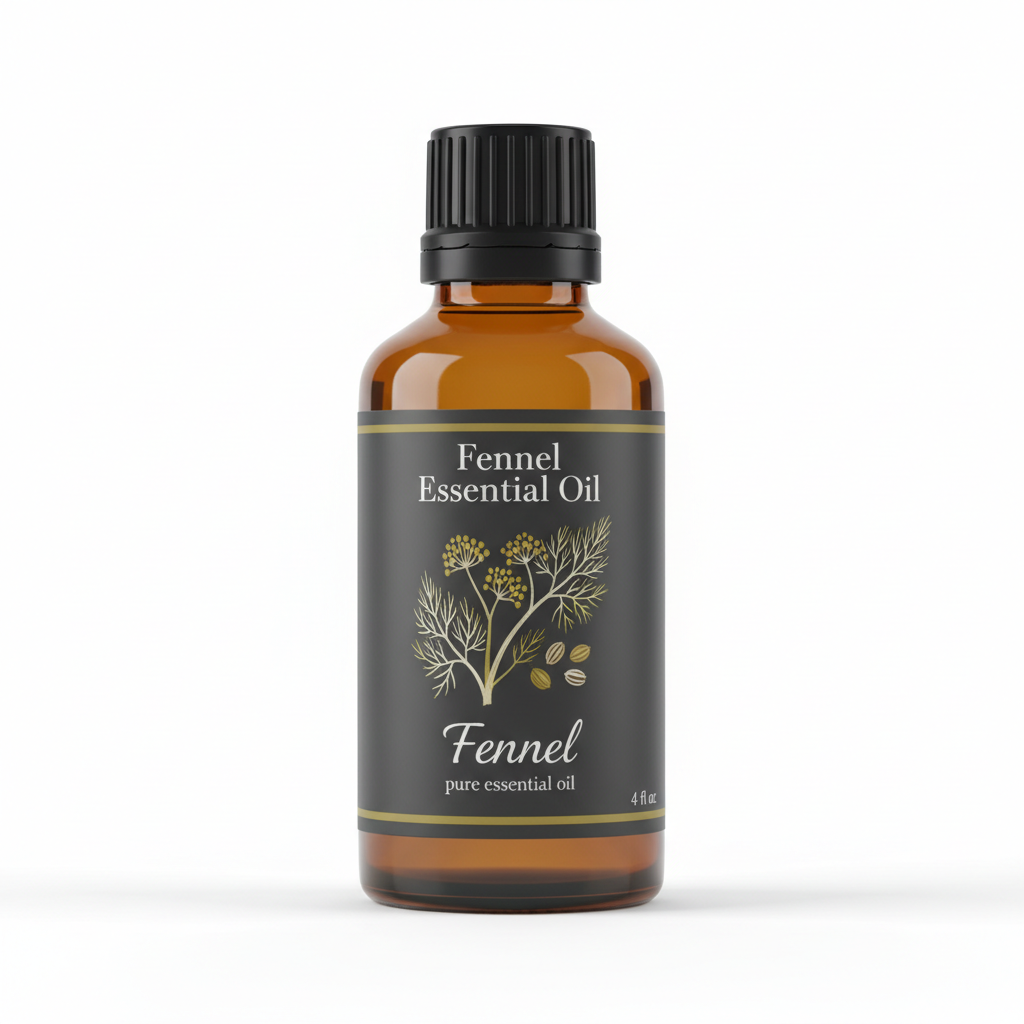
Fennel Essential Oil
Our own Fennel Essential Oil, in sizes from 0.5 oz to bulk.
From $13.99
Shop Now →What the dermatologists put first
The American Academy of Dermatology's 2024 acne guideline weighed the evidence using a formal systematic review and landed on 18 recommendations. Its strong ones go to benzoyl peroxide, topical retinoids, topical antibiotics and oral doxycycline, with a further set of conditional options behind them. Essential oils do not appear among them (Reynolds et al., 2024). That is not a judgment on fennel in particular. It simply tells you where the proven options sit, and an aromatic oil is not one of them.
A nice smell is not a result
It is easy to confuse a lovely scent with a good outcome. A sweet, peppery aroma makes a routine feel pleasant, and pleasant is worth something, but it isn't the same as a routine that suits a skin that breaks out. Skin that is prone to breakouts tends to be honest about the difference.
What the lab work actually covers
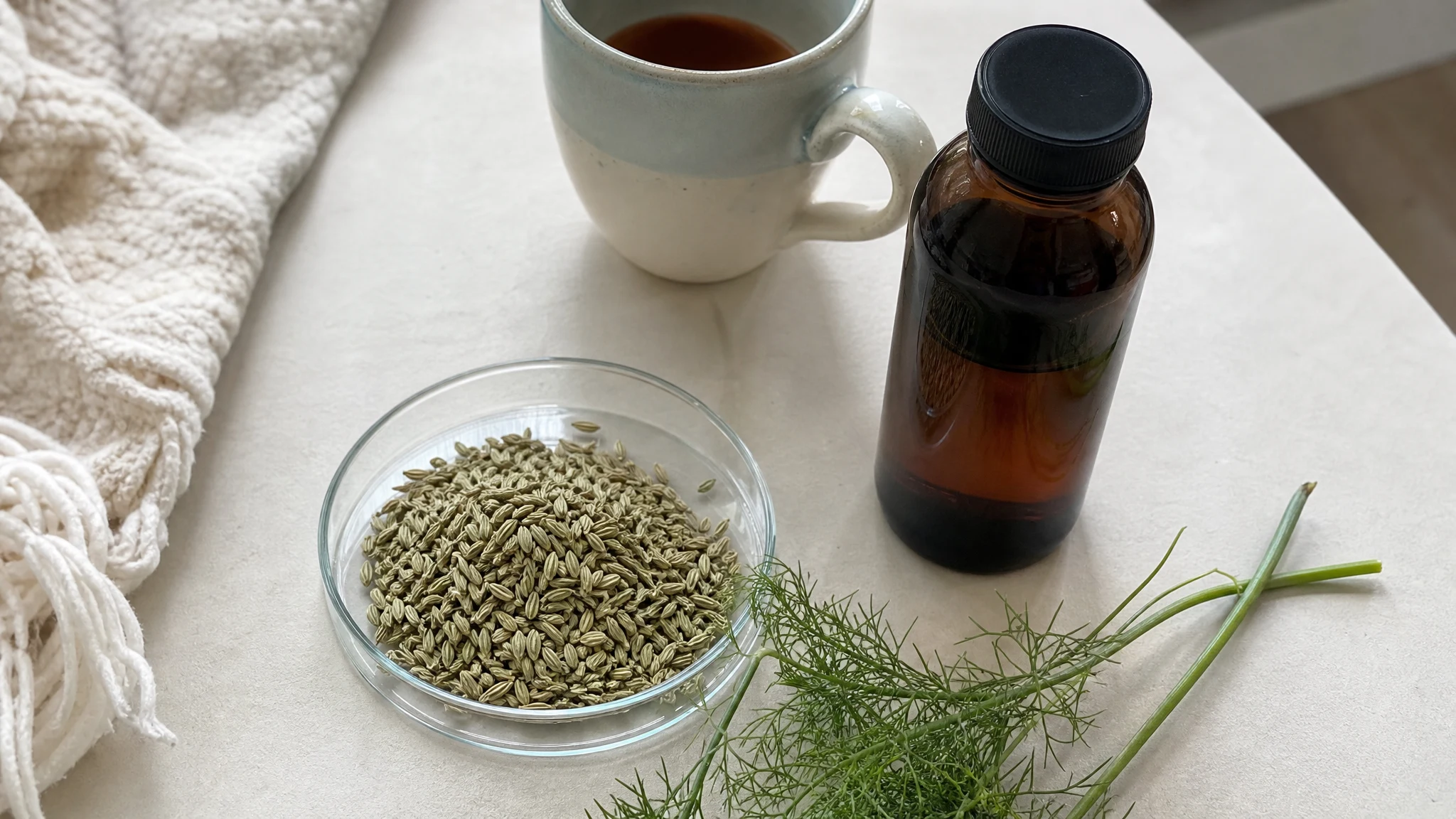
Fennel oil does inhibit some microbes in a dish. A 2025 study of seed oil from Meknes, Morocco, which was mostly fenchone, trans-anethole and limonene, found activity against yeast and some bacteria in microplate tests, and its authors are clear that the work is in vitro and in silico and needs confirming in living systems (El Moumen et al., 2025). That oil is one batch from one region, so it tells you more about how much fennel oils vary than about any bottle on a shelf. A dish is also a very different place from a pore, with no skin barrier, no sebum and no carrier oil in the way. We read the study as interesting chemistry, not as a skincare claim.
The carrier is the bigger decision
Fennel oil never goes on skin on its own. It goes on inside a carrier, and on a face that clogs easily the carrier is what you will actually feel. Comedogenicity ratings get passed around like facts, but they began with animal tests on raw ingredients. When researchers patch-tested finished products on six volunteers, they concluded that products using comedogenic ingredients are not necessarily comedogenic (Draelos and DiNardo, 2006). Six people is a small group, so treat that as a reason to hold ratings loosely, not as a verdict on any oil.
Our practical take: choose a light carrier you already know your skin tolerates, keep any scent ingredient low, and introduce one new thing at a time so you can tell what is responsible if skin reacts. Our carrier oil comparison walks through the options, and it is a useful read even if fennel never touches your face.
Why we would skip it on the face
Fennel oil carries a sensitisation record. EFSA's 2023 opinion on fennel oils describes them as irritants to skin and eyes and as skin and respiratory sensitisers (EFSA FEEDAP Panel, 2023). That opinion was written for animal feed, so it is not a skincare ruling, but it is a fair signal. Skin that is already working hard with a prescribed routine is not the place to add an ingredient that can cause its own reaction, and a reaction would be hard to tell apart from a flare.
If you do use fennel oil on skin elsewhere, our guidance is 0.5% to 2% in a carrier with a patch test first, and the steps are in our skin basics guide. We recommend avoiding it entirely in pregnancy and breastfeeding, and it is not for children. Anyone with an oestrogen-sensitive condition or epilepsy should leave it alone, as should anyone who reacts to celery, aniseed, caraway, coriander or dill. Our safety overview has the full picture.
Keeping a routine simple
If your skin is unpredictable, the most useful habit costs nothing: change one thing at a time. Add a new product, wait a couple of weeks, and only then add the next. Jot down the date in your phone or on a sticky note. When something does go wrong, you'll know which change to blame instead of staring at a shelf of suspects.
It also helps to leave scent out of the face routine altogether. Many people with breakout-prone skin find that plain, unscented products give them the fewest surprises, and there is nothing dull about that.
Where fennel fits instead
If you love the smell, enjoy it somewhere else. A few drops in a diffuser, in a ventilated room, give you the sweet, licorice-like opening and the earthy, peppery settle without anything touching your face. A lightly scented body oil at the low end of our guidance is another option. Our DIY fennel body oil keeps to that range.
What we sell, and who to ask
We sell one thing, a steam-distilled fennel essential oil with a sweet, anise-like aroma, and we do not offer it for acne or any skin condition. Breakouts that are painful, persistent or leaving marks deserve a dermatologist, who can work from that guideline with your actual skin in front of them.
If you enjoy the sweet, peppery scent of fennel, there are lovely ways to enjoy it that never come near a breakout-prone face.
Fennel Essential Oil
Fennel Essential Oil from our own shop, in sizes from 0.5 oz to bulk.
From $13.99
Shop Now →Sources & Further Reading
- Reynolds et al., 2024. Guidelines of care for the management of acne vulgaris (Europe PMC record)
- El Moumen et al., 2025. Chemical composition, antioxidant and antimicrobial potentials of Foeniculum vulgare Mill
- Draelos and DiNardo, 2006. A re-evaluation of the comedogenicity concept (Europe PMC record)
- EFSA FEEDAP Panel, 2023. Safety and efficacy of essential oils from Foeniculum vulgare