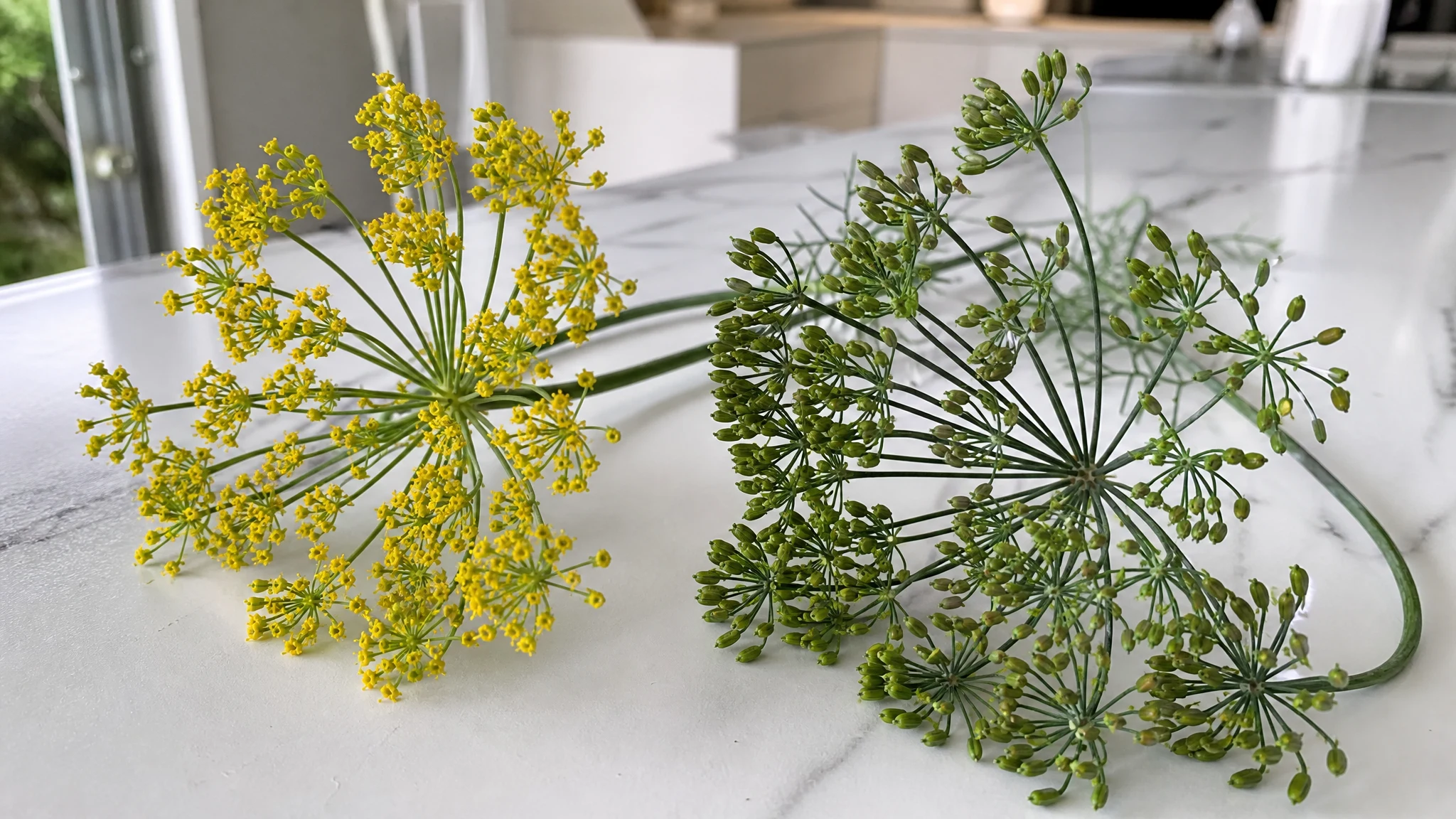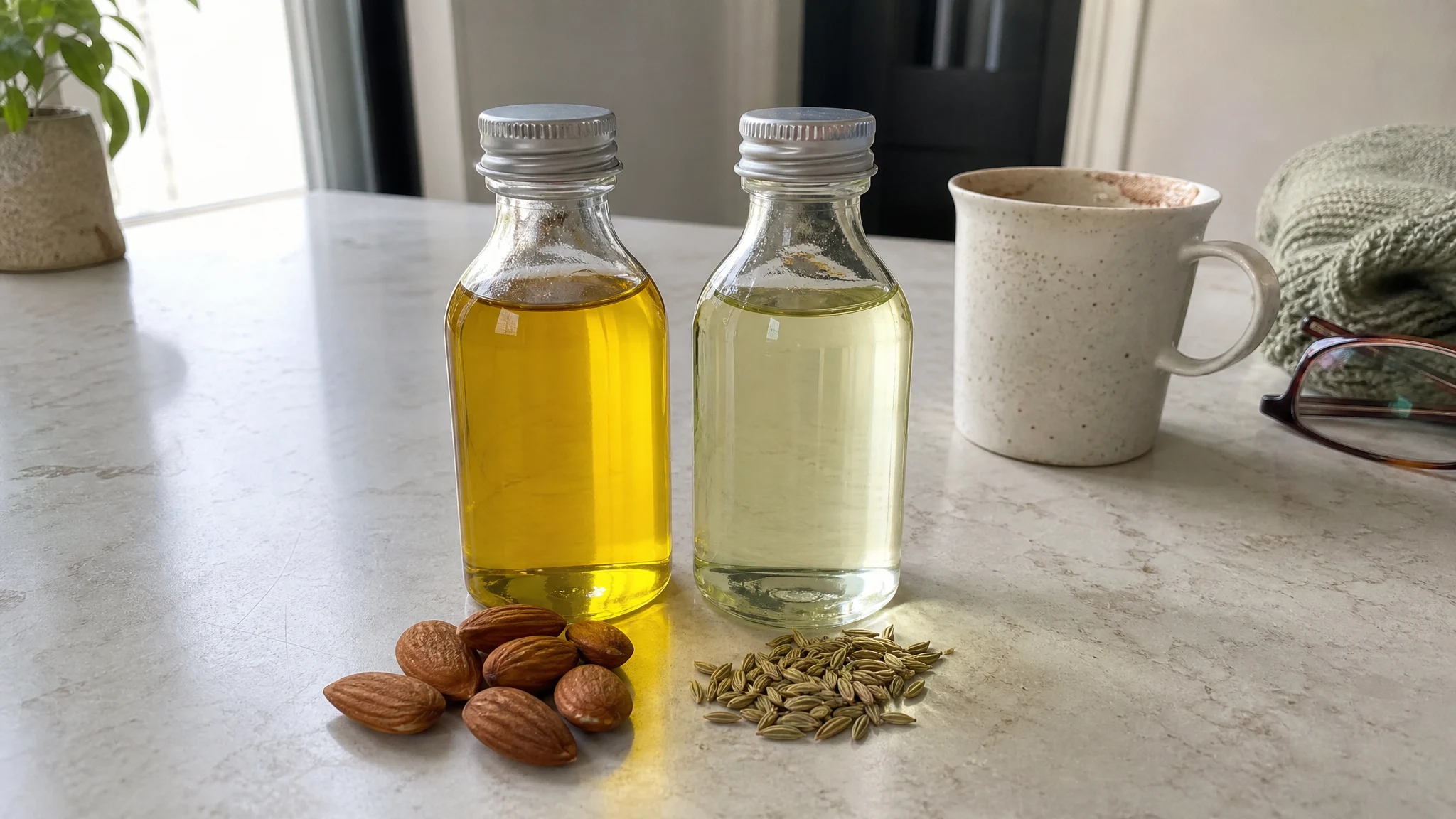
How to Choose a Carrier Oil for Fennel Essential Oil
People often ask which carrier oil is "best" for fennel oil, as if the right one could make the blend gentler. It cannot. The amount of fennel oil in the bottle sets the strength, whatever it is mixed into. What the carrier does decide is how long your blend keeps, how it sits on different skin, and whether it is a good fit for anyone with a nut allergy. That is where the choice is worth some thought.
Fennel Essential Oil
Our own Fennel Essential Oil, in sizes from 0.5 oz to bulk.
From $13.99
Shop Now →Start with the dilution
Our dilution guidance for skin is 0.5% to 2% fennel oil in a carrier, about 3 to 12 drops per ounce, with a patch test first. The sums: an ounce is roughly 30 ml, and at the usual planning figure of 20 drops per ml that is about 600 drops, so 0.5% is 3 drops and 2% is 12. In a 10 ml bottle, 1% is about 2 drops. Drop sizes vary with the bottle, so use these as a guide. For leave-on products the fragrance industry's estragole limits can put the sensible ceiling below 2%, so we suggest beginning at the low end (IFRA Standard, Estragole, Amendment 49). Mixing two carriers changes nothing, since the percentage is of the total volume. Our skin basics guide covers dilution and patch tests in more depth.
Jojoba: our pick for a blend you will keep
Jojoba is the carrier we would reach for first. It is described as noncomedogenic in a review of plant-based cosmetic oils (Abdalla et al., 2024), and it held up best in a 2026 oxidation study that pushed rosehip, sunflower, olive and jojoba oils to the point of going off. Jojoba had the longest induction period, and the ranking followed how rich each oil was in polyunsaturated fats (Fagoaga et al., 2026). Our reasoning from that pattern is that oils high in polyunsaturated fats, such as sunflower and rosehip, suit small batches you will use up quickly, while jojoba suits a bottle that will sit on a shelf for months.
Matching the carrier to the job
For the face, or skin that breaks out. The same review lists virgin coconut oil as highly comedogenic and olive oil as having comedogenic potential. Comedogenicity ratings are weaker evidence than they sound, though. They began with animal tests on raw ingredients, and a small human study of finished products concluded that products containing comedogenic ingredients are not necessarily comedogenic (Draelos and DiNardo, 2006). So treat the ratings as a nudge. Jojoba is the usual choice here. Fennel oil is a better fit for body blends than for the face, and our post on fennel oil and acne explains why.
For a body oil you will keep for months. Choose a stable carrier and mix a small batch. Our DIY fennel body oil is a formulation built from this dilution guidance and uses carriers from this list. Whichever you choose, write the batch date on the bottle. We describe fennel oil as typically stable for 2 to 3 years when sealed, and a carrier may not last that long, so our storage notes in how to store fennel oil apply to the finished blend too.
For larger areas. How a carrier feels, how quickly it absorbs and how greasy it leaves skin are real differences, and they come down to personal taste. Try a little of the carrier alone first, and remember that a larger area means more oil on the skin overall, which is a good reason to keep to the lower end of the dilution range.
If someone has a nut allergy
Sweet almond oil is a classic body carrier, and it is also a tree nut oil, so it deserves a deliberate decision. An allergist answering this question for the American Academy of Allergy, Asthma and Immunology (reviewed October 2026) explains that highly refined nut oils are unlikely to contain much allergenic protein, notes the topic has not been well studied for topical use, and recommends asking the manufacturer whether an oil is refined (AAAAI, Ask the Expert). Jojoba sidesteps the almond question entirely. For anyone with a known allergy, an allergist is the right person to ask about a specific oil.
Fennel oil itself belongs to a plant family that includes anise, caraway, celery, coriander and dill, and the European Medicines Agency lists hypersensitivity to those plants or to anethole as a contraindication for fennel preparations (EMA/HMPC, 2024).
Smell the carrier first
Before you mix anything, smell the carrier on its own. A fresh one has a faint, pleasant smell, nutty or grassy or almost nothing at all. You'll notice that unrefined oils carry more of their own scent, and that scent will sit beside fennel's sweet, peppery aroma. A neutral carrier lets the fennel come through, while a stronger one makes a blend of its own.
What to look for on a carrier bottle
- The plant, and the words refined, cold-pressed or unrefined. They matter for scent and for the nut question.
- A harvest, pressing or best-before date, because oxidation is the main way a carrier goes off.
- Dark glass and a tight cap, as for the fennel oil itself.
- A plain carrier. A pre-scented blend means you lose track of the total essential oil percentage.
A rancid smell is the plain signal that a carrier has turned, and a rancid carrier should not go on skin.
Who this blend is not for
We sell fennel oil only, with no carriers, so buy yours from a pharmacy, grocery or craft supplier that states the type and a date. We advise avoiding fennel oil entirely in pregnancy and while breastfeeding and with children, and anyone with an oestrogen-sensitive condition or epilepsy should leave it alone. A pharmacist can answer questions about medicines and interactions. If you are weighing a carrier called fennel seed oil against the essential oil, fennel seed oil versus fennel essential oil explains why they are different products.
Pick a carrier for the job and the shelf life, keep the fennel oil at the strength you planned, and the blend will be as nice as its ingredients.
Fennel Essential Oil
Fennel Essential Oil from our own shop, in sizes from 0.5 oz to bulk.
From $13.99
Shop Now →Sources & Further Reading
- Abdalla S, Aroua MK, Gew LT, 2024. A comprehensive review of plant-based cosmetic oils. ACS Omega 9(44)
- Fagoaga C et al., 2026. Oxidative stability and kinetics of oxidation of rosehip, sunflower, olive and jojoba oils
- Draelos ZD, DiNardo JC, 2006. A re-evaluation of the comedogenicity concept. J Am Acad Dermatol 54(3)
- American Academy of Allergy, Asthma and Immunology. Food allergy: nut oils in topical products
- EMA/HMPC, 2024. Assessment report on Foeniculum vulgare Miller, fructus (EMA/HMPC/240553/2016)
- IFRA, 2020. IFRA Standard: Estragole (Amendment 49)