Fennel vs Peppermint Oil: What the Research Covers
Fennel and peppermint have shared a reputation for centuries: both turn up in after-dinner teas and kitchen cabinets. When people compare the essential oils, they usually want to know which one is "better for digestion". The honest answer starts with what the research actually looked at, because it is not what most readers assume.
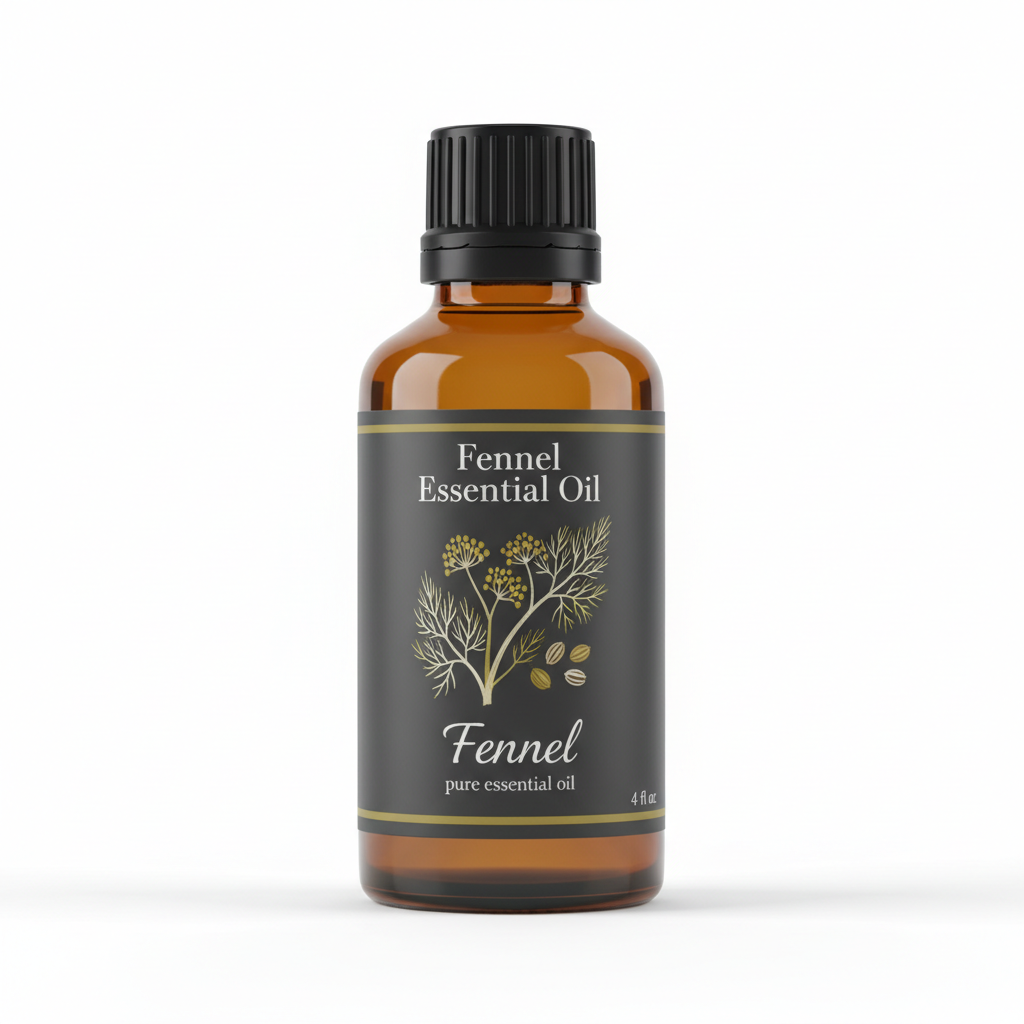
Fennel Essential Oil
Our own Fennel Essential Oil, in sizes from 0.5 oz to bulk.
From $13.99
Shop Now →Both bodies of research are about swallowed products
For peppermint, the National Center for Complementary and Integrative Health says a small body of research points to enteric-coated peppermint oil capsules may improve irritable bowel symptoms in adults, with more side effects than placebo in a 2022 review, mostly mild reflux and indigestion. For peppermint oil applied to the skin, it describes the evidence as limited and mentions tension headaches, not digestion.
The best-known fennel trial is a 2016 randomized study of 121 people with mild to moderate irritable bowel syndrome. They took capsules of a combination of curcumin and fennel essential oil for 30 days, and symptom scores fell by about 50% compared with about 26% on placebo. It is a genuine signal, and it is also a combination product, taken by mouth, with no arm testing fennel on its own. We cover that study in fennel oil and IBS.
The common thread is the most useful thing on this page: neither body of evidence tests an oil you put on your skin or run through a diffuser. A capsule study cannot be carried over to a rub or a room scent, for peppermint or for fennel.
Two very different personalities
Put the research aside for a moment and think about the bottles. Peppermint is the bright, sharp one that most people recognise from candy and toothpaste. Fennel is rounder and sweeter, with a licorice-like opening and earthy, peppery layers behind it. On a shelf they are neighbours, but in a room they play very different parts.
That is a good reason to choose between them by scent and by the product you are making, not by a reputation they happen to share in the tea aisle. If a diffuser blend is the plan, imagine the finished room first. Do you want crisp and sharp, or sweet and warm?
No head-to-head
We did not find a trial that compares fennel oil with peppermint oil. That means anyone naming a winner is setting two different sets of studies side by side, which is a fair thing to notice but not a result. It also means there is no basis for stacking the two in the hope of a bigger effect.
Cautions differ in kind
NCCIH advises that the menthol in peppermint oil should not be inhaled by or applied to the face of an infant or small child, and notes that skin use can cause rashes and irritation. Fennel brings a different list. The European Medicines Agency's assessment report lists hypersensitivity to plants of the carrot family (aniseed, caraway, celery, coriander, dill) or to anethole as a contraindication for fennel preparations. For our oil, we say to avoid it entirely in pregnancy and breastfeeding, to keep it away from children, and to leave it alone with an oestrogen-sensitive condition or epilepsy.
Those are good reasons to treat the two oils as separate choices rather than interchangeable ones. If you like both as scents, there is no reason they cannot sit on the same shelf; just keep each at the low end of its own range and patch test them one at a time.
If you keep both on the shelf
A few simple habits make life easier with two strong-smelling oils:
- Keep a separate dropper or cap for each, and never swap them, so one scent does not creep into the other.
- Label dilutions clearly. A blank roller bottle looks the same whether it holds fennel or peppermint.
- Smell them one at a time with a rest in between, because both can numb your nose to the next scent.
- Store each tightly capped, out of sunlight and out of reach of children and pets.
How to read the next headline
You will see claims about both oils again, because they are popular topics. Ask the same simple questions each time: was it swallowed or applied, was it a tea, a capsule or an oil, and was it one ingredient or a mix? Most of the confusion goes away once you know what was actually in the study.
What we sell, and who to ask
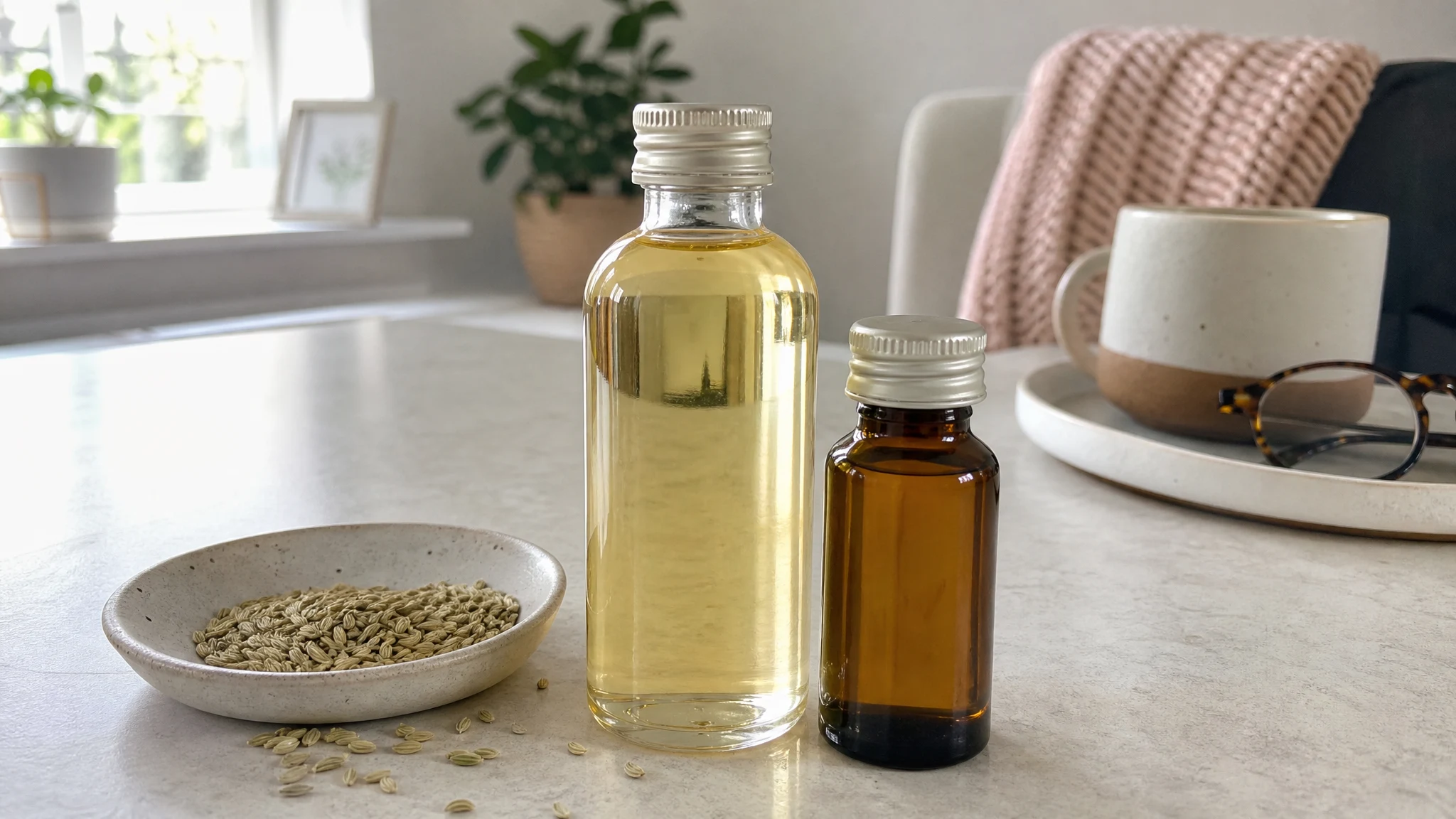
We sell a fennel essential oil for external, cosmetic use, and we do not make claims about digestion. If you have digestive symptoms, especially persistent ones, a physician or gastroenterologist is the right person, and they can talk through capsules and diet in a way an article cannot. If you simply enjoy fennel's sweet, anise-like aroma, our oil is steam-distilled from crushed seed and our general skin guidance is 0.5% to 2% in a carrier after a patch test. The buying guide covers what to check before ordering, and our evidence overview keeps the research in one place. If you are curious about the traditions around bloating, fennel oil for bloating and digestion looks at that too.
Two plants, two reputations, and one useful reminder: a study of what people swallowed tells you about that, not about the bottle on your shelf.
Fennel Essential Oil
Fennel Essential Oil from our own shop, in sizes from 0.5 oz to bulk.
From $13.99
Shop Now →Sources & Further Reading
- National Center for Complementary and Integrative Health. Peppermint oil: usefulness and safety. https://www.nccih.nih.gov/health/peppermint-oil
- Portincasa P et al., 2016. Curcumin and fennel essential oil improve symptoms and quality of life in patients with irritable bowel syndrome. J Gastrointestin Liver Dis 25(2):151-157. https://pubmed.ncbi.nlm.nih.gov/27308645/
- European Medicines Agency (HMPC), 2024. Assessment report on Foeniculum vulgare subsp. vulgare var. vulgare and var. dulce, fructus (EMA/HMPC/240553/2016). https://www.ema.europa.eu/en/documents/herbal-report/final-assessment-report-foeniculum-vulgare-miller-subsp-vulgare-var-vulgare-foeniculum-vulgare-miller-subsp-vulgare-var-dulce-mill-batt-trab-fructus-revision-1_en.pdf-0