Fennel Oil Benefits: What the Research Really Covers
Search for fennel oil benefits and you will find long lists of them, usually with a confident study or two attached. Look closely at those studies and a pattern shows up: most were not done on the bottle you buy. They tested fennel tea, ground seed, standardised capsules, or oil that was swallowed in drops. That does not make the research uninteresting, because fennel is one of the better-studied kitchen herbs. It does mean the honest answer to "what does the research say?" starts with "about which fennel?"
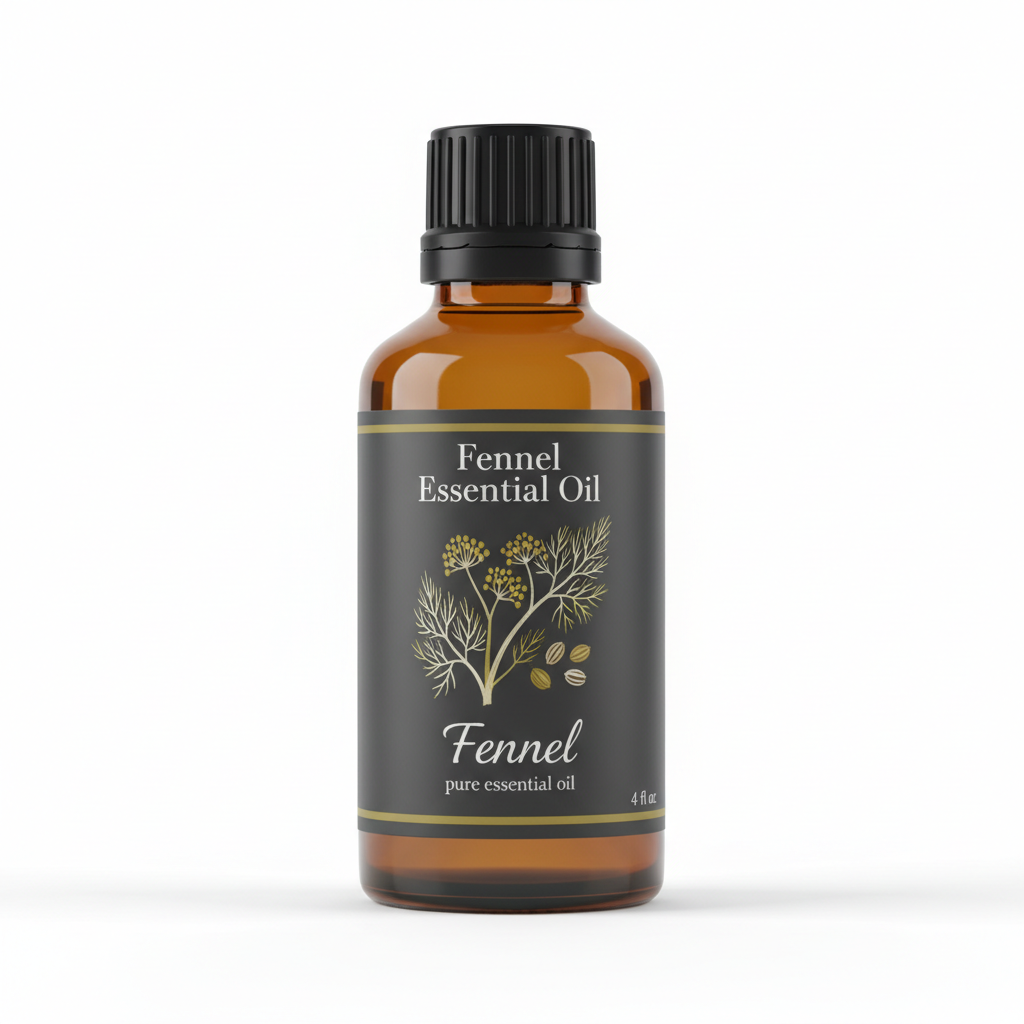
Fennel Essential Oil
Our own Fennel Essential Oil, in sizes from 0.5 oz to bulk.
From $13.99
Shop Now →Four different things called fennel
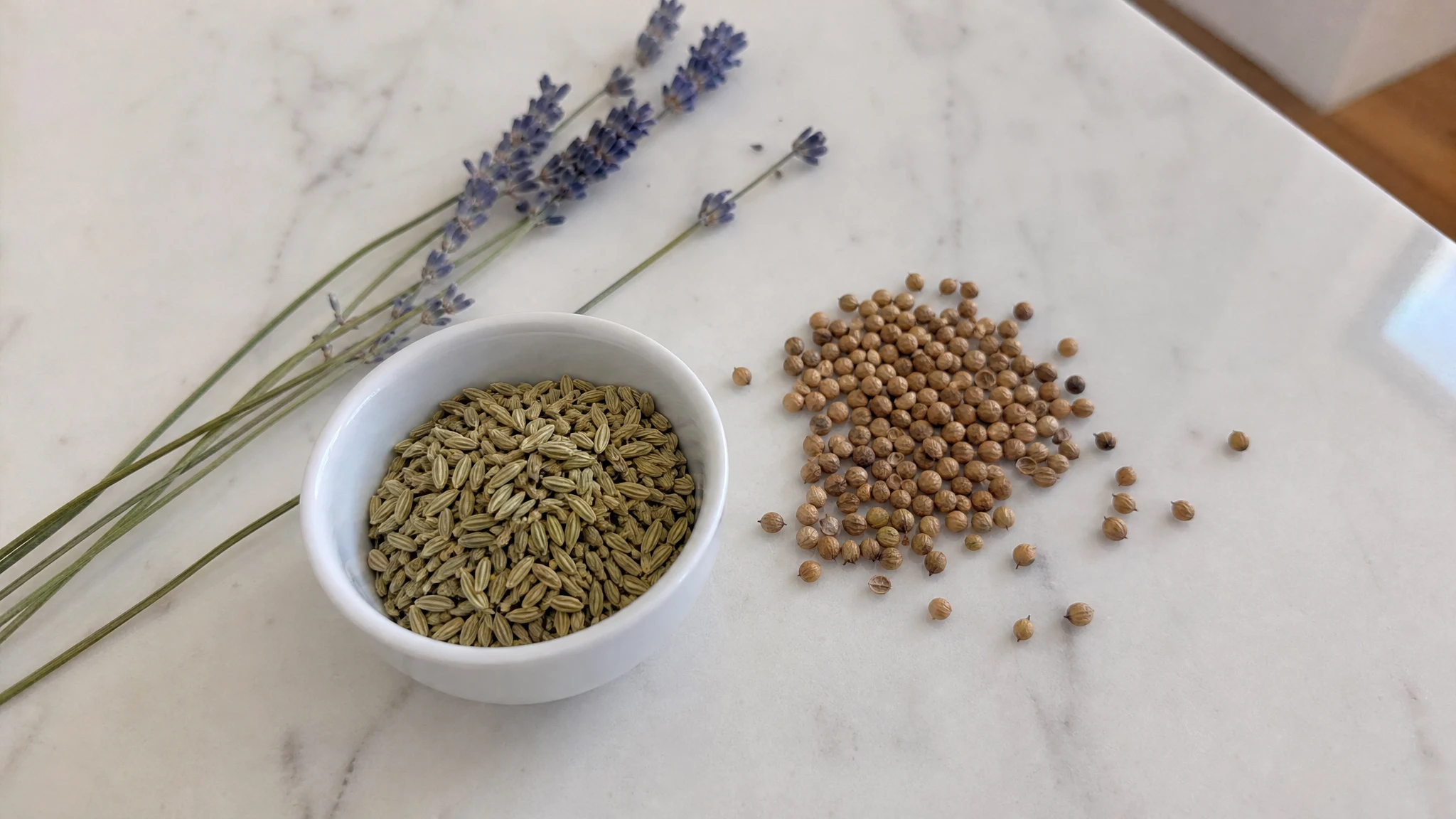
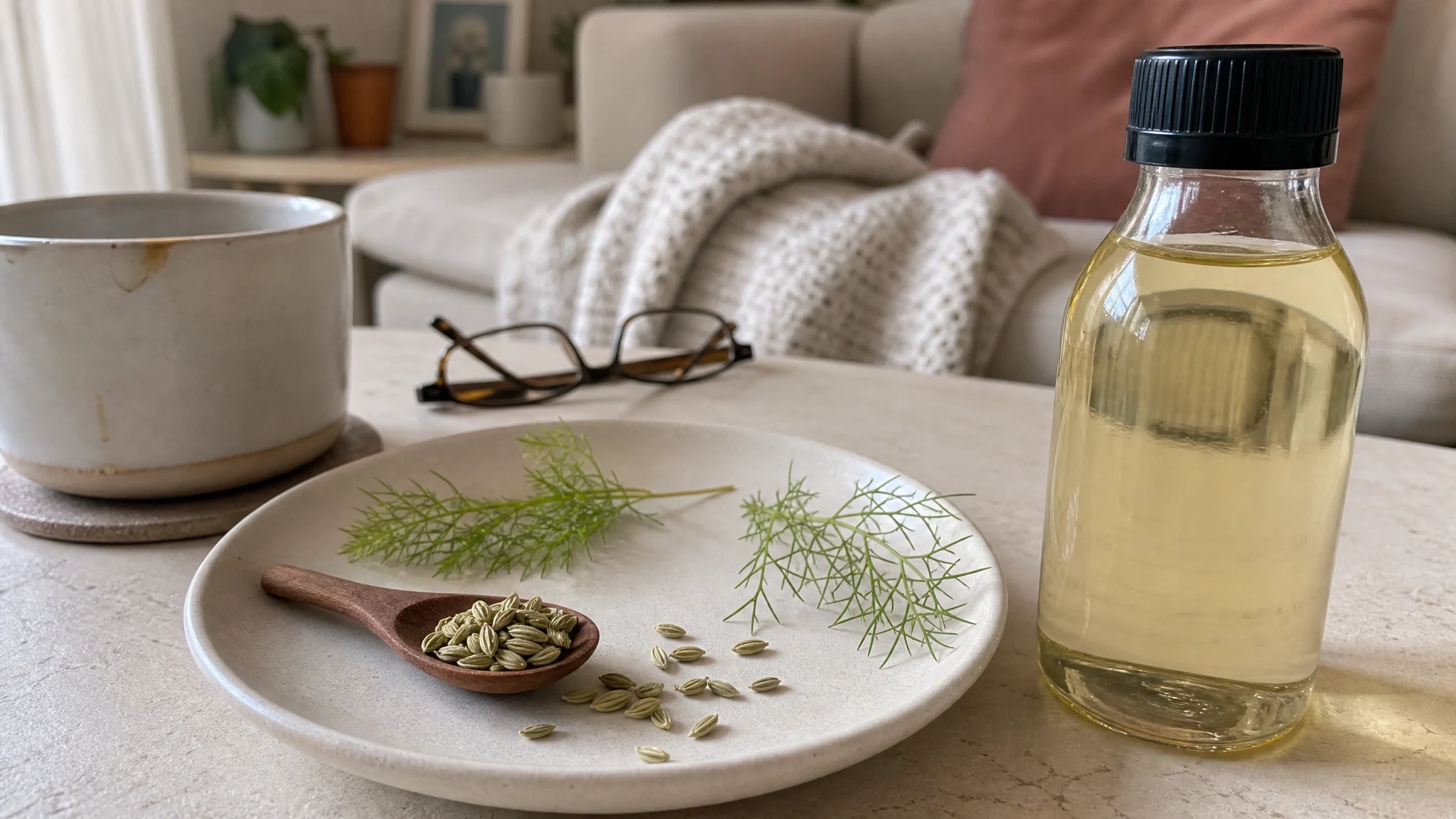
The dried seed (botanically the fruit), a tea made from it, a capsule of extract and the steam-distilled oil are four different materials. A tea is a water infusion, while the oil is a concentrated distillate whose main compound, trans-anethole, is what gives fennel its sweet, licorice-like aroma. A result for one does not carry over to another. The oil we sell is sweet fennel, Foeniculum vulgare, steam-distilled from crushed seed, and we offer it for its aroma and, diluted in a carrier, for external cosmetic use. We do not offer it for swallowing, and we do not make health claims for it.
Period pain shows the gap well. A 2020 review pooled 12 randomized trials of fennel for primary dysmenorrhea, and every one was run in Iran. Nine used fennel oil by mouth and three used capsules. The reviewers deliberately left out studies of massage with fennel oil, so none of the pooled results speaks to rubbing a diluted oil on skin. We go through those trials in our period pain article.
Digestion: the oldest tradition
This is where fennel's reputation is deepest. The European Medicines Agency's 2008 assessment report notes that the traditional use of fennel for mild, spasmodic digestive complaints, bloating and flatulence is supported by expert opinion and clinical experience, and the uses it describes are of the fruit. It is a tradition about the whole fruit, not the oil.
The best-known study that includes the oil is a trial in irritable bowel syndrome. It gave 121 people either a capsule combining curcumin with fennel essential oil or a placebo for 30 days, and symptom scores fell by 50 percent in the capsule group against 26 percent on placebo. It is a real result, and it is also a swallowed two-ingredient capsule, so it cannot tell us what fennel alone did. A later review of herbal therapies for IBS places peppermint oil among the herbs with randomized-trial support and fennel oil among those with promising early laboratory findings. Our IBS article looks at both studies, and fennel versus peppermint compares them.
Menopause and hormones
You may have read that fennel is "estrogenic". That comes from animal and laboratory work: a fennel extract, and trans-anethole in particular, produced estrogen-like effects in rats and in a yeast cell test. Human trials in menopausal women exist, mostly on capsules and extracts, and they are small and varied. The North American Menopause Society's 2023 guidance lists supplements and herbal remedies among options it does not recommend for hot flashes. Our menopause article traces the claim step by step. Because of that hormone-related chemistry, we recommend that anyone with an estrogen-sensitive condition leave this oil alone.
The rest of the list
Claims about cough, microbes, skin and hair mostly come from tradition or from experiments in dishes, where growth stops at some concentration of oil. A dish is not a person, and those results do not show what an oil does at home. We keep them in context in separate pieces on cough, lab antimicrobial research, weight claims and hair.
A fair way to read any benefits list
Here is the habit we would suggest. Whenever a page lists fennel benefits, look for three answers: which fennel was used (tea, seed, capsule or oil), how it was used (swallowed, applied to skin or breathed in), and who it was tested on (people, animals or cells in a dish). If a page doesn't say, treat the claim as a story and not a finding. Try it on two or three claims and the pattern shows up quickly.
None of that is meant to spoil the fun. Fennel has a long, interesting history, and it is easy to be charmed by it. We just prefer to enjoy the plant with our eyes open.
What would make the case stronger
A convincing study of the oil would use sweet fennel oil diluted in a carrier, applied to skin or inhaled, against a matched placebo, in a stated number of people over a stated time, with the oil's anethole and estragole content reported. A study that does all of that is still to come, so we leave the benefit claims to the studies and describe the oil by what it is: a distinctive, sweet, peppery-herbal aroma and a lovely ingredient for blending.
Using it well
For skin, our dilution guidance is 0.5 to 2 percent in a carrier oil, with a patch test first and eyes avoided. We recommend avoiding fennel oil entirely in pregnancy and while breastfeeding, and it is not for children or pets. For recurring digestive symptoms, period pain or weight questions, a physician, obstetrician-gynecologist or dietitian is the right person, not a bottle. If you are new to the oil, our introduction is the place to begin, and our safety overview says who should skip it.
Fennel has earned its place in the kitchen and the apothecary shelf. The oil's own research story is still being written, and it is worth reading with curiosity rather than hope.
Fennel Essential Oil
Fennel Essential Oil from our own shop, in sizes from 0.5 oz to bulk.
From $13.99
Shop Now →Sources & Further Reading
- Lee HW et al., 2020. Fennel for Reducing Pain in Primary Dysmenorrhea: A Systematic Review and Meta-Analysis of Randomized Controlled Trials. Nutrients 12(11)
- Portincasa P et al., 2016. Curcumin and Fennel Essential Oil Improve Symptoms and Quality of Life in Patients with Irritable Bowel Syndrome. J Gastrointestin Liver Dis
- Abalo R et al., 2025. Natural Remedies for Irritable Bowel Syndrome: A Comprehensive Review of Herbal-Based Therapies. Int J Mol Sci
- European Medicines Agency, HMPC, 2008. Assessment report on Foeniculum vulgare Miller (EMEA/HMPC/137426/2006)
- The North American Menopause Society, 2023. The 2023 nonhormone therapy position statement of The North American Menopause Society. Menopause