Fennel for Period Pain: What the Trials Actually Used
Look up fennel for period pain and you will find a headline that sounds like a win: in some trials, fennel did about as well as a standard painkiller. It is a genuine finding, and a good one to understand properly, because the details decide whether it has anything to do with a bottle of essential oil. In most of those trials the "fennel oil" was swallowed as drops, and that single fact shapes everything else.
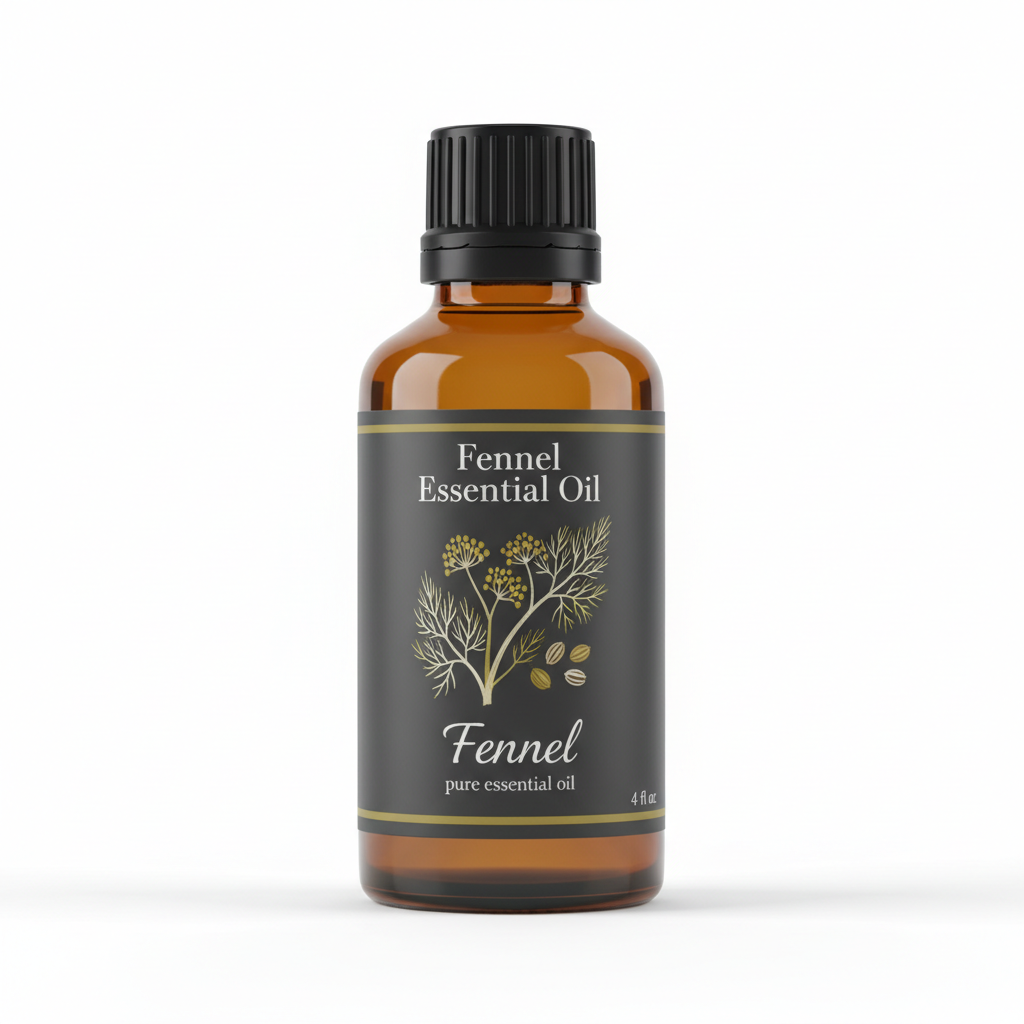
Fennel Essential Oil
Our own Fennel Essential Oil, in sizes from 0.5 oz to bulk.
From $13.99
Shop Now →If you are reading this because cramps are making your month hard, we are sorry, and we want to be straightforward about what our oil is and is not. It is a lovely-smelling cosmetic oil. It is not a pain remedy, and we would rather tell you that plainly than let a headline imply otherwise.
What the volunteers actually took
The most complete pooled analysis is a 2020 systematic review of 12 randomized trials, published in Nutrients. Every trial came from Iran. Nine tested fennel oil taken by mouth and three tested capsules. The reviewers deliberately left out studies of massage with fennel oil, so nothing in their numbers concerns applying a diluted oil to skin or smelling it. The doses were counted in drops, for example 25 drops of a 2 percent preparation every six hours, or 20 to 30 drops every four to eight hours. The review does not say how big a drop was, so those figures cannot be turned into a dose you could compare with anything.
That matters for us because the oil we sell is undiluted and is not intended for swallowing. Our guidance for skin is 0.5 to 2 percent in a carrier oil, and our ingestion article explains why the bottle is not food.
What the numbers say, in plain English
Against conventional pain medicines such as mefenamic acid or ibuprofen, the pooled result of seven trials was that fennel performed about the same, with the trials agreeing closely with each other. Against placebo the pooled result favoured fennel by a large margin, but the trials disagreed a great deal with one another, and the reviewers saw signs that small studies with favourable results were over-represented. A second meta-analysis of 12 studies reported a much smaller effect against placebo and again found no difference from mefenamic acid. When two reviews of overlapping trials disagree about the size of an effect, the sensible reading is "something may be there, and we do not know how big".
A 2026 review of carrot-family herbs (anise, dill, cumin and fennel) covering 14 studies came to a similar place. It found low risk of bias in the placebo trials of fennel and anise, but concerns about how fennel and dill trials against standard drugs were conducted and reported. It still called these herbs potentially effective add-ons and asked for better trials.
The newest trial we looked at, in 384 young women in India, used fennel capsules (480 mg) rather than oil, alongside ginger and placebo. Pain scores fell to 4.61 on fennel and 3.28 on ginger, while the placebo group stayed near 6.24. Ginger came out ahead of fennel.
What we take from it
Fennel preparations taken by mouth look worth studying further for period pain, on this evidence. It does not show anything about fennel oil on skin or in the air, it does not tell us what a safe swallowed dose of an essential oil is, and it tells us little about adverse effects, since only three of the 12 trials checked for them. We will not say our oil relieves cramps, and we do not offer an abdominal massage routine for it. Anything we suggested would be a guess.
Fennel also has hormone-related chemistry, which is part of why we recommend that anyone with an estrogen-sensitive condition leave the oil alone and why we ask people who are pregnant or breastfeeding to avoid it entirely. Our menopause article explains that background, and our contraindications page lists who should skip the oil.
A small habit that helps your appointment
If you do decide to talk to someone, a simple note on your phone can make the visit far more useful. Jot down roughly when the pain starts and how long it lasts, what it stops you doing, and what you have already tried. A few weeks of notes tell a clinician more than a hurried description on the day, and they spare you from trying to remember everything under pressure.
When pain deserves a clinician
Ordinary cramps are one thing. The NHS advises seeing a GP if periods become more painful, heavier or irregular, if the pain stops you doing your usual activities, if you have pain during sex or bleeding between periods, or if you notice a swollen tummy, loss of appetite or unplanned weight loss. It advises asking for an urgent appointment or calling NHS 111 if pelvic or period pain is severe or worse than usual and painkillers have not helped. A physician or obstetrician-gynecologist can tell whether something other than ordinary cramps is going on, and a pharmacist can talk through pain relief.
For the bigger picture, our evidence overview shows how period pain compares with other fennel claims, and our pregnancy page covers a group that should avoid the oil.
The fennel and period pain story is a good example of how a promising result can be real and still not be about the product you are holding.
Fennel Essential Oil
Fennel Essential Oil from our own shop, in sizes from 0.5 oz to bulk.
From $13.99
Shop Now →Sources & Further Reading
- Lee HW et al., 2020. Fennel for Reducing Pain in Primary Dysmenorrhea: A Systematic Review and Meta-Analysis of Randomized Controlled Trials. Nutrients 12(11)
- Shahrahmani H et al., 2021. Effect of fennel on primary dysmenorrhea: a systematic review and meta-analysis. J Complement Integr Med
- Thaliyil Poduval A et al., 2026. Efficacy of herbaceous Apiaceae plants in primary dysmenorrhea: A systematic review and meta-analysis of RCTs. Ann Pharm Fr
- Negi R et al., 2026. Efficacy of ginger and fennel in relieving primary dysmenorrhea: A triple-blind crossover controlled trial. J Educ Health Promot
- NHS. Period pain