Estragole in Fennel Oil: What Regulators Said
Two sentences about fennel oil go around the internet: "it contains a carcinogen" and "it's natural, so it's fine". The regulators who actually studied estragole said neither. What they wrote is more careful and, once you read it, more useful. They found that estragole causes liver tumours in rodents at high doses, that the same chemistry plausibly operates in people, and that nobody can yet draw an exact line. Their advice is to keep exposure as low as practically achievable. That is a precaution that scales with how much and how often, not a verdict on a bottle of oil.
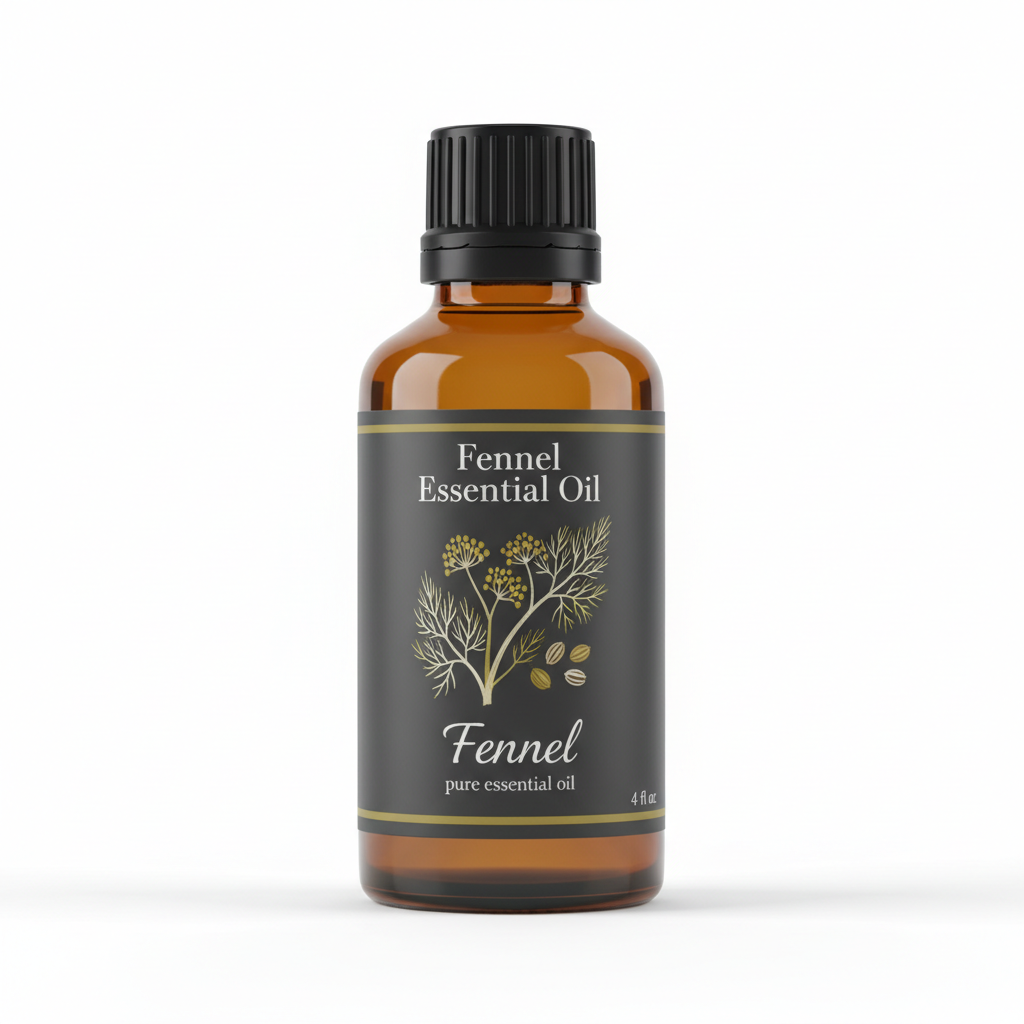
Fennel Essential Oil
Our own Fennel Essential Oil, in sizes from 0.5 oz to bulk.
From $13.99
Shop Now →Where estragole sits in fennel oil
Estragole is a minor passenger in sweet fennel oil, far behind trans-anethole, which gives fennel its sweet licorice character. The European Food Safety Authority's 2023 review gives a specification of 2 to 6 percent for sweet fennel oil, and the five batches it analysed averaged 3.76 percent by one method and 4.42 by another. The European Pharmacopoeia caps bitter fennel oil at 6 percent. Those are other people's batches. The figure for a given lot of any fennel oil is something to ask the seller for, and if you would like a report for your own lot from us, ask in writing through our contact page. Our guide to reading a fennel oil lab report shows what to look for when it arrives.
What the European Medicines Agency concluded
The agency's herbal medicines committee revisited estragole in a statement last revised in 2023. Its reading goes like this. Estragole given to rodents at high doses produced liver tumours. In the body it is converted to a reactive compound that binds DNA, and that pathway has been demonstrated in animals and in human liver systems in the lab. So the committee considers the animal tumours "probably relevant" for human risk assessment. It was equally frank about the limits: a conclusive assessment is not possible with the data we have, an exact limit cannot be defined, and no one has measured cancer in people using fennel preparations. It also notes that "officially" neither IARC nor the US National Toxicology Program has made an evaluation of estragole.
What it does offer is a working yardstick, borrowed from the way drug impurities are handled: a guidance value of 0.05 mg of estragole per person per day for adults and adolescents, and for pregnant and breastfeeding women, with 1 microgram per kilogram of body weight per day for children. The committee calls this a helpful tool for judging sensitive groups, doses and duration, and not a threshold between safe and unsafe. For skin products it says that data on absorption through the skin are missing, and that until there are data the same limits apply, with use limited to intact skin and a maximum of two weeks.
What changed for bitter fennel oil
In 2007 the same committee had a traditional herbal monograph for bitter fennel fruit oil taken for cough. In May 2024 it concluded that this use no longer fit the requirements, citing the estragole content, the fact that no carcinogenicity studies have been done on the oil itself, and the genotoxicity and carcinogenicity concerns in its estragole statement. That was a decision about swallowing bitter fennel oil as a medicine. It tells us nothing direct about a diluted sweet fennel oil used for aroma, and we would not stretch it that far. What it shows is how seriously the regulators weigh the daily dose.
Reading numbers without panic
Figures such as micrograms and milligrams sound alarming mostly because they are unfamiliar. A useful habit is to ask three plain questions of any number you see: per what (a day, a body weight, a lot), measured by whom, and compared with what. A figure with no answers to those is a talking point, and a figure with all three is information.
It also helps to remember that these documents were written for people deciding what to allow in herbal medicines and food, which is a different job from choosing a bottle of aroma oil. We read them to learn how careful people think about dose, and that is the lesson we keep.
What we would ask any seller
Our recommendation is short. Ask which fennel variety it is. Ask for the anethole and estragole figures for the lot you will receive. Ask who measured them. A seller who is happy to answer in writing is one worth talking to, and that goes for us too.
How this shapes what we recommend
Reading these documents is why our guidance reads the way it does. We recommend diluting fennel oil to 0.5 to 2 percent in a carrier oil for skin, patch testing first, and keeping it away from eyes. The lower end of that range is a perfectly good place to start, and the regulators' emphasis on keeping exposure low is one reason we say so. We recommend avoiding the oil entirely in pregnancy and while breastfeeding, and it is not for children, which lines up with the committee's attention to those groups. We do not suggest swallowing it. If you have a long-term condition or take medication, a pharmacist or physician can look at your own situation; our contraindications page lists the groups we ask to skip it.
None of this makes fennel oil sinister. It makes it a concentrated aromatic that rewards a careful hand. Our overview, is fennel essential oil safe, covers who should skip it, and sweet versus bitter fennel oil explains the two varieties and how to tell which you have.
The best reading of the regulators is a simple one: respect the dose, keep it low, and ask for the numbers.
Fennel Essential Oil
Fennel Essential Oil from our own shop, in sizes from 0.5 oz to bulk.
From $13.99
Shop Now →Sources & Further Reading
- European Medicines Agency, HMPC, 2023. Public statement on the use of herbal medicinal products containing estragole (EMA/HMPC/137212/2005 Rev 1 Corr 1)
- European Medicines Agency, HMPC, 2024. Public statement on Foeniculum vulgare Miller subsp. vulgare var. vulgare, aetheroleum (EMA/HMPC/522456/2021)
- EFSA FEEDAP Panel, 2023. Safety and efficacy of feed additives consisting of essential oils from the fruit and stems of Foeniculum vulgare Mill. ssp. vulgare: Bitter fennel oil for use in all animal species and sweet fennel oil for use in dogs and cats (FEFANA asbl)