Sweet vs Bitter Fennel Oil: How to Read the Label
The shortcut goes like this: sweet fennel oil is the mild one, bitter fennel oil is the strong one, so buy sweet and relax. There is something to it, but the documents tell a more interesting story, and the most useful thing to take from it is how to read a bottle rather than a name.
Fennel Essential Oil
Our own Fennel Essential Oil, in sizes from 0.5 oz to bulk.
From $13.99
Shop Now →What the two names actually refer to
Both oils come from Foeniculum vulgare. The European Pharmacopoeia, as summarized in the European Medicines Agency's 2024 assessment report, recognizes sweet fennel (var. dulce) and bitter fennel (var. vulgare). Sweet fennel fruit must give at least 20 mL of essential oil per kilogram, with at least 80% anethole in that oil. Bitter fennel fruit must give at least 40 mL per kilogram, with at least 60% anethole and at least 15% fenchone. So sweet fruit gives less oil that leans toward anethole, while bitter fruit gives more oil with more fenchone.
Where the tidy story loosens
The same EMA report notes that some chemotypes of fennel carry less than 50% anethole, more than 30% fenchone and more than 30% estragole. The pharmacopoeial figures are minimums, not a guarantee that every oil is typical.
Standards for the oil itself overlap a good deal. A 2024 study cites sweet fennel oil at 60% to 80% anethole under the French standard and bitter fennel at 50% to 78% under ISO 17412. EFSA's 2023 opinion uses a very different specification for a bitter fennel oil for feed: 15% to 30% anethole, with limonene prominent. And IFRA's estragole standard lists bitter fennel in two separate entries, an anethole type and a phellandrene type. The upshot is that "bitter" can describe more than one chemistry, and "sweet" is a claim about the plant variety that a label alone does not prove.
Why the difference matters in use
For cosmetic and perfume work, the figure to watch is estragole, because it carries the IFRA limits. The European Pharmacopoeia caps estragole in bitter fennel oil at 6.0%, and in 2024 the EMA's herbal committee withdrew a monograph on bitter fennel oil as a swallowed expectorant, citing estragole concerns. That statement concerns oral medicine, not skin or fragrance use, but it shows regulators following the estragole figure rather than the word on the label.
The practical translation: divide a finished-product limit by the oil's estragole share to get a ceiling. With IFRA's 0.075% limit for body oils and lotions, that is about 2.0% oil at EFSA's sweet fennel batch mean of 3.76% estragole, about 1.25% at 6.0%, and about 0.44% at the 17.0% average the 2024 study found in its own authentic distillates. Same species, more than a four-fold spread in how much fits, which is why the lot's figures matter more than the variety name.
Smell first, then read
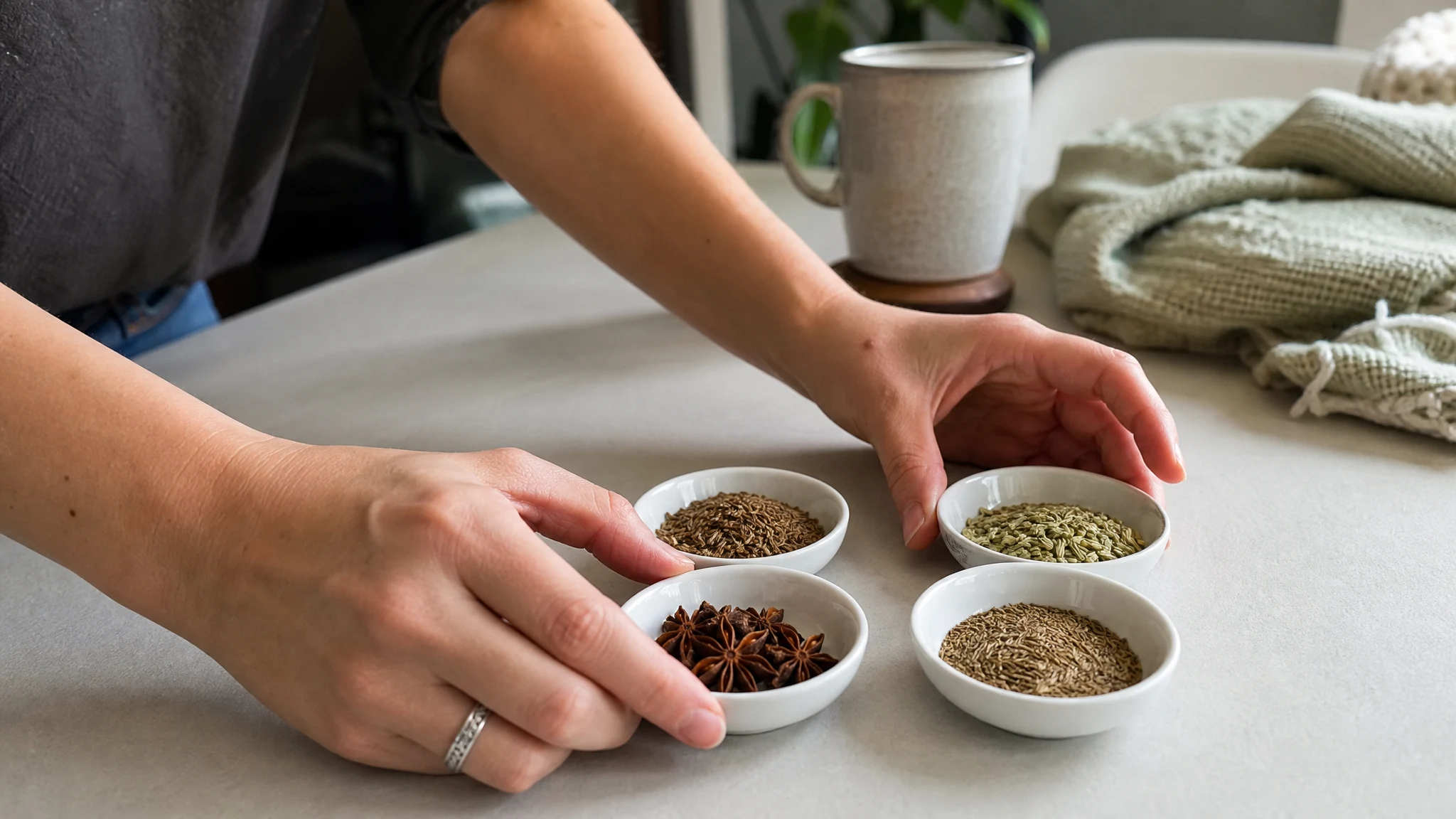
If you can sample two oils, smell them before you read anything, then read the documents and see whether your nose and the paper agree. Use paper strips, give each one a minute, and write your impressions in plain words. "Sweet candy", "grassy", "sharp", "earthy", "peppery". Our description of our own oil is sweet and anise-like first, then earthy and peppery, a top to middle note. If another oil strikes you very differently, that is a reason to ask what it is.
A card for every bottle
A practical habit we recommend: make a small card for each fennel oil you own. Write the seller, the variety they named, the lot number, the date you received it and what the report showed, if there was one. When you come back to a blend six months later, the card answers questions you would otherwise have to guess at. It also makes you a much sharper buyer the next time, because you are comparing against your own notes.
A word about names on bottles
Labels use all sorts of shorthand: "sweet fennel", "bitter fennel", "fennel seed", "Foeniculum vulgare", or just "fennel". Treat each as a starting point, not a conclusion. The botanical name tells you the species, and a variety on its own does not tell you how the oil will behave. The lot's figures do.
What to ask any seller, us included
We would ask three things in writing: which variety, what the anethole and estragole percentages are for the specific lot, and how they were measured. Our shop describes our oil as sweet fennel, steam-distilled from crushed seed. The Certificate of Analysis we publish for one batch lists the species as Foeniculum vulgare, with density of 0.975 and refractive index of 1.546. If you need the variety or a compound breakdown for a lot, ask us in writing through the contact page before ordering, and read what comes back before you rely on it. Our guide to reading a fennel oil label and GC-MS report explains how.
Whichever variety you choose, we say to avoid fennel oil entirely in pregnancy and breastfeeding and to keep it away from children. Is fennel essential oil safe covers who should skip it, estragole in fennel oil covers the regulator story, and fennel and anise oil shows how a sibling oil lands on the same numbers.
So the next time you see "sweet" on a bottle, treat it as a good start and the lot report as the full answer.
Fennel Essential Oil
Fennel Essential Oil from our own shop, in sizes from 0.5 oz to bulk.
From $13.99
Shop Now →Sources & Further Reading
- European Medicines Agency (HMPC), 2024. Assessment report on Foeniculum vulgare subsp. vulgare var. vulgare and var. dulce, fructus (EMA/HMPC/240553/2016). https://www.ema.europa.eu/en/documents/herbal-report/final-assessment-report-foeniculum-vulgare-miller-subsp-vulgare-var-vulgare-foeniculum-vulgare-miller-subsp-vulgare-var-dulce-mill-batt-trab-fructus-revision-1_en.pdf-0
- European Medicines Agency (HMPC), 2024. Public statement on Foeniculum vulgare subsp. vulgare var. vulgare, aetheroleum (EMA/HMPC/522456/2021). https://www.ema.europa.eu/en/documents/public-statement/final-public-statement-foeniculum-vulgare-miller-subsp-vulgare-var-vulgare-aetheroleum-revision-1_en.pdf
- EFSA FEEDAP Panel, 2023. Safety and efficacy of feed additives from Foeniculum vulgare Mill. ssp. vulgare: bitter fennel oil and sweet fennel oil. https://pmc.ncbi.nlm.nih.gov/articles/PMC10613937/
- Murphy BJ et al., 2024. Authentication of Fennel, Star Anise, and Anise Essential Oils by GC/MS and GC/IRMS. Plants 13(2). https://pmc.ncbi.nlm.nih.gov/articles/PMC10818908/
- IFRA, 2020. IFRA Standard: Estragole (Amendment 49). https://www.perfumersworld.com/documents/Project-Templates/IFRA-Standards/Estragole.pdf