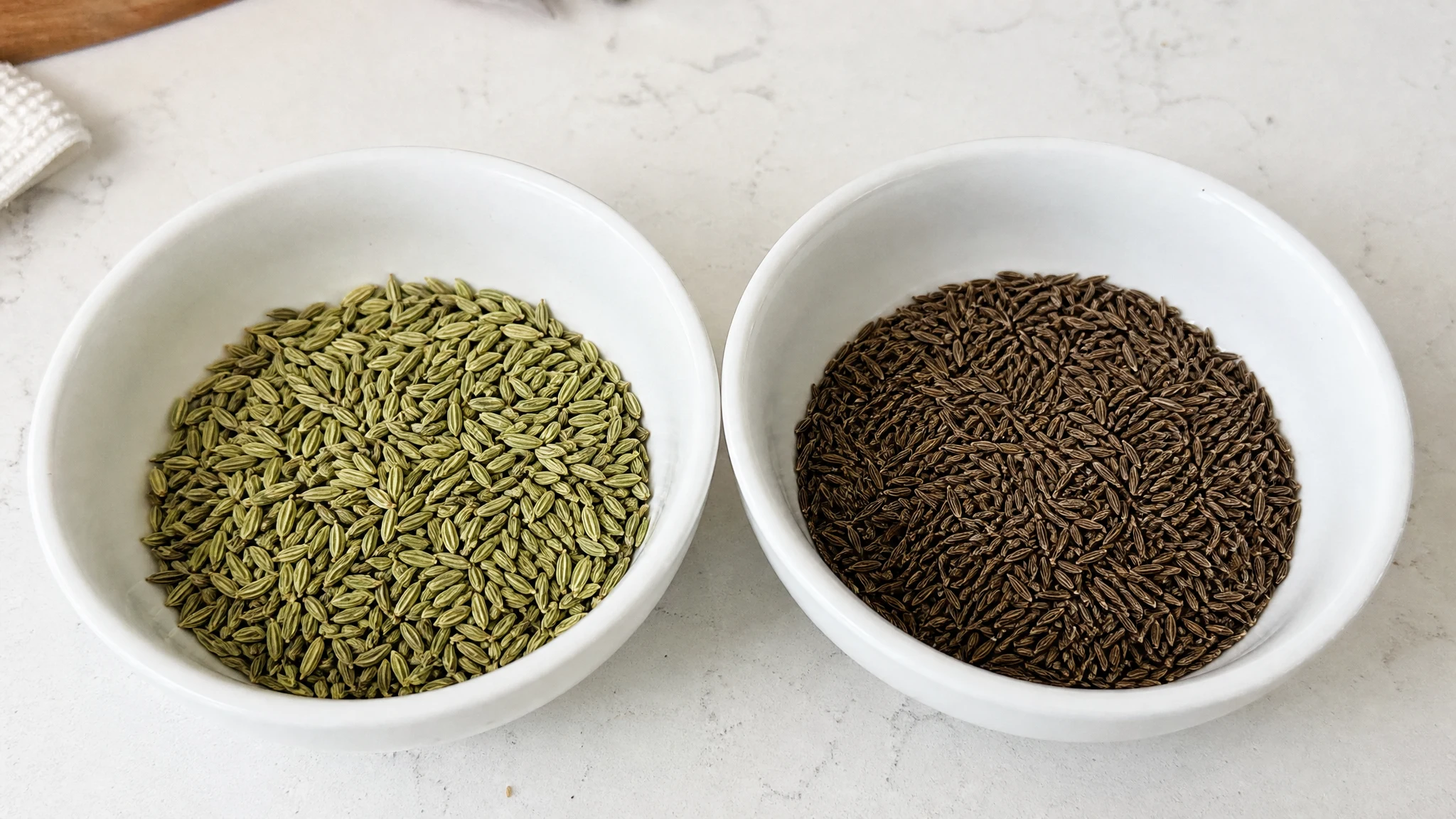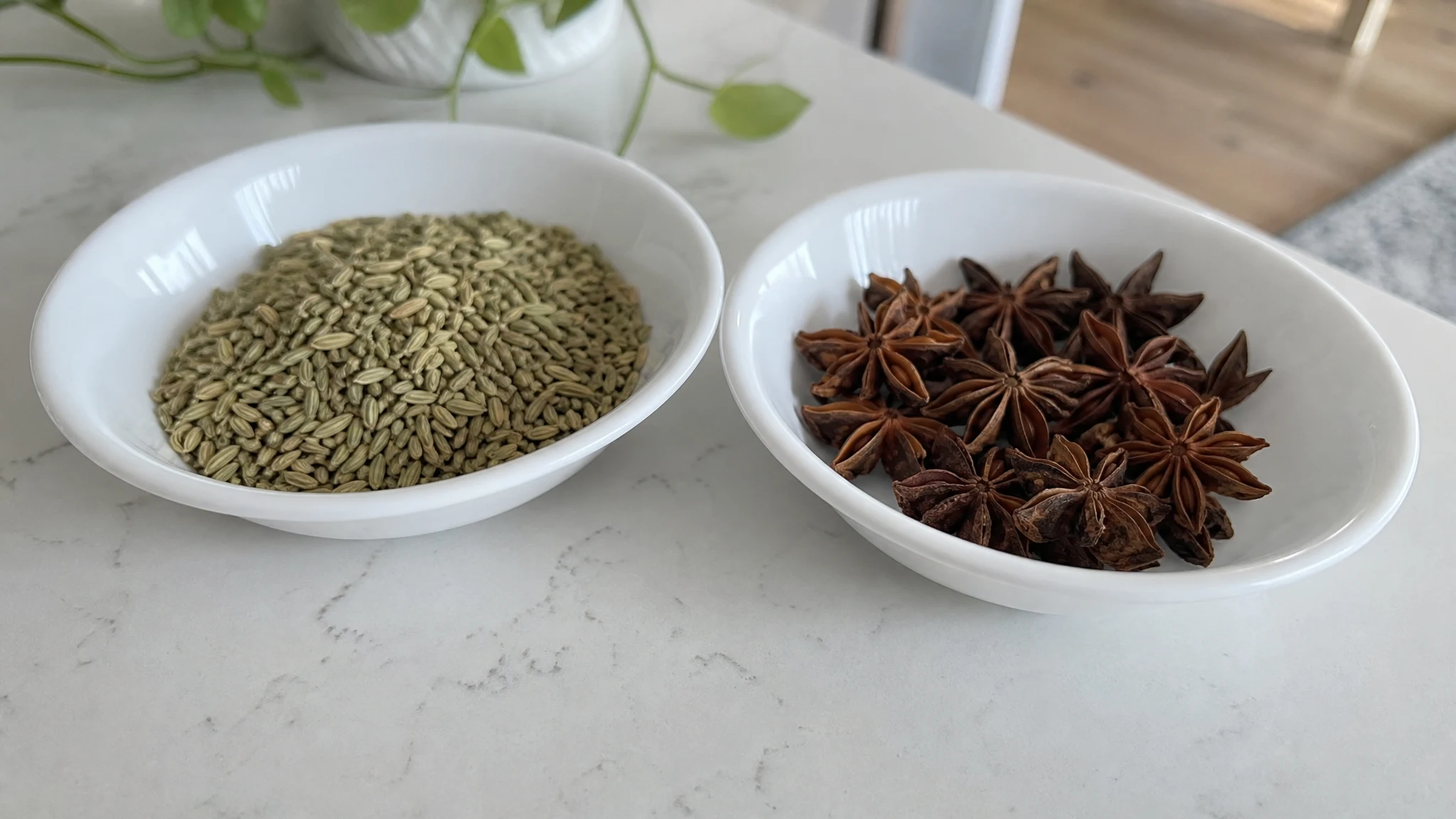
Fennel Oil vs Anise Oil: Which Fits Your Recipe?
Fennel and anise are often swapped for one another because they share a signature molecule, trans-anethole, and a sweet, licorice-like personality. They are cousins, though, not twins, and the differences show up in the numbers once you look.
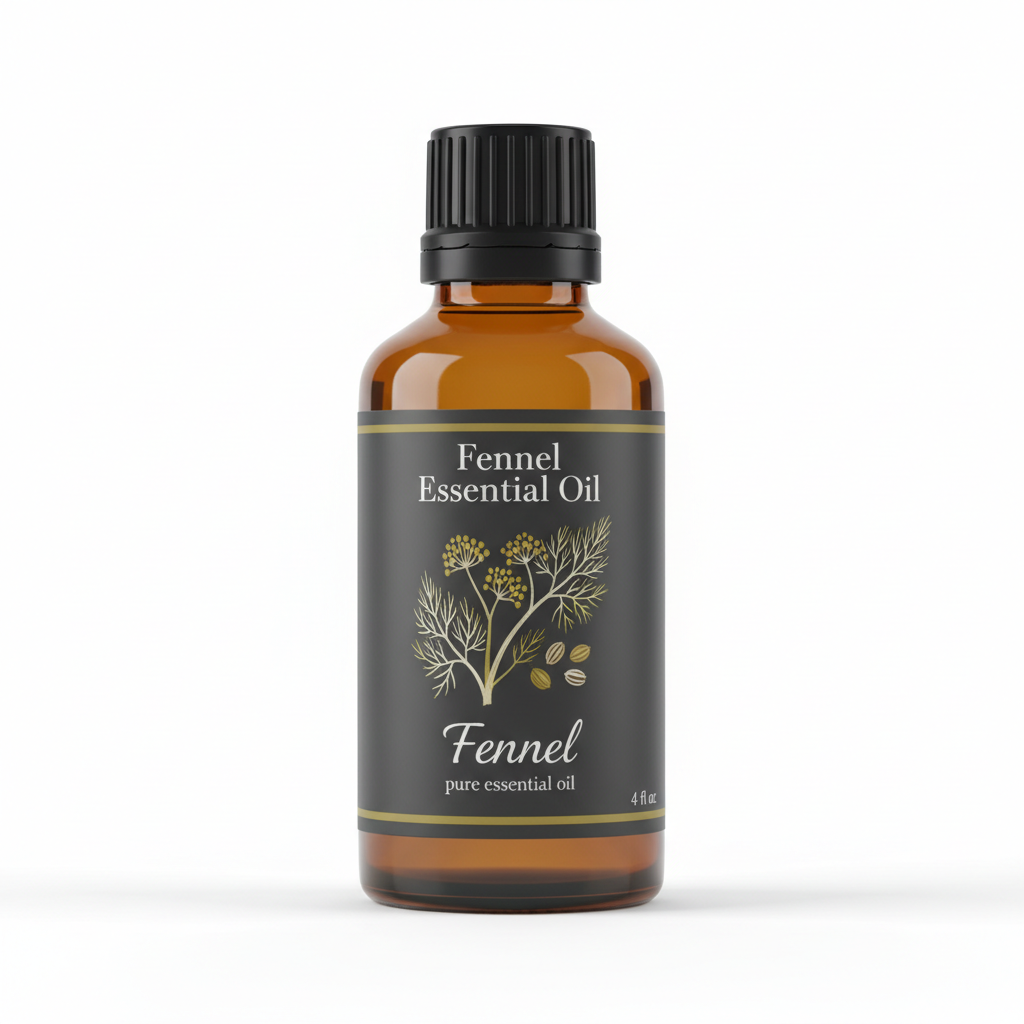
Fennel Essential Oil
Our own Fennel Essential Oil, in sizes from 0.5 oz to bulk.
From $13.99
Shop Now →Almost all anethole, or anethole plus company
Anise oil is close to a single-note oil. In the five Spanish batches EFSA analyzed in 2023, trans-anethole averaged 90.0% of the oil. Sweet fennel oil, in five Moldavian batches, averaged 77.7%, and it carries more besides: fenchone, a camphor-like ketone, plus limonene and a little more estragole. That cast of supporting compounds is part of why fennel reads as sweet, then earthy and peppery, rather than as a straight licorice line. It is a fair reading of the chemistry, though aroma was not measured in the studies we read, so treat it as reasoning, not a finding.
Those supporting compounds are also how laboratories tell the oils apart. In the 2024 authentication study, fenchone averaged 18.5% in the authors' authentic fennel distillates and was not detected in anise or star anise. Anise has its own markers, such as p-anisaldehyde and gamma-himachalene, which labs look for in turn.
The difference that changes your recipe
The estragole figure is the one worth remembering. EFSA's anise batches averaged 0.82% estragole, against 3.76% in the sweet fennel batches. IFRA limits estragole in finished products by category, so a lower estragole share leaves more room for the oil.
For a body oil or lotion (IFRA category 5A, limit 0.075%), simple division gives a ceiling of about 9% for the anise oil and about 2% for the fennel oil. For bar soap and bath products (category 9, limit 0.050%) it is about 6% against 1.3%. This is our arithmetic, it counts estragole only, and any other estragole source in the same product uses up part of the same limit. Still, it explains why we would not swap the two one for one.
Both EFSA opinions describe the oils as irritants to skin and eyes and as skin and respiratory sensitisers, and both note a proposed classification linked to estragole above 1%. So the oils share a hazard profile and differ in degree, which is another reason for a measured hand with either.
Smell them side by side
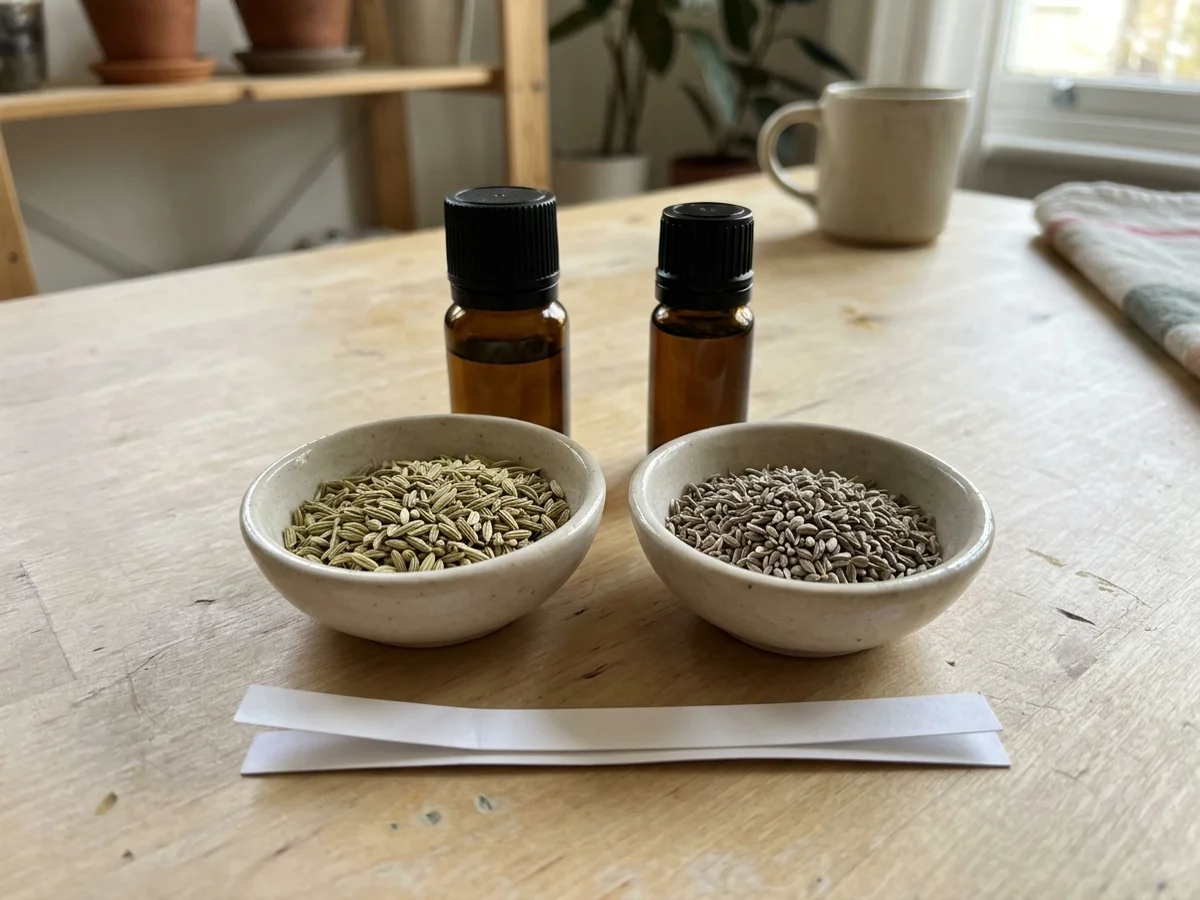
Numbers only go so far, so if you have both oils, give your nose a chance to compare. Put a drop of each on its own paper strip, label them in pencil, and wait a minute so the very first burst fades. Then go back and forth.
You will notice that both open with that unmistakable sweet licorice. With fennel, our description is sweet and anise-like first, then earthy, peppery and herbaceous layers behind it. Anise tends to read as one long, straight, sweet line by comparison. Come back to the strips after ten minutes and a half hour, and the difference between a one-note and a layered aroma usually becomes easier to hear.
A third look-alike: star anise
A label that says only "anise" may mean star anise, a different plant (Illicium verum) with similar chemistry. Authentic star anise distillates in the 2024 study averaged 86.1% anethole and 3.1% estragole. The practical lesson is to check the botanical name on the bottle, whether Pimpinella anisum, Illicium verum or Foeniculum vulgare, and to treat a vague "licorice oil" as a reason to ask questions.
If you are swapping one for the other
It is tempting to treat the two oils as interchangeable in a recipe you already like. We would not. Change one thing at a time: take out the anise, put in a smaller amount of fennel, and write down what you did. Smell the result fresh, then again the next day. A blend that came together around anise's straight sweetness may need a different partner when fennel's earthier layers join in.
Keep notes on the page with the dates. Your own notes will teach you more about these two oils than any comparison table, ours included.
Which to choose
If you want an oil that is nearly all anethole, anise is the closer match on paper. If you want that sweet opening with earthy, peppery layers behind it, that is fennel, which is the one we sell. Our shop describes it as sweet fennel, steam-distilled from crushed seed. For anise you would go to another supplier, and the same advice holds there: ask for the lot's GC-MS report before relying on any figure.
For our oil, the Certificate of Analysis we publish for one batch lists density and refractive index. If you need anethole, fenchone or estragole for a lot, ask us in writing through the contact page. To go deeper on the variety question, read sweet vs bitter fennel oil and estragole in fennel oil, and for other options see finding a stand-in for fennel oil. For who should skip fennel altogether, is fennel essential oil safe covers it.
In short, they smell related on paper and behave differently in a formula, so match the oil to the product rather than the other way around.
Fennel Essential Oil
Fennel Essential Oil from our own shop, in sizes from 0.5 oz to bulk.
From $13.99
Shop Now →Sources & Further Reading
- Murphy BJ et al., 2024. Authentication of Fennel, Star Anise, and Anise Essential Oils by GC/MS and GC/IRMS. Plants 13(2). https://pmc.ncbi.nlm.nih.gov/articles/PMC10818908/
- EFSA FEEDAP Panel, 2023. Safety and efficacy of feed additives obtained from the fruit of Pimpinella anisum L. (anise oil). EFSA Journal 21(4):e07976. https://pmc.ncbi.nlm.nih.gov/articles/PMC10117170/
- EFSA FEEDAP Panel, 2023. Safety and efficacy of feed additives from Foeniculum vulgare Mill. ssp. vulgare: bitter fennel oil and sweet fennel oil. https://pmc.ncbi.nlm.nih.gov/articles/PMC10613937/
- IFRA, 2020. IFRA Standard: Estragole (Amendment 49). https://www.perfumersworld.com/documents/Project-Templates/IFRA-Standards/Estragole.pdf
- IFRA, 2019. Guidance for the use of IFRA Standards (list of product categories). https://pimgrup.com/wp-content/uploads/2021/01/List-of-IFRA-categories.pdf