Is Fennel Oil Safe? Who Should Skip It
Most essential oils come with a general "use sensibly" note. Fennel gets a longer one, and it deserves a clear explanation rather than a vague warning. For an adult using a small, well-diluted amount on skin, the main thing to watch is irritation. For a handful of situations, the better answer is simply to leave the bottle closed.
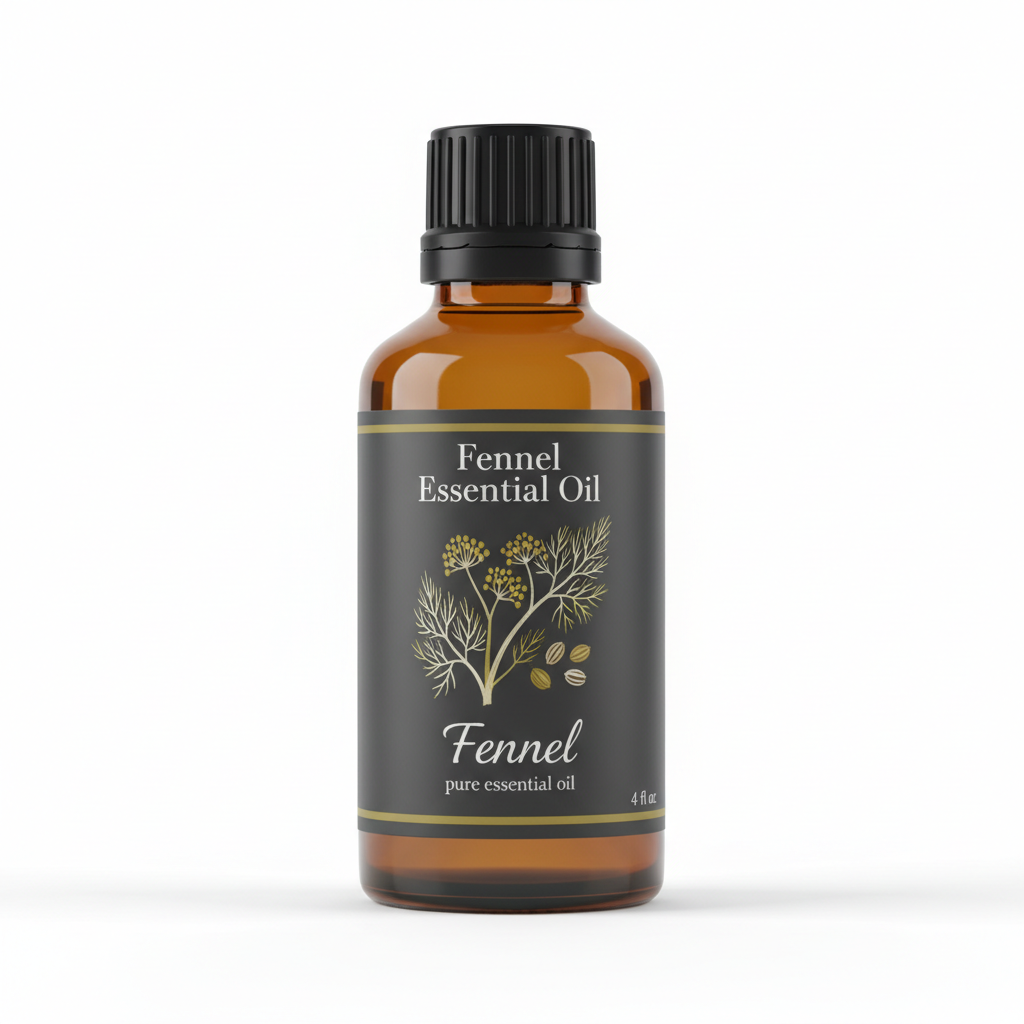
Fennel Essential Oil
Our own Fennel Essential Oil, in sizes from 0.5 oz to bulk.
From $13.99
Shop Now →Why fennel earns extra care
Fennel oil is built mostly around anethole, the sweet anise-scented molecule, with a small share of estragole alongside it. Regulators pay attention to both, and the reasons are different enough that it helps to take them one at a time.
Estragole is the headline. The European Medicines Agency's herbal committee looked at oil from bitter fennel and ended its work on a medicinal monograph in 2024, citing the way estragole behaves in rodent studies and the fact that no carcinogenicity studies exist on the oil itself (EMA/HMPC, 2024, final public statement on bitter fennel oil). That statement concerns bitter fennel taken by mouth as a medicine. We sell an external cosmetic oil, which our shop describes as sweet fennel, so it is context for us and not a verdict on our bottle. It is also why we say plainly that estragole content is worth asking about.
Second, sensitisation. The European Food Safety Authority's panel described fennel oils as irritants to skin and eyes and as skin and respiratory sensitisers (EFSA FEEDAP Panel, 2023, safety and efficacy of feed additives from Foeniculum vulgare). Plenty of loved oils carry that label, and it is the reason we keep dilution low and keep the oil away from eyes.
Third, seizures after swallowing. A 1999 neurology paper reviewing the literature listed fennel among eleven plant oils reported as convulsants, pointing to ketones such as fenchone (Burkhard et al., 1999, Plant-induced seizures: reappearance of an old problem). A 2011 case report described a woman with well-controlled epilepsy who had a generalised seizure after eating cakes made with an unknown amount of fennel essential oil (Skalli and Soulaymani Bencheikh, 2011, Epileptic seizure induced by fennel essential oil). Both concern swallowed oil, which is not what our bottle is for.
Who should skip it
Our How It's Made page is direct about this, and we stand by it. Please leave fennel oil out of your home if any of these describe you or someone sharing your air:
- You are pregnant or breastfeeding. We say avoid it entirely, and an obstetrician-gynecologist, midwife or lactation consultant is the right person to ask.
- You are choosing for a baby or child. Fennel oil is not appropriate for children.
- You have epilepsy, or an oestrogen-sensitive condition. Leave this one alone, and talk to your physician.
- You react to celery, aniseed, caraway, coriander or dill. The EMA's fennel fruit report lists hypersensitivity to carrot-family plants and to anethole as a contraindication for fennel preparations (EMA/HMPC assessment report on fennel fruit, 2024).
- You share a home with pets. The ASPCA lists fennel the plant as non-toxic to dogs and cats but advises avoiding concentrated oil (ASPCA, Fennel). A veterinarian can advise on your own animals.
If none of that applies: skin and air
On skin we recommend dilution in a carrier oil at 0.5% to 2%, and we would start at the low end and keep fennel to small, occasional uses rather than daily coverage of large areas. That is a judgment call from the sensitiser classification above and from the fact that nobody has measured how much estragole crosses skin from a diluted oil. It is a reasoned position, not a measured limit. If you work to IFRA standards for a finished product, check them for your own category, since the fragrance industry's estragole limits are stricter than a generic percentage.
On patch testing, the advice is split. We suggest dabbing a small area and waiting 24 hours. The Tisserand Institute points out that patch testing is not fully reliable and that sensitisation often does not show on first use, which is a good reason to stay modest in strength even after a clean first day (Tisserand Institute, Irritation and allergic reactions). There is a fuller walkthrough in fennel oil skin basics.
For diffusing, the Tisserand Institute suggests 30 to 60 minutes on and 30 to 60 minutes off with some fresh air, and notes that people with asthma may find some oils trigger symptoms (Tisserand Institute, Safety guidelines). If a room smells strongly of anise, it is already more than you needed.
A simple household habit
Whoever lives in your home, treat the fennel bottle the way you would any strong aromatic. Keep it tightly capped, on a high shelf or in a closed box, away from children and pets, and out of direct light and heat. Write the date you opened it on the label. A bottle that is easy to find and easy to date is a bottle you will use thoughtfully.
Swallowing is a different question
Our bottle is not meant for internal use, and we would not suggest it. America's Poison Centers notes that choking on an essential oil can send it into the lungs and cause pneumonia, and that anyone who swallows one should call 1-800-222-1222 in the US (America's Poison Centers, Essential oils: Poisonous when misused). More on the topic is in can you ingest fennel essential oil.
Choosing a bottle with the chemistry in mind
Because estragole varies from oil to oil, the sensible question for any seller, us included, is which lot and what the report shows. The Certificate of Analysis we publish covers one batch and lists density, refractive index, appearance and smell. If you need anethole and estragole figures for a particular lot, ask us in writing through the contact page before you order. The wider estragole picture is in estragole in fennel oil.
The short version is that fennel is a lovely, characterful oil for people it suits, used lightly and diluted, and one that a few households are better off without. Knowing which group you are in is most of the work.
Fennel Essential Oil
Fennel Essential Oil from our own shop, in sizes from 0.5 oz to bulk.
From $13.99
Shop Now →Sources & Further Reading
- European Medicines Agency (HMPC), 2024. Final public statement on Foeniculum vulgare Miller subsp. vulgare var. vulgare, aetheroleum, revision 1
- EFSA FEEDAP Panel, 2023. Safety and efficacy of feed additives from Foeniculum vulgare (bitter and sweet fennel oil)
- European Medicines Agency (HMPC), 2024. Final assessment report on Foeniculum vulgare fructus
- Burkhard PR et al., 1999. Plant-induced seizures: reappearance of an old problem. PubMed 10460442
- Skalli S, Soulaymani Bencheikh R, 2011. Epileptic seizure induced by fennel essential oil. PubMed 21865126
- ASPCA. Fennel (toxic and non-toxic plants)
- Tisserand Institute. Irritation and allergic reactions
- Tisserand Institute. Safety guidelines
- America's Poison Centers. Essential oils: Poisonous when misused