The History of Fennel: From Ancient Plant to Essential Oil
Fennel is one of those plants whose name outlived the empires that spoke it. Every time you say "fennel" you are borrowing a word that traces back through Old French and Latin to the word for hay, and the Greeks had a name for it so old that it turns up on Bronze Age tablets. The oil we distil from its seed is a far younger story, and a more varied one than the plant's.
Fennel Essential Oil
Our own Fennel Essential Oil, in sizes from 0.5 oz to bulk.
From $13.99
Shop Now →A name older than Latin
The English word came from Old French fenoil, from Latin faeniculum, a diminutive of faenum, "hay". The Greek word is marathon, and the plain where the famous battle was fought is described as a place of fennel. A form of the word, ma-ra-tu-wo, appears in Mycenaean Linear B, which makes it among the earliest fennel names on record.
Fennel also turns up in stories. In Hesiod's Theogony, Prometheus carries stolen fire from Olympus inside a hollow fennel stalk, a detail that makes sense once you have held a dry stalk, light and pithy. Much later, as Old English finule, it is one of the nine plants named in the Anglo-Saxon Nine Herbs Charm, recorded in the tenth century. A plant that shows up in myth, Greek geography and Old English verse has clearly been part of kitchens and gardens for a very long time.
The plant travelled, and it settled in
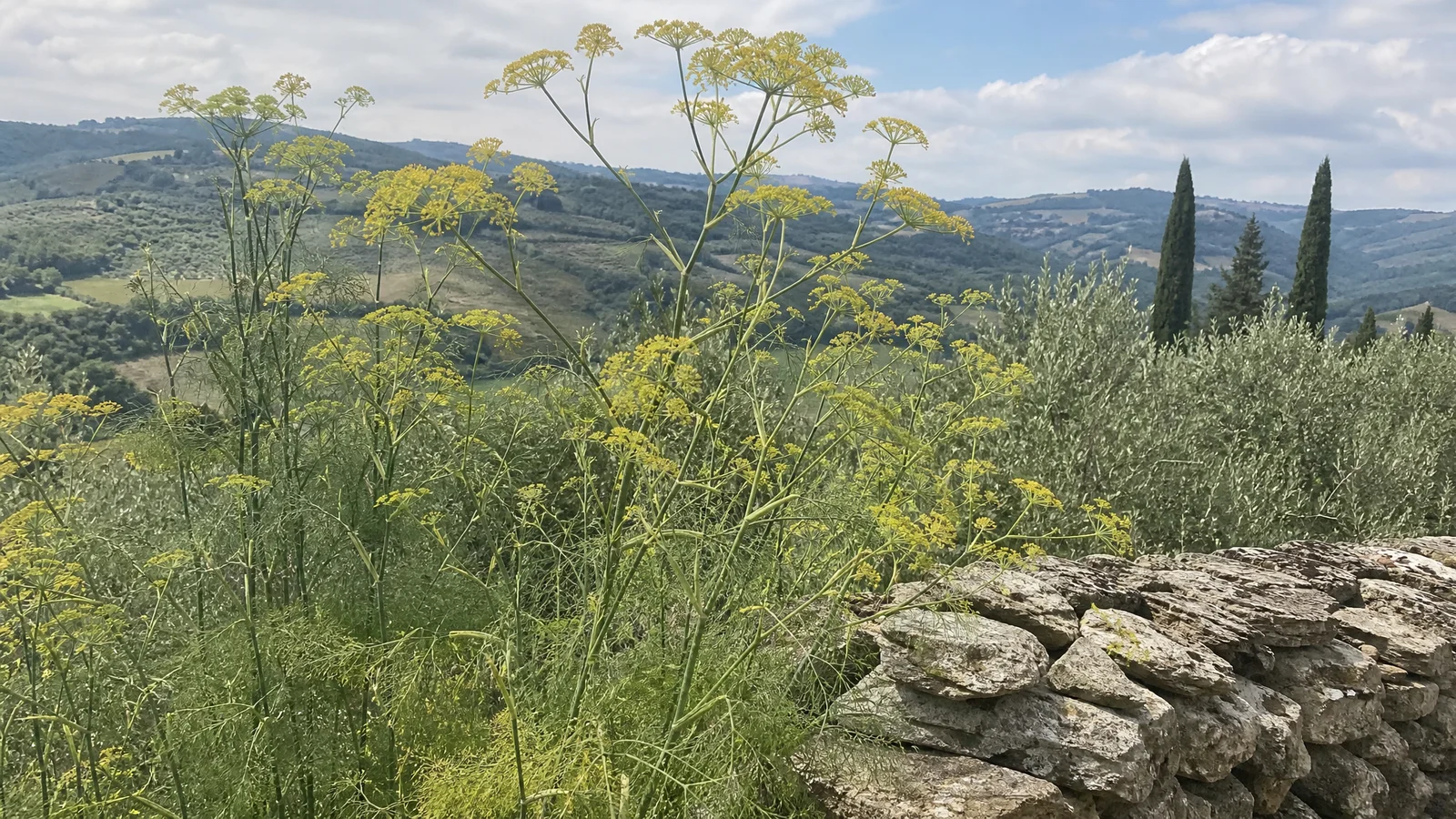
Fennel is native to the Mediterranean shores and now grows on several continents. In California, the state's invasive plant council rates it Moderate and describes it as very common throughout the state, with dense stands on Santa Cruz Island, around San Francisco Bay and on the Palos Verdes Peninsula. It also notes that it is unclear whether the culinary varieties are invasive. That wild roadside fennel is a good reminder that the plant is hardy and generous, though it is not where a distiller's oil comes from.

The oil is newer, and it is not one thing
Distillation as a craft is old, but nobody can say when fennel was first distilled, so we will not guess. What we can describe is how it is done today, and the variety is more interesting than "fennel oil" suggests.
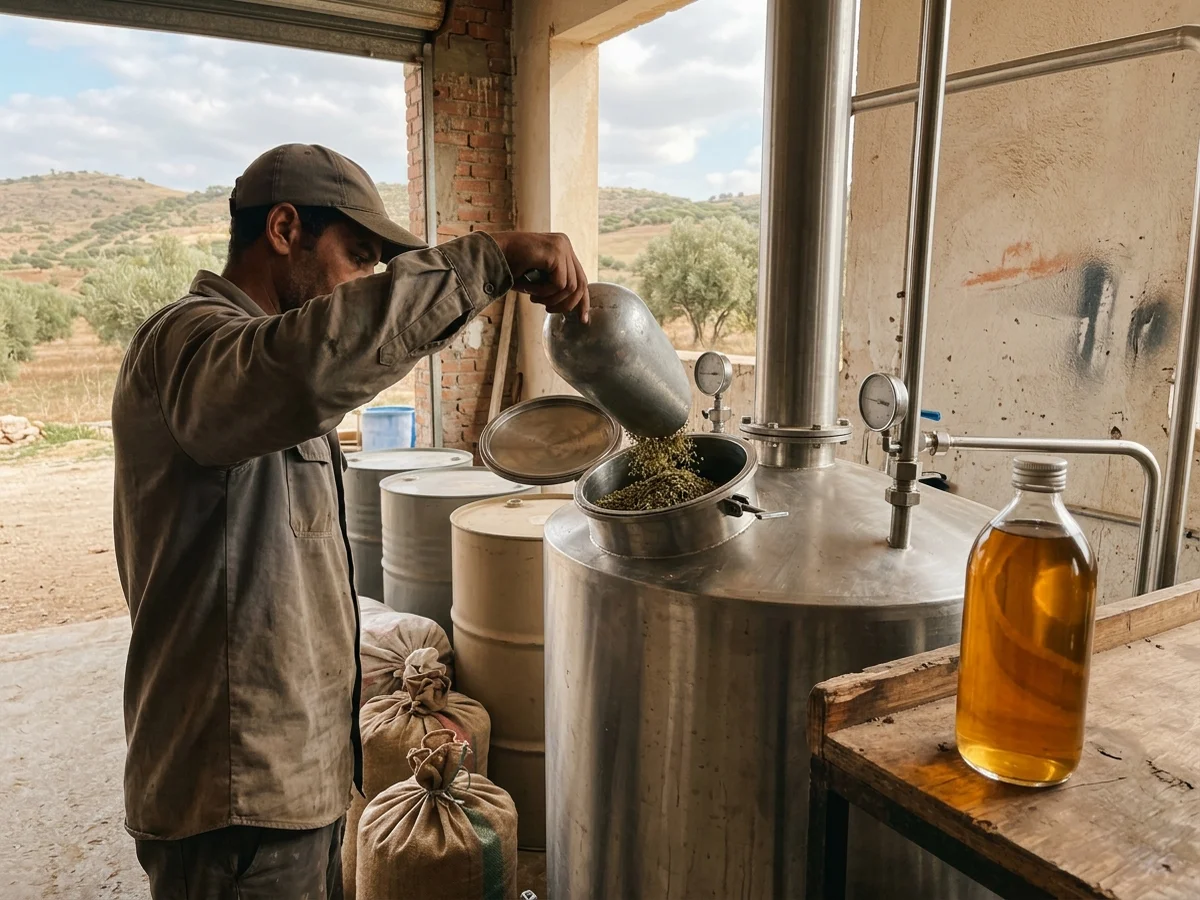
The European Food Safety Authority describes sweet fennel oil as steam-distilled from the fruit (the seed, in everyday language) and bitter fennel oil as distilled from fruit and stems. Researchers in Mississippi distilled whole fennel herb at eight run times from about a minute to nearly three hours. The longest run gave the most oil, about 0.68 percent of the plant's weight, and the make-up shifted with time: trans-anethole, the compound behind the sweet licorice character, rose the longer the still ran, while fenchone, another of its main compounds, was richest in the shortest runs. The authors note that most commercial fennel oil is made from the herb and that herb and seed oils differ.
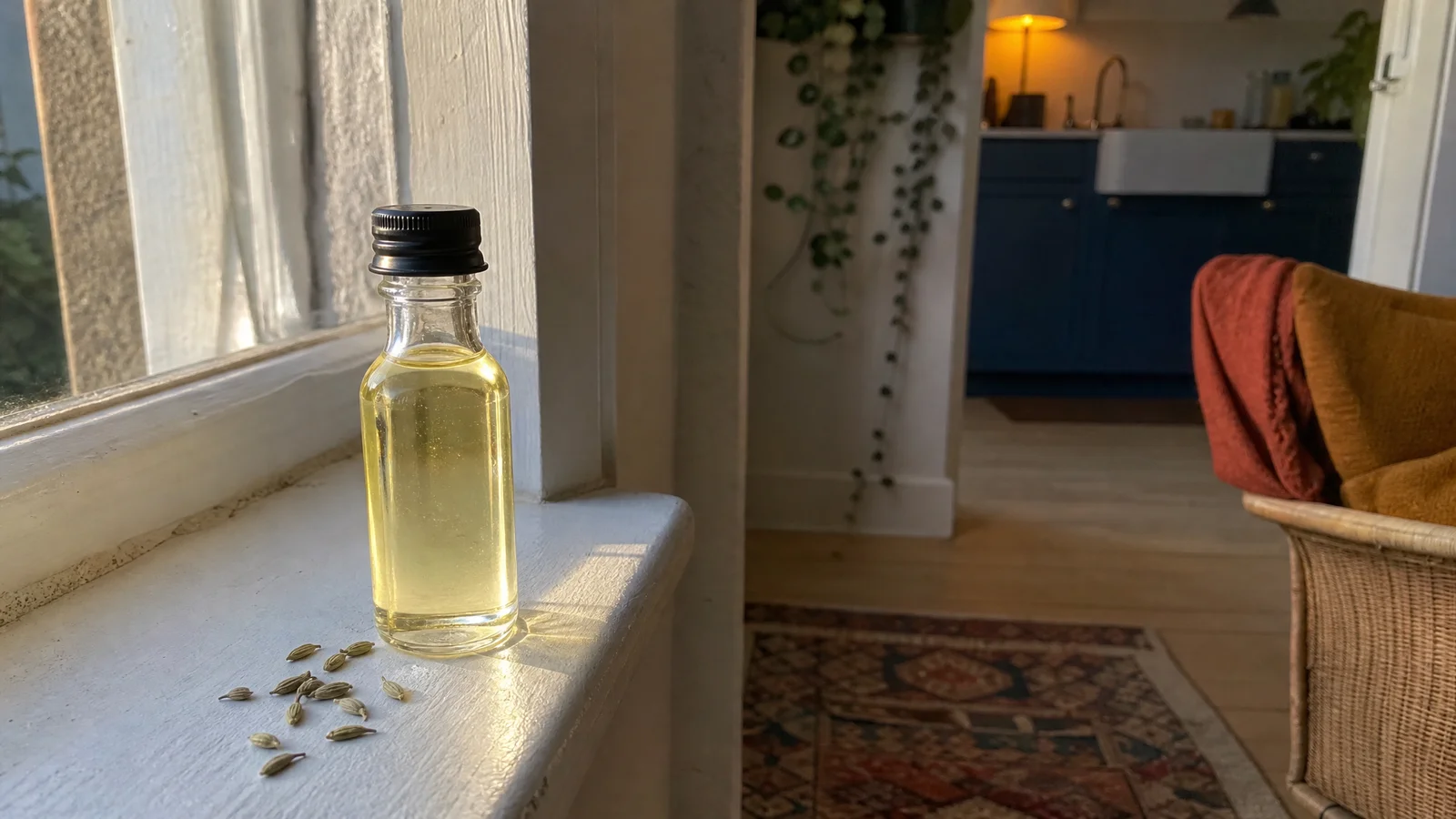
The takeaway is practical. "Fennel oil" can mean different plant parts, different varieties and different distillation times, and each gives a slightly different aroma and chemistry. It is why we tell you plainly what we sell: one fennel oil, steam-distilled from crushed seed, which our shop describes as sweet fennel.
Sweet and bitter
Botanists divide cultivated fennel into a sweet type (var. dulce) and a bitter type (var. vulgare), and the oil trade has standards for both. Our shop describes sweet fennel as milder and more fragrant than the bitter type. Their published ranges overlap, so a single number rarely tells you which you have. If you want the full picture, our sweet versus bitter guide goes through it, and if the variety matters for what you are making, you can ask us in writing for a report on your lot through the contact page.
It is worth pausing on how ordinary this is. Fennel was a plant people grew, cooked with and told stories about long before anyone thought of bottling its scent, and that humility is a good way to approach the oil: it is a seasoning for the nose, not a miracle.
Meeting fennel in the garden
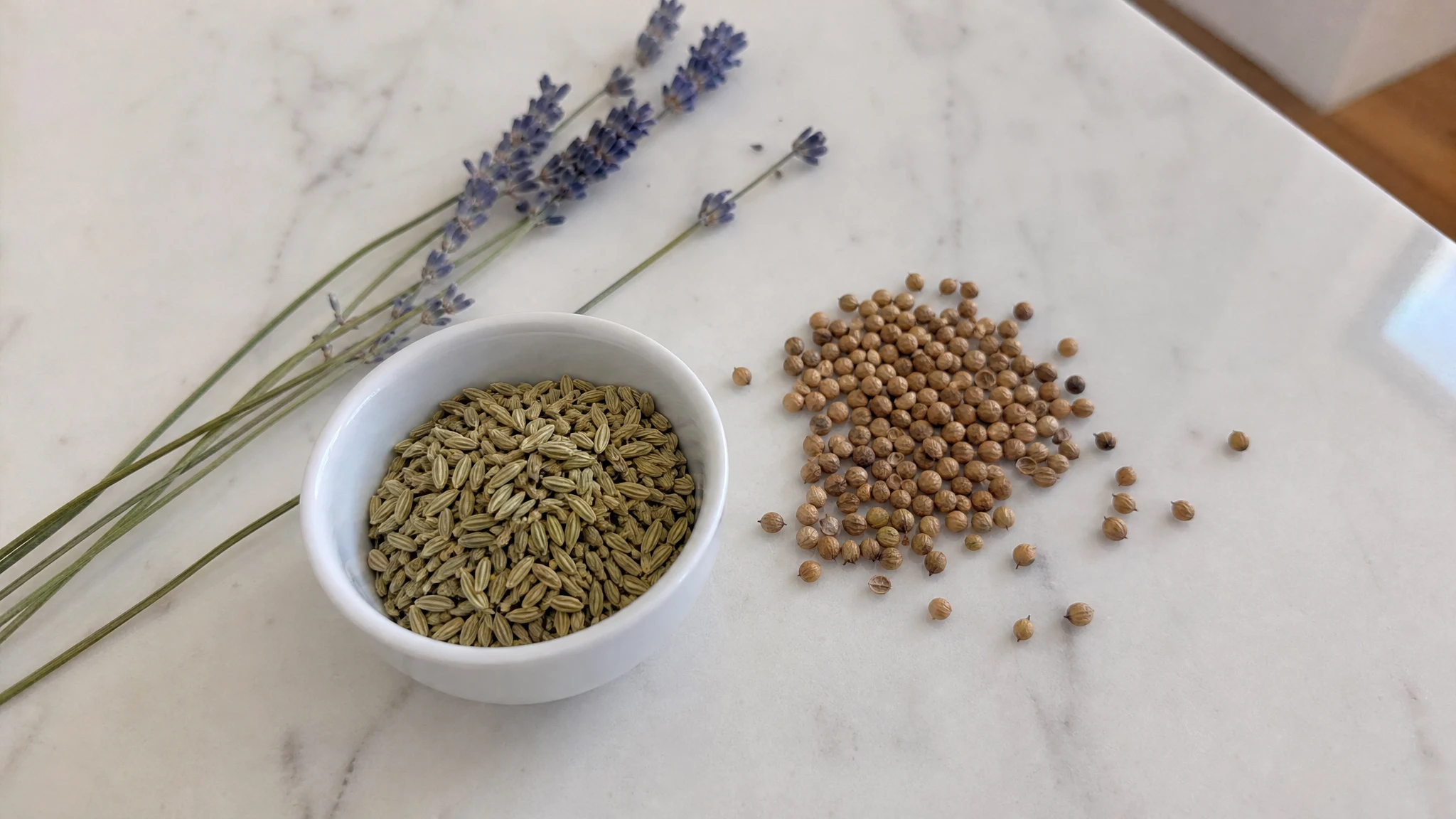
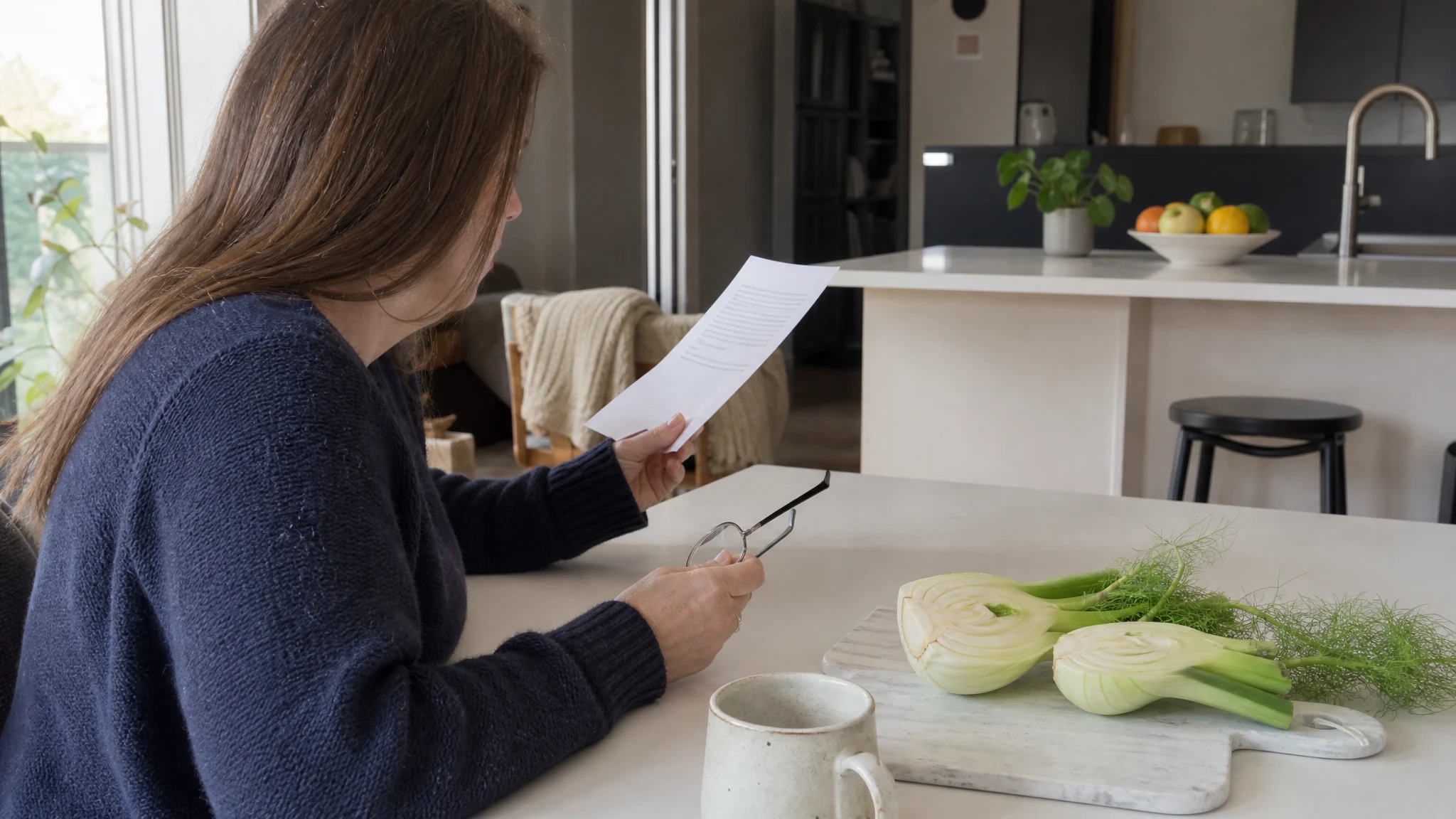
If you have ever brushed against a fennel plant, you know it announces itself. The feathery leaves release a sweet, anise-like smell the moment you touch them, and the seeds, small ridged ovals in tan and pale green, carry the same scent more strongly. Rub one between your fingers and sniff. The oil we distil is that smell, concentrated.
We like starting with the plant because it explains the oil. Once you have smelled the seed, the phrase "sweet and anise-like, settling into earthy, peppery layers" stops being a catalogue description and becomes something you can recognise.
What history does and does not tell you
Long use is a fine reason to be fond of a plant. It does not tell you how a concentrated oil behaves on skin, and fennel oil's estragole content has drawn regulatory attention, which we cover in our estragole piece. We recommend avoiding the oil entirely in pregnancy and while breastfeeding, and it is not for children; our safety overview lists who should skip it. For anything about your health, a physician or pharmacist is the right person to ask. To see the modern end of the story, our steam-distilling walkthrough follows seed from the mill to the still.
Next time you crush a fennel seed between your fingers, you are smelling the same sweet, green warmth that people named long before there was a word for oil.
Fennel Essential Oil
Fennel Essential Oil from our own shop, in sizes from 0.5 oz to bulk.
From $13.99
Shop Now →Sources & Further Reading
- Wikipedia. Fennel (name, Marathon, Linear B, Hesiod, Nine Herbs Charm)
- California Invasive Plant Council. Foeniculum vulgare Profile
- EFSA FEEDAP Panel, 2023. Safety and efficacy of feed additives consisting of essential oils from the fruit and stems of Foeniculum vulgare Mill. ssp. vulgare: Bitter fennel oil for use in all animal species and sweet fennel oil for use in dogs and cats (FEFANA asbl)
- Zheljazkov et al., 2013. Distillation Time Modifies Essential Oil Yield, Composition, and Antioxidant Capacity of Fennel (Foeniculum vulgare Mill). J Oleo Sci 62(9)
- Murphy et al., 2024. Authentication of Fennel, Star Anise, and Anise Essential Oils by Gas Chromatography (GC/MS) and Stable Isotope Ratio (GC/IRMS) Analyses