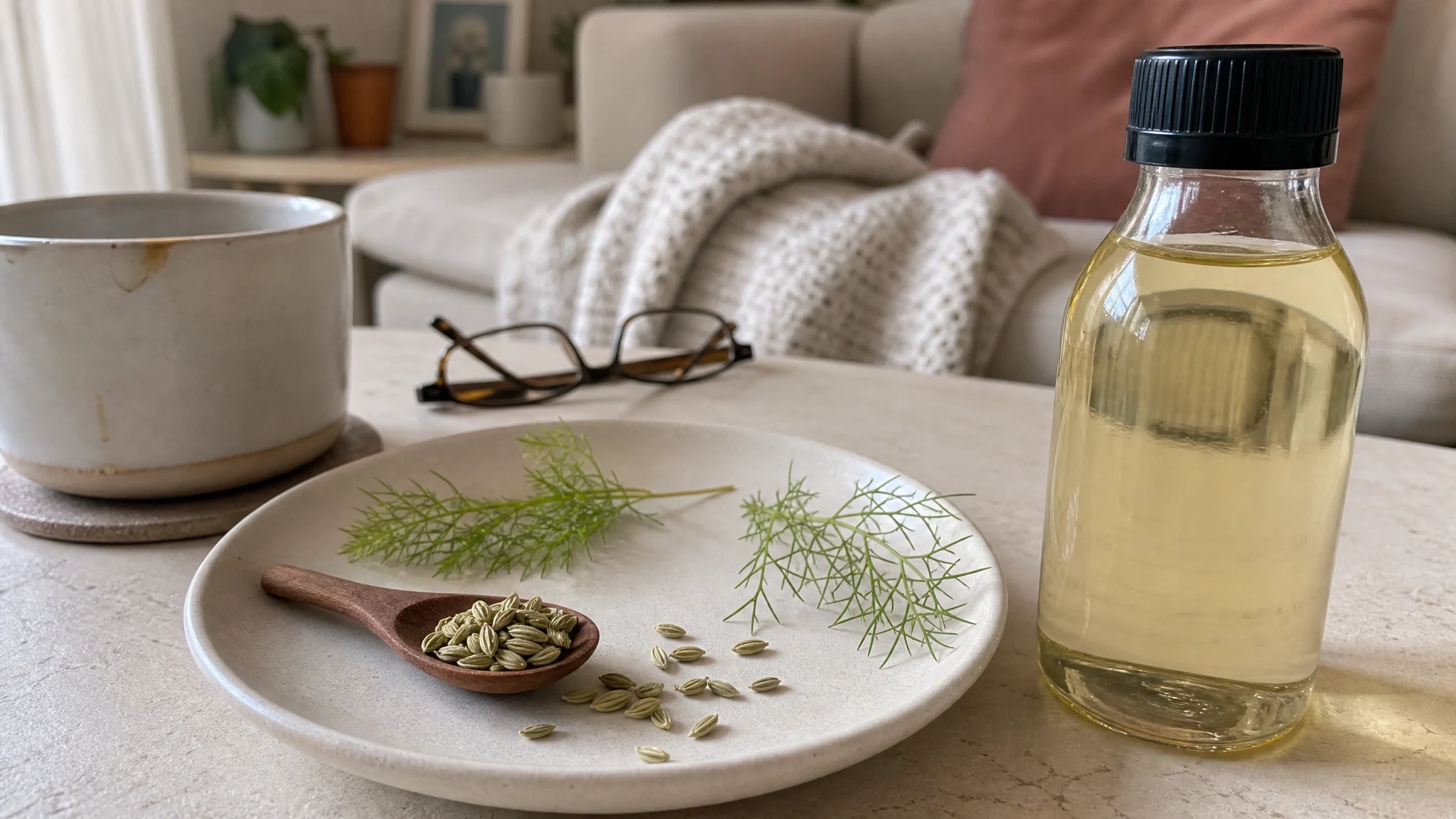
Fennel and Estrogen: Where the Claim Really Comes From
"Fennel is estrogenic" is stated on a lot of pages as though it were a finding about hot flashes. It is a finding about rats and a yeast cell. The human studies on fennel and menopause are a separate, smaller body of work, and almost all of them used capsules or extracts taken by mouth. None tested an essential oil inhaled or applied to skin. Here is how the claim got started and how far it reaches.
Fennel Essential Oil
Our own Fennel Essential Oil, in sizes from 0.5 oz to bulk.
From $13.99
Shop Now →Where the estrogen idea comes from
The European Medicines Agency's 2008 assessment report on fennel gathers the older laboratory evidence. An acetone extract of fennel, fed to ovariectomized female rats at 0.5 to 2.5 mg per kilogram a day, produced dose-dependent estrogen-like effects: the rats entered the estrus phase, and mammary gland and uterine tissues weighed more. Trans-anethole, the compound that makes up most of sweet fennel oil, given by mouth to immature female rats at 80 mg per kilogram for three days, increased uterine weight, and at high concentrations it was active in a yeast assay carrying the human estrogen receptor.
Those are an extract, an isolated compound, a rat and a yeast cell, none of them a woman with hot flashes, and none at the exposure of a drop of diluted oil. The same report lists use for symptoms of the female climacteric among traditional uses. That is a record of what people did, which is worth knowing and not the same as a trial.
What studies in women have looked at
A 2018 meta-analysis pooled the small trials then available in menopausal women. Its authors concluded that fennel may be helpful for vasomotor symptoms, vaginal itching and dryness, and sexual function, though it rests on few trials and the paper itself is not easy to follow, so we treat it as a signal rather than an answer.
Two newer trials, both from Iran, add a little. In one, 76 postmenopausal women took a 500 mg fennel and valerian extract capsule twice a day or a starch placebo for eight weeks. The authors reported fewer and milder hot flashes and better sleep scores than placebo. Because valerian was in the capsule, fennel's own share cannot be separated out. In the other, 125 women took fennel, evening primrose oil or a placebo twice a day for eight weeks, and hormone levels (FSH and estradiol) changed significantly in the fennel and evening primrose groups compared with placebo, alongside a change in psychological symptoms. The abstract does not say which way the hormone numbers moved or exactly what form of fennel was used, so we draw no conclusion beyond that fennel taken by mouth appears to do something measurable in the body.
The part that cuts both ways
If a fennel preparation can shift hormone levels, that is exactly the reason some people should steer clear of it. The EMA report cautions that if excessive doses of fennel oil are ingested, its estrogenic activity may affect hormone therapy, including oral contraception and hormone replacement therapy. That is the reasoning behind our own advice: if you have an estrogen-sensitive condition, leave this oil alone. Our contraindications page has the longer list. No study we have read measured whether the amount reaching the body from a diluted skin oil or from aroma is anywhere near that, so we do not claim that it is, or that it is not.
What the specialists say
The North American Menopause Society's 2023 position statement sorted nonhormone treatments for hot flashes by strength of evidence. It recommends cognitive-behavioral therapy, clinical hypnosis, certain antidepressants, gabapentin and fezolinetant, and it lists supplements and herbal remedies among options it does not recommend. It also says hormone therapy remains the most effective treatment and should be considered within 10 years of the final menstrual period, and that for women who cannot take it, clinicians should know the evidence-backed alternatives.
The small positive trials and the cautious guideline are both fair readings of the same situation: early signals, a narrow range of studies, and not enough to recommend a herbal product.
Questions worth bringing to an appointment
If you are curious about fennel in any form, the most useful thing you can bring to a clinician is clarity about what you actually use. A few details help: is it a tea, a capsule, an extract or an essential oil? How often, and for how long? Is it something you swallow, put on skin or smell in a room? Write the answers on your phone before the visit, because those are the details that tend to slip away once you are sitting in the chair.
What this means for a bottle of fennel oil
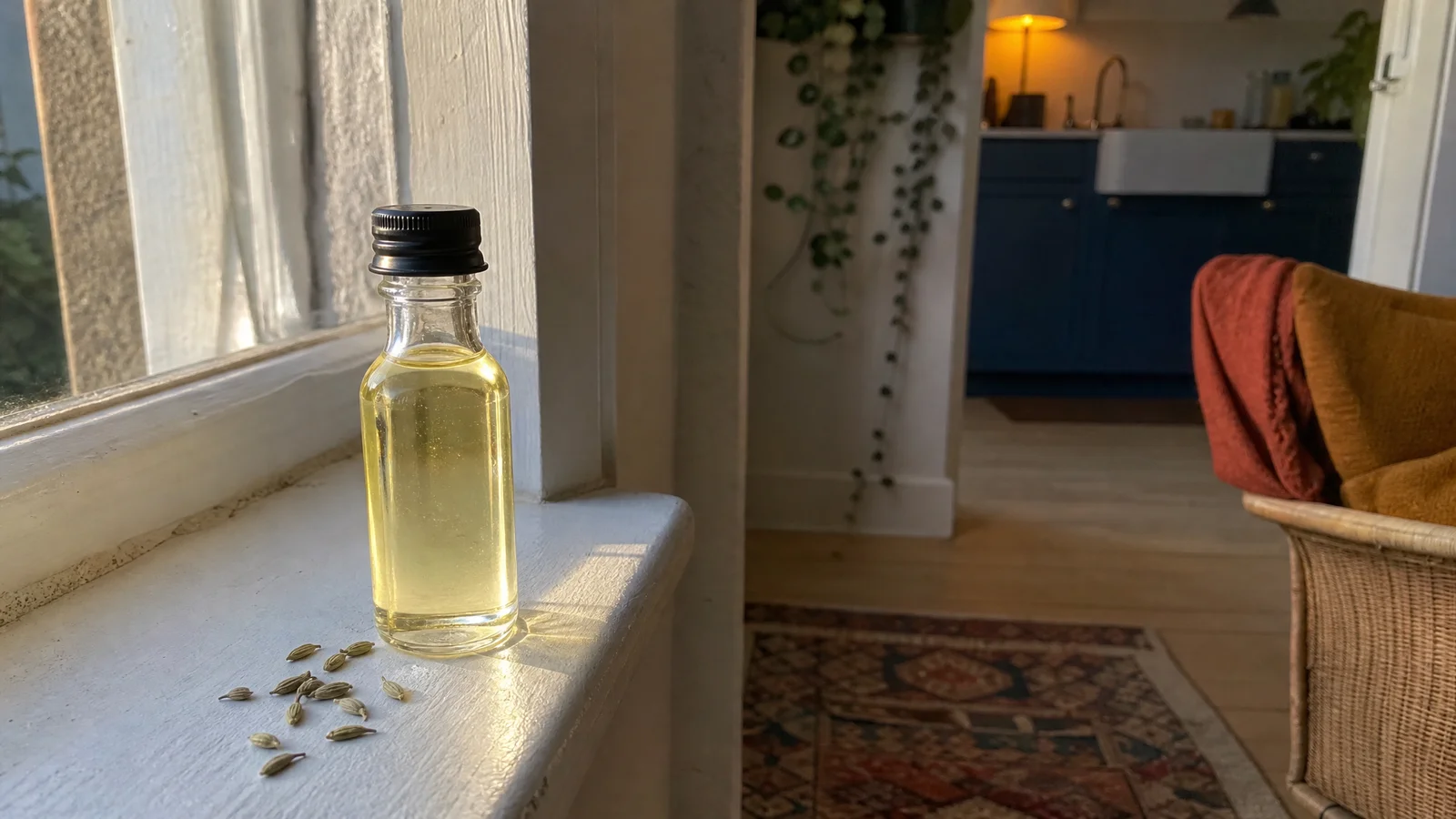
We will not tell you our oil eases hot flashes, because none of the research we found tested that. We sell a sweet fennel oil, steam-distilled from crushed seed, for its aroma and for diluted external use. For skin, our guidance is 0.5 to 2 percent in a carrier oil with a patch test first, and we recommend avoiding it in pregnancy, while breastfeeding and for children.
If menopause symptoms are disrupting your sleep or work, an obstetrician-gynecologist or menopause specialist can weigh hormone therapy and the nonhormone options against your own history. If you take hormone therapy, contraception or tamoxifen-type medicines, ask a pharmacist before bringing any fennel product into the picture, and tell your clinician what you use, including whether it is a tea, an extract or an essential oil, since those are different exposures. For the wider map see what fennel research covers, the sister piece on period pain trials and our safety overview.
Fennel's aroma is lovely, and its chemistry is interesting enough to deserve respect.
Fennel Essential Oil
Fennel Essential Oil from our own shop, in sizes from 0.5 oz to bulk.
From $13.99
Shop Now →Sources & Further Reading
- European Medicines Agency, HMPC, 2008. Assessment report on Foeniculum vulgare Miller (EMEA/HMPC/137426/2006)
- Khadivzadeh T et al., 2018. Effect of Fennel on the Health Status of Menopausal Women: A Systematic and Meta-analysis. J Menopausal Med 24(1)
- Jenabi E et al., 2023. Effect of Fennel-Valerian Extract on Hot Flashes and Sleep Disorders in Postmenopausal Women: A Randomized Trial. J Menopausal Med
- Ghavi F et al., 2023. Comparison of the Effect of Fennel and Evening Primrose Oil on Menopausal Problems and Hormonal Levels: A Randomized Controlled Trial. Iran J Nurs Midwifery Res
- The North American Menopause Society, 2023. The 2023 nonhormone therapy position statement of The North American Menopause Society. Menopause