How Fennel Oil Is Made: From Seed to Amber Bottle
Steam-distilled sounds simple, and in outline it is: hot steam passes through plant material and carries its aroma away with it. But two lots of fennel oil can both be steam-distilled and still smell and read differently, because the choices inside the still matter. Here is the journey from seed to bottle, in the order the seed experiences it.
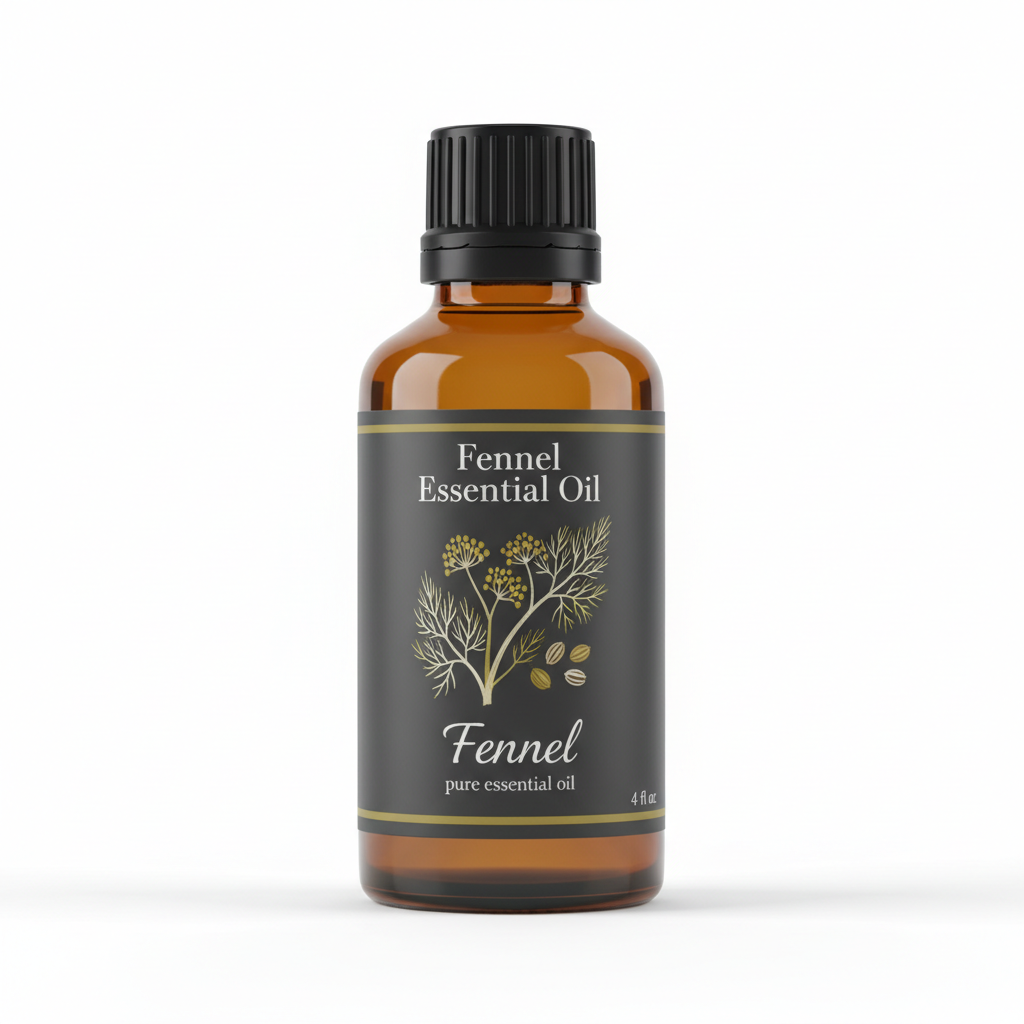
Fennel Essential Oil
Our own Fennel Essential Oil, in sizes from 0.5 oz to bulk.
From $13.99
Shop Now →Seed first, and why crushing comes last
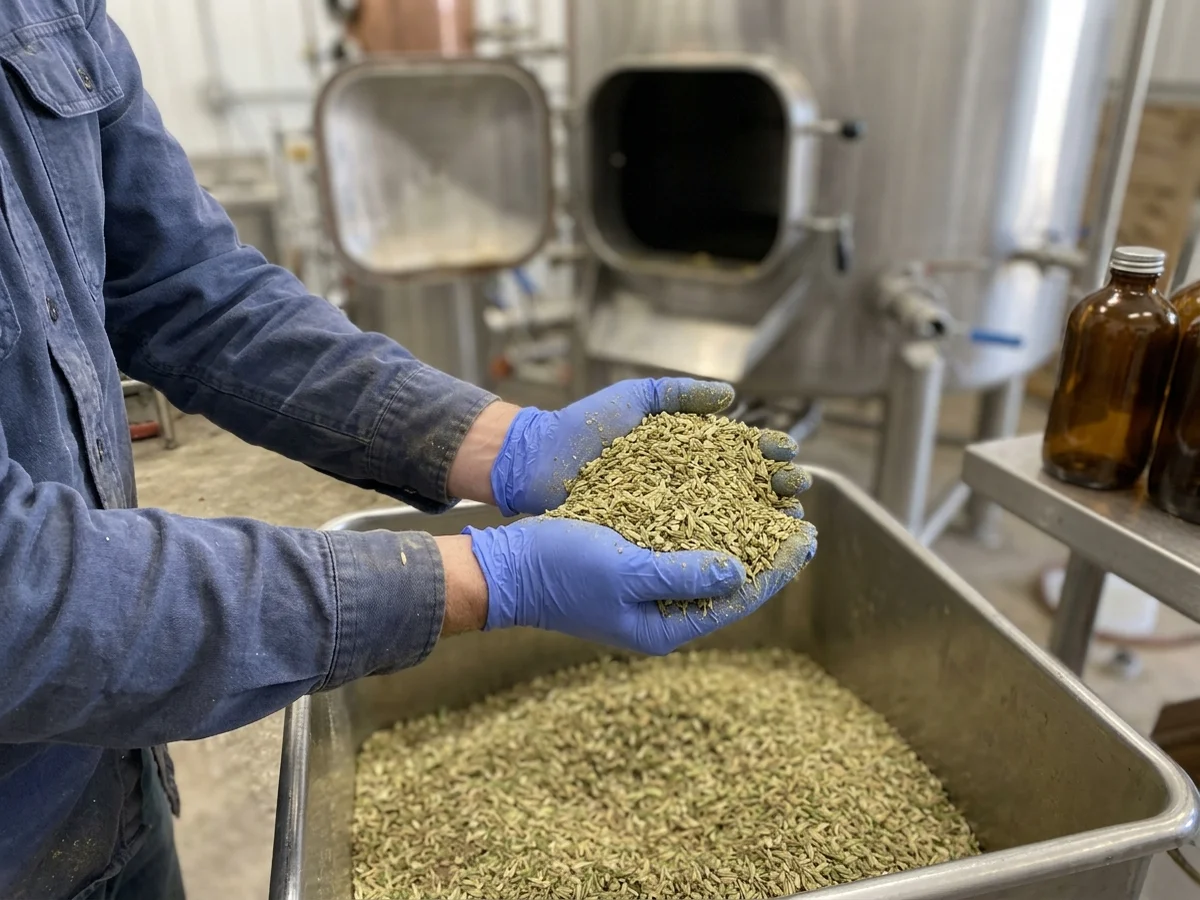
The "seed" in fennel seed oil is really the fruit of Foeniculum vulgare. It is a modest source of oil. The European Pharmacopoeia sets a minimum of 20 mL of oil per kilogram of sweet fennel fruit, which is only about 2% by volume, so the quality of the seed has a big influence on yield. That is why our process starts with seed bought to a screen size, with a ceiling on moisture, and why split, damaged or immature seed is turned away.
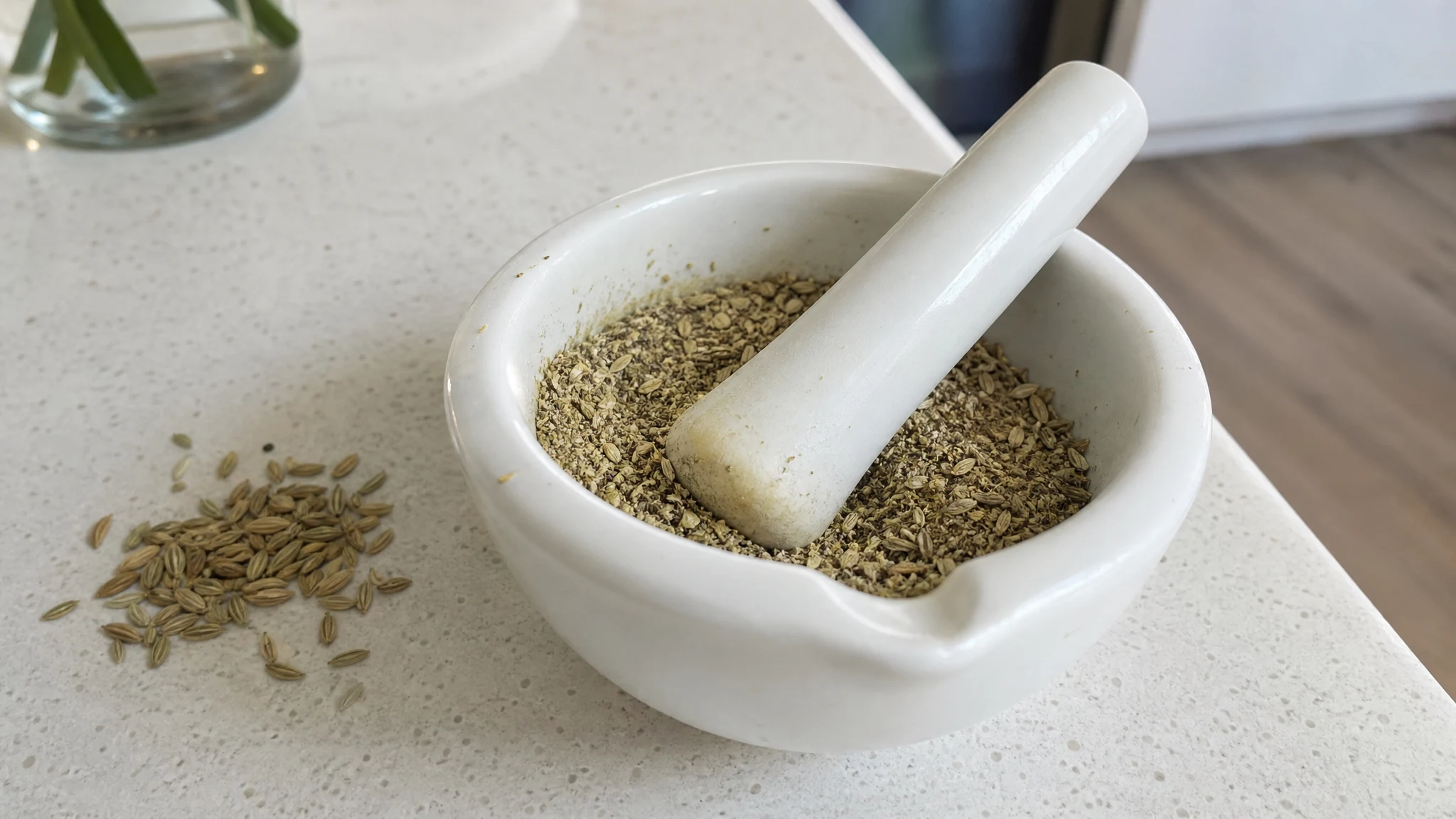
The seed is cracked coarse in a mill shortly before it meets steam. There is good logic to doing it last: the European Medicines Agency notes that crushed or powdered fruit gradually loses volatile compounds as it ages, and in one set of tea material, bags opened for 30 days lost 4% to 10% of their oil, with anethole falling and a breakdown product called anisaldehyde rising. Crushing late keeps the aroma where it belongs.
Picture the first few minutes
If you have ever crushed fennel seeds in a mortar, you already know what the mill room is meant to smell like: sweet, a little like licorice, with a green, peppery edge. That smell is the oil being released, and it begins to fade from the moment the seed is broken. It is a nice picture of why the order of the work matters. Crush too early, and the best part has drifted away before steam gets to it.
Steam does the work
In the still, steam passes through the cracked seed and carries the volatile oil to a condenser. The liquid then collects in a separator where oil and water part ways, and the oil floats to be collected. The water left behind is the hydrosol, which we do not sell. EFSA describes sweet fennel oil as distilled from the fruit alone, while bitter fennel oil is distilled from fruit and stems, which is one of the reasons the two differ. If you wonder how this compares with other extraction methods, fennel CO2 extract vs essential oil covers one of them.
Knowing when to stop
Our process is not run on a stopwatch: the charge is done when it is done. That is a sensible way to work, and a 2013 study shows why the stopping point has consequences. Researchers distilled lots of fresh fennel herb for times from 1.25 minutes to 160 minutes. Oil yield climbed with time, reaching 0.68% at the longest run, while the share of trans-anethole, the oil's main compound, was lowest in the shortest runs and fenchone, another of the oil's main components, was highest at the start. In plain terms, the oil that comes off early is different from the oil that comes off late, so a distiller's judgement about timing shapes the finished oil. The study used herb in a laboratory still, so we are not borrowing its percentages for ours.
Why the process matters at your end
Understanding the steps makes it easier to ask good questions and to handle the oil kindly once it is yours. A seed that is graded carefully, cracked late and distilled until it is spent is a good story. Still, a good story is not a substitute for a lot report, and no process page can tell you the numbers. We would encourage you to enjoy the story and also to ask for the paper.
Into amber glass
Every size of our oil goes into amber glass, and retail sizes and bulk containers come off the same run. We add nothing to it. Amber glass suits a light-sensitive oil, and a review of oil stability found that the main compound in sweet fennel oil changes when exposed to light and warmth, which is why how you store the bottle at home matters too. Our storage guide covers that.
When the bottle reaches your hands
It helps to treat opening day like a small ritual. Check that the label matches the batch you were told about, note the date, and open the bottle somewhere with a bit of air. You will notice the sweet, anise-like opening first, then earthier layers. A flat, chemical or sharply off smell is worth writing down and asking about. Then cap it tightly and store it out of the light, as the amber glass intends.
What to ask any seller
Whoever you buy from, three questions help: which variety it is, what the anethole and estragole figures are for your lot, and whether the oil has been checked for added synthetic anethole. A 2024 authentication study found that routine GC/MS did not flag one commercial fennel oil whose carbon isotope reading fell in the range the authors measured for synthetic anethole, so isotope testing is the extra step for that last question. Our batch certificate gives density, refractive index, appearance and smell, and for anything beyond that you are welcome to ask us in writing through the contact page. For more on judging a bottle, see checking fennel oil for adulteration.
A few drops of oil carry a lot of craft, from the day the seed is graded to the moment the bottle is capped.
Fennel Essential Oil
Fennel Essential Oil from our own shop, in sizes from 0.5 oz to bulk.
From $13.99
Shop Now →Sources & Further Reading
- EMA/HMPC, 2024. Assessment report on Foeniculum vulgare, fructus (EMA/HMPC/240553/2016). ema.europa.eu
- Zheljazkov VD, Horgan T, Astatkie T, Schlegel V, 2013. Distillation time modifies essential oil yield, composition, and antioxidant capacity of fennel. J Oleo Sci 62(9). J-STAGE
- EFSA FEEDAP Panel, 2023. Safety and efficacy of feed additives from Foeniculum vulgare (bitter and sweet fennel oil). PMC10613937
- Turek C, Stintzing FC, 2013. Stability of essential oils: a review. Compr Rev Food Sci Food Saf 12. review PDF
- Murphy BJ et al., 2024. Authentication of fennel, star anise and anise essential oils by GC/MS and GC/IRMS. Plants 13(2). PMC10818908