Fennel Oil Side Effects: Signs to Watch For
Most people who use a well-diluted fennel oil never notice anything beyond the smell. A small number do, and it helps to know in advance what a reaction looks like and what to do about it. The documented list is short: irritation of skin and eyes, allergy in sensitive people, and serious trouble only when oil is swallowed.
Fennel Essential Oil
Our own Fennel Essential Oil, in sizes from 0.5 oz to bulk.
From $13.99
Shop Now →Setting up for a comfortable first try
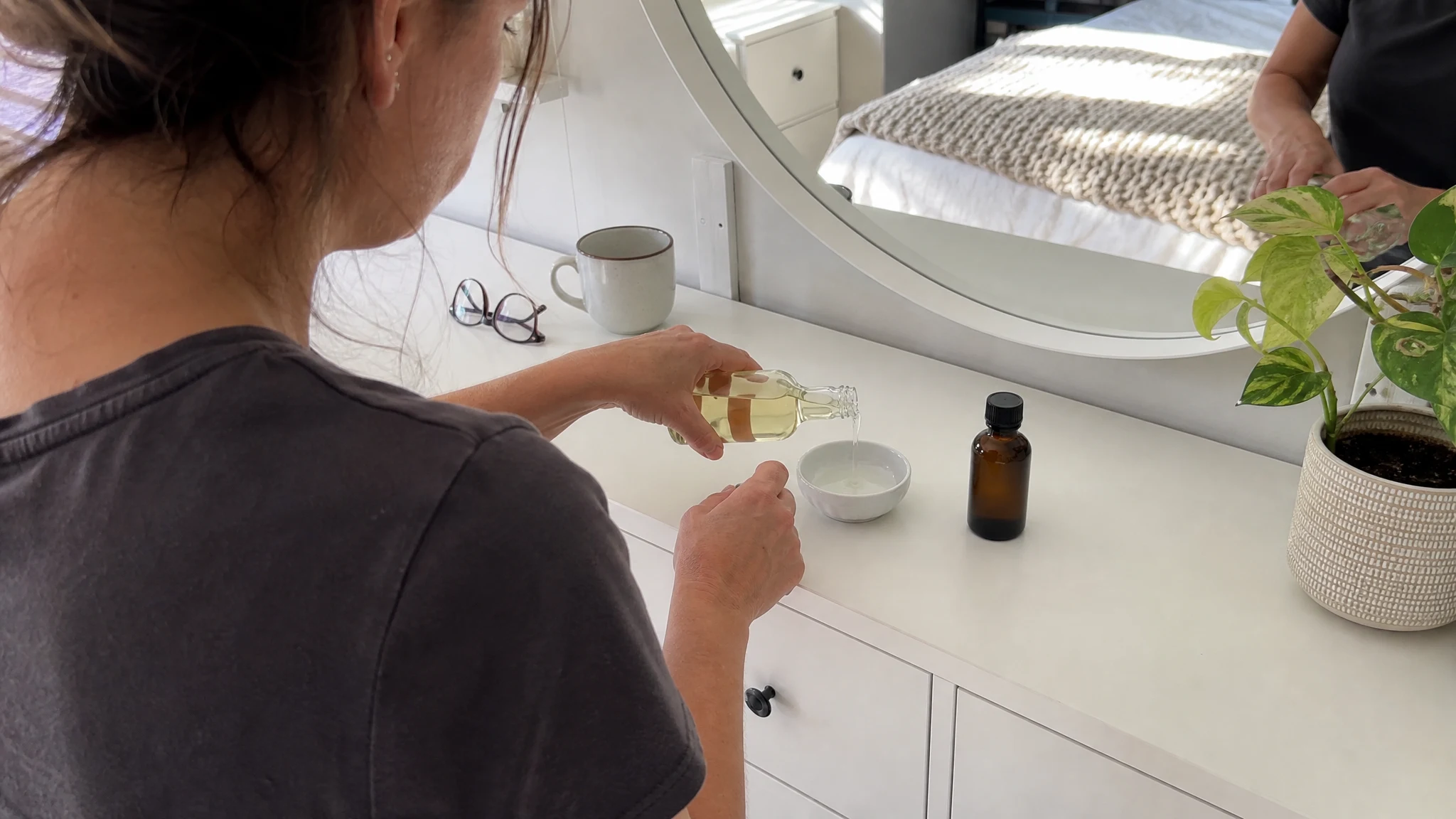
A little preparation makes a first session calmer. Measure your carrier oil and your drops on a clean plate or in a small bottle, label what you mixed with the date, and wash your hands afterwards. Keep a towel and a glass of water within reach, and avoid touching your eyes until your fingers are clean. It sounds fussy, and it takes a minute.
Skin: irritation versus allergy
EFSA, the European food safety authority, treats fennel oil as an irritant to skin and eyes and as a skin and respiratory sensitiser. That is a statement about the oil as a concentrate, which is exactly why we ask you to dilute it first. The Tisserand Institute draws a useful line between two kinds of reaction. Irritation shows up quickly and fades within hours once you stop. Allergy builds after the immune system has been primed, can take days or weeks to settle, and often does not appear on the first use at all.
So the practical rule is simple. Redness, itching or stinging means stop, rinse with water and leave the oil out of that routine. Do not wait to see whether it passes.
If you react to other plants in the carrot family
Fennel is a member of the Apiaceae, alongside aniseed, caraway, celery, coriander and dill. The European Medicines Agency lists hypersensitivity to those plants, or to anethole, the main aroma compound in fennel, as a reason not to use fennel preparations, and notes that contact dermatitis from anethole products is rare. If one of those plants has ever bothered you, treat fennel oil as one to skip or ask a dermatologist about first.
Swallowed oil is a different category
America's Poison Centers notes that essential oils can be poisonous when swallowed, that breathing an oil into the lungs can cause pneumonia, and that children may be more susceptible than adults. Our oil is not meant for internal use, and we keep it capped and out of reach of children and pets. If a child or anyone else has swallowed some, call your poison center at 1-800-222-1222 in the US before trying anything at home, and keep the bottle in hand because they will ask what it is and how much was taken.
Seizures and why we say leave it alone with epilepsy
One published case describes a 38-year-old woman with well-controlled epilepsy who had a generalised seizure after eating cakes containing an unknown amount of fennel essential oil. The authors concluded that people with epilepsy should probably avoid the oil. One case with an unknown dose cannot tell us how common this is, and it was oral, not a skin or aroma use. It is enough for us to say what we say: if you have epilepsy, fennel oil is not for you. The same caution applies in pregnancy, while breastfeeding, around children, and with an oestrogen-sensitive condition.
Reading your own skin
People tend to ignore small signals, and small signals are the ones worth noticing. A warm patch, a faint pink tint, a tingle that lingers after the scent has faded: those are your cue to stop for the day. It is much easier to pause and try again later, or not at all, than to push through a mild reaction and turn it into a bigger one. If the oil does not suit you, there are plenty of other pleasant things to smell, and nothing to be embarrassed about.
Handling the bottle with care
Good habits cut down on most problems before they start. Wipe the neck of the bottle after each use so no oil dries on the thread. Put the cap on firmly and check it. Keep a dropper or small dish for measuring so oil never goes straight from bottle to skin, and keep the bottle on a shelf that little hands and curious pets cannot reach. If a few drops land on your fingers, wash them before you touch your face.
Those thirty seconds are the most useful part of using any strong oil, and they cost nothing.
Who to call, in order of urgency
- A mild skin reaction: stop, rinse, and ask a pharmacist if it lingers.
- A spreading rash, hives, a cough or runny nose that starts after exposure, or oil in the eye: rinse with running water and call a pharmacist or physician the same day, or poison control for the eye.
- Trouble breathing, swelling of the lips or throat, a seizure, or swallowed oil: emergency services or poison control right away.
Those tiers are our own grouping for convenience, so a reaction can jump straight to the top one. Bring the bottle with you either way. If you want the bigger picture on who should skip it, our overview of fennel oil safety is the place to start, and contraindications and interactions covers medicines and conditions.
Fennel rewards a gentle hand: a low dilution, a fresh bottle and a quick stop at the first itch keep it a pleasure to use.
Fennel Essential Oil
Fennel Essential Oil from our own shop, in sizes from 0.5 oz to bulk.
From $13.99
Shop Now →Sources & Further Reading
- EFSA FEEDAP Panel, 2023. Safety and efficacy of feed additives from Foeniculum vulgare (bitter and sweet fennel oil). PMC10613937
- EMA/HMPC, 2024. Assessment report on Foeniculum vulgare, fructus (EMA/HMPC/240553/2016). ema.europa.eu
- Tisserand Institute. Irritation and allergic reactions. tisserandinstitute.org
- America's Poison Centers. Essential oils. poison.org
- Skalli S, Soulaymani Bencheikh R, 2011. Epileptic seizure induced by fennel essential oil. Epileptic Disord 13(3). PMID 21865126. Europe PMC