How to Spot Cut Fennel Oil Before You Pay for It
Rub a drop between your fingers, float it on water, watch it spread on paper: the internet is full of home tests for fennel oil. We could not find a published study that validates any of them for this oil. What we can point to is a laboratory study that shows how fennel oil gets cut and how much work it takes to find out, and that is a better guide to what a careful buyer should do.
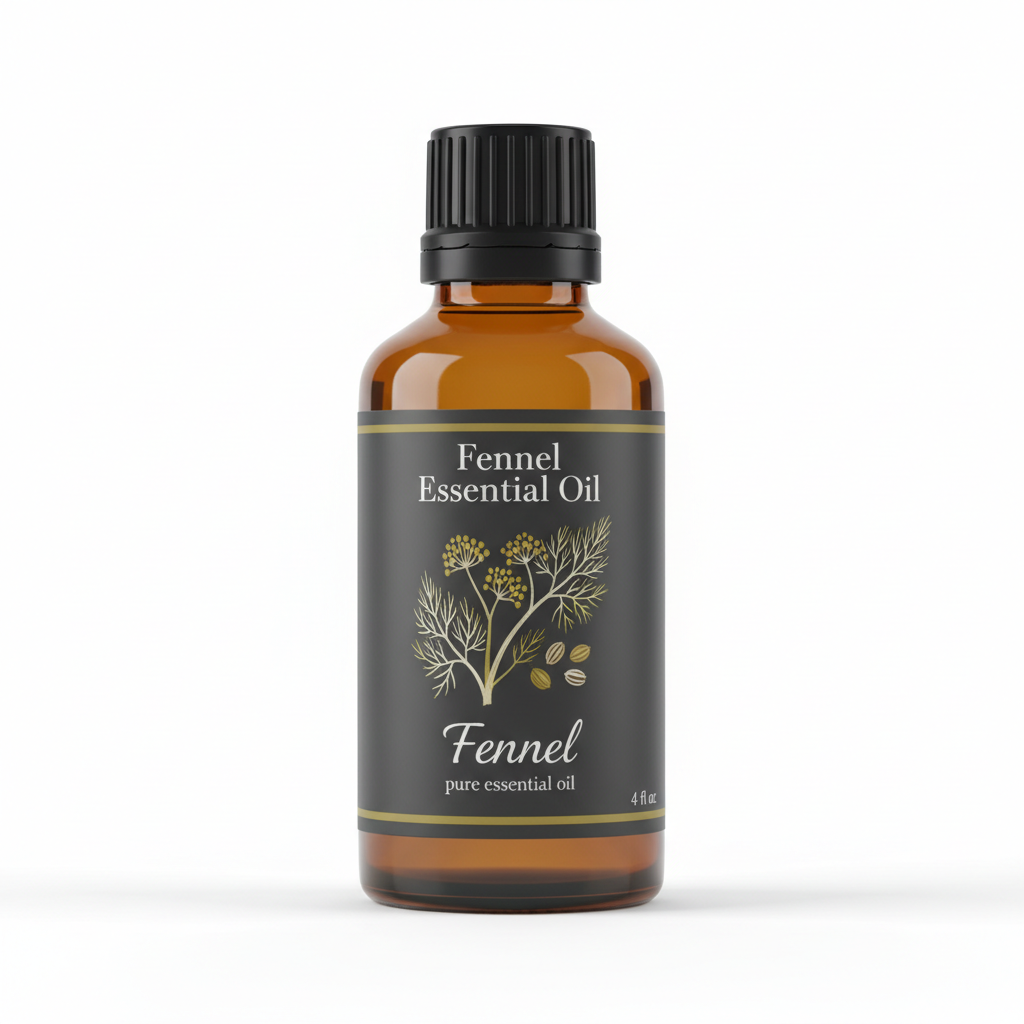
Fennel Essential Oil
Our own Fennel Essential Oil, in sizes from 0.5 oz to bulk.
From $13.99
Shop Now →What laboratories found
In 2024 the journal Plants published an analysis of 30 commercial oils sold as anise, star anise or fennel, compared with oils the authors distilled themselves and with synthetic anethole standards. They used gas chromatography with mass spectrometry to read the compounds and isotope analysis to see where the carbon in the anethole came from (Murphy et al., Plants, 2024). Eight of the 30 were judged adulterated, and three of the eleven fennel oils were among them. It is a small sample and it does not tell you how likely any given bottle is to be cut. What it does show is that cutting happens in more than one way:
- A bulking liquid. One fennel oil was 43.2% triethyl citrate, an odorless ester. Another contained 35.4% capryl palmitate.
- Another anethole oil. The capryl palmitate sample also carried markers that point to star anise.
- Possibly synthetic anethole. A third fennel oil was flagged only by its carbon isotope signature. The authors treat that as an indication rather than proof, because the ranges for natural and synthetic anethole overlap.
Why a nose or a drop on paper is not enough
A diluted oil can still smell fennel-like, because the aroma comes from the real oil that remains. Smell tells you about gross faults such as a flat or chemical note, and that is useful, but it is a judgment and not a measurement. Density and refractive index are real measurements, and the Certificate of Analysis we hold for one batch reports both (0.975 and 1.546). They describe the liquid as a whole and do not name compounds, so a mixture that lands inside the expected band passes. That is our reasoning, not a finding from the study, but it is why we look to a composition report for authenticity questions.
Even the laboratories needed more than one tool. The authors recommend a multi-method approach for authentication, because the mass spectrometry results alone could not always tell where an extra marker came from, and the isotope result alone was not decisive.
A range is a screen, not a pass mark
A lot report will usually show anethole, estragole and fenchone as percentages, and it is tempting to hold them up against a published range and call it a day. The study's authors compare against a bitter fennel range from ISO 17412 and a sweet fennel range from a French standard. Yet their own five authentic fennel distillates, from Europe, Sicily and Tasmania, averaged an estragole level well above the sweet fennel range. So a number inside a range is reassuring, and a number outside it is a reason to ask a question and not an accusation. Both are most useful from a seller who can say which variety and origin the oil is.
The questions that do the work
- Which fennel is it, in words? Sweet or bitter. The two differ in composition, and the sweet versus bitter post explains why that matters.
- Can I see a GC/MS report for this lot? Look for a batch number that matches your bottle, anethole, estragole and fenchone as percentages, and the laboratory's name.
- Is anything else in the bottle? A seller answering "pure" without a document has told you little, because the FDA notes there is no regulatory definition of "essential oils" (FDA, Fragrances in Cosmetics).
- Does the price make sense? The price comparison post shows what a 35% to 43% diluent does to the cost of a milliliter of oil.
If your real question is about anise rather than fennel, our fennel versus anise comparison sorts the two out, and the buying checklist turns these questions into a list you can run on any seller.
When the bottle arrives
Ordering is not the end of the careful part. When a bottle reaches you, check that the batch number on the label matches the one in the document you were sent. Open it and smell it in a well-ventilated spot, and write down what you notice in plain words: sweet, anise-like, earthy, peppery, or perhaps flat, sharp or oddly chemical. Note the date.
None of that proves anything, and we would not pretend it does. But a record of what you received is useful if you later have a question for the seller, and it gives you something to compare against the next bottle.
Where we stand
We sell one fennel oil, steam-distilled from crushed seed, which we describe as sweet fennel. Our Certificate of Analysis covers a single batch and lists appearance, smell, relative density and refractive index, all within their stated standards. It does not name the variety, anethole, estragole or a laboratory, so on that sheet alone you cannot tell sweet from bitter. If you want composition figures for a lot, ask us in writing through the contact page before ordering, and read whatever arrives against the points above. That is what we would suggest with anyone's oil, ours included.
Fennel oil is not suited to everyone. We advise avoiding it in pregnancy and while breastfeeding and with children, and anyone with an oestrogen-sensitive condition or epilepsy should leave it alone. Your doctor or pharmacist can advise on your situation.
Skip the kitchen tricks, ask for the report, and you will know more than any home test could tell you.
Fennel Essential Oil
Fennel Essential Oil from our own shop, in sizes from 0.5 oz to bulk.
From $13.99
Shop Now →