Organic Fennel Oil: What the Seal Does and Doesn't Cover
An organic seal on a bottle of fennel oil can feel like the last word on quality. It is a meaningful label, and it is also a narrower one than most people assume. It speaks to how a crop was grown and handled. It does not speak to what ended up in the bottle, and understanding that difference makes you a sharper buyer of any fennel oil, certified or not.
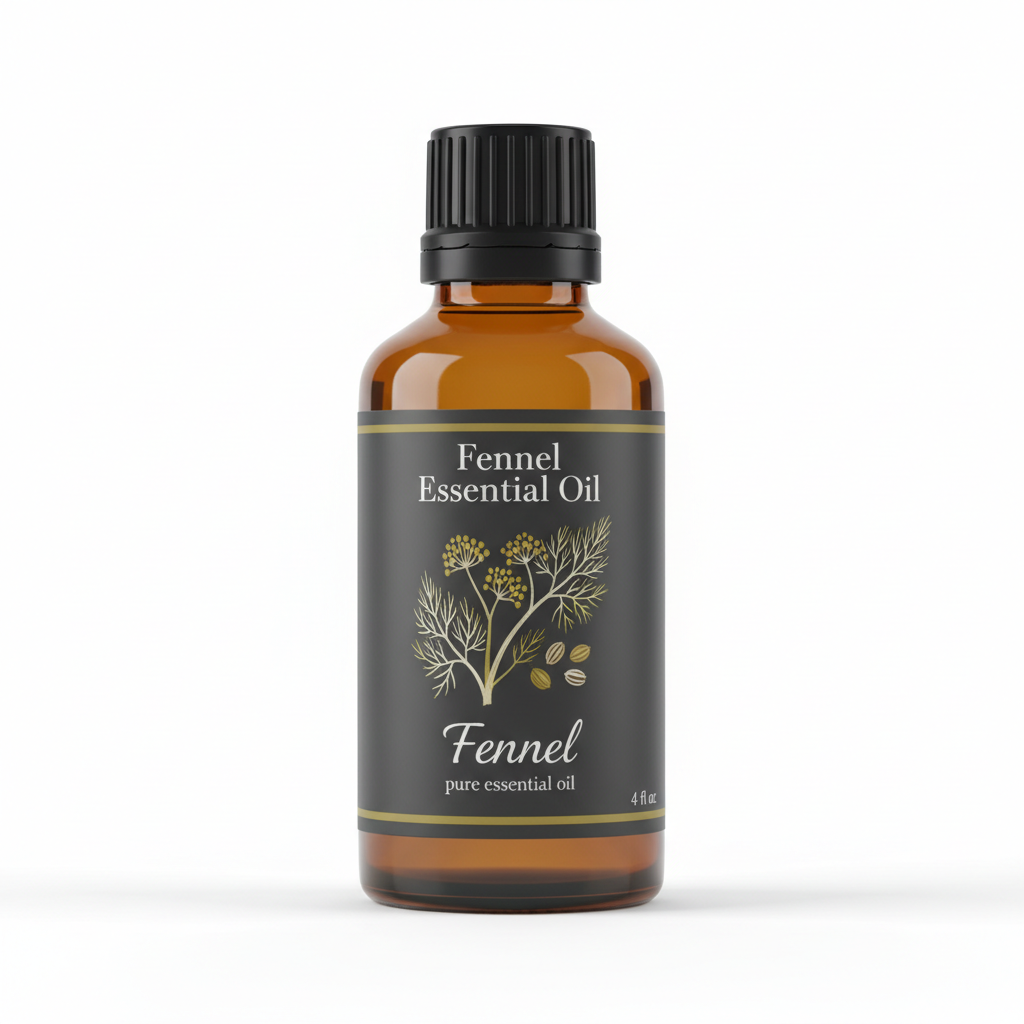
Fennel Essential Oil
Our own Fennel Essential Oil, in sizes from 0.5 oz to bulk.
From $13.99
Shop Now →What certification covers
In the United States "organic" is a regulated term. The rules define organic production as a system managed in accordance with the Organic Foods Production Act and its regulations, and certification as a certifying agent's determination that an operation is in compliance (7 CFR 205.2). The certificate belongs to the farm or handler and the way they work. It is not a specification for the oil, so it carries no anethole figure and does not describe the variety.
We do not sell our fennel oil as certified organic, and we do not claim it is. If a seal matters to you for how a crop was farmed, that is a perfectly good reason to buy certified oil from a supplier who can show you the certificate and name the certifier.
Organic is not the same as residue-free
The regulations themselves expect that traces will sometimes turn up. If residue testing finds a prohibited substance above 5 percent of the EPA tolerance for it, or above unavoidable environmental contamination, the product cannot be sold or labeled as organic (7 CFR 205.671). So the system includes testing and a threshold, which is a sensible design, and it is a different thing from a promise of zero.
What residue studies say about essential oils
The evidence for essential oils is indirect, but one pattern is clear. A review of a laboratory database prepared for the European Pharmacopoeia covered more than 127,000 data sets compiled over eight years. Positive findings were rare, and the oils with the most residue problems were those made by cold pressing, such as citrus oils, while distilled oils showed positive findings in only a few cases (Klier et al., 2015). A 2025 pilot study of twelve oils from the Italian market found citrus oils the most contaminated, with batch-to-batch variation, and a preliminary assessment found no risk to consumers while still urging monitoring (Stefanelli et al., 2025).
Fennel oil is steam-distilled, so the pattern in the first study applies to its category, and we read it that way: distilled oils as a group were found with residues much less often than pressed ones. Neither study split its results into organic and conventional, and neither singled out fennel in the abstracts, so it is not a statement about any specific bottle. We also did not find a study asking whether organic farming shifts the makeup of fennel oil, so we do not claim that either.
Better questions than "is it organic?"
If what you care about is what lands on your skin or in a product you sell, these questions are more revealing than a seal:
- Is there a GC-MS report for this lot? It should show anethole as the main component and an estragole figure. Our guide to reading a label and GC-MS report explains the lines.
- Which fennel is it? Sweet and bitter fennel differ in anethole and fenchone content (EMA, 2024), and a seller who does not name the variety is giving you half the picture.
- Is a residue screen available? It is a separate test from GC-MS. A manufacturer making a product for sale might reasonably ask for one. Someone scenting a room probably does not need it in the same way, though that is our judgment, not a finding.
- Is anything else in the bottle? An organic seal does not address dilution either. Our post on checking fennel oil before you pay covers how that is found.
Keep the paper trail
Whether or not you choose certified oil, keep a small file for every bottle you use: the name of the seller, the botanical name, the lot number, and any certificate or report that came with it. If a seal matters to you, ask for the certificate and look for the certifier's name on it, not only a logo on the label. A real certificate is an ordinary document with names and dates on it, and a seller who has one is usually glad to send it.
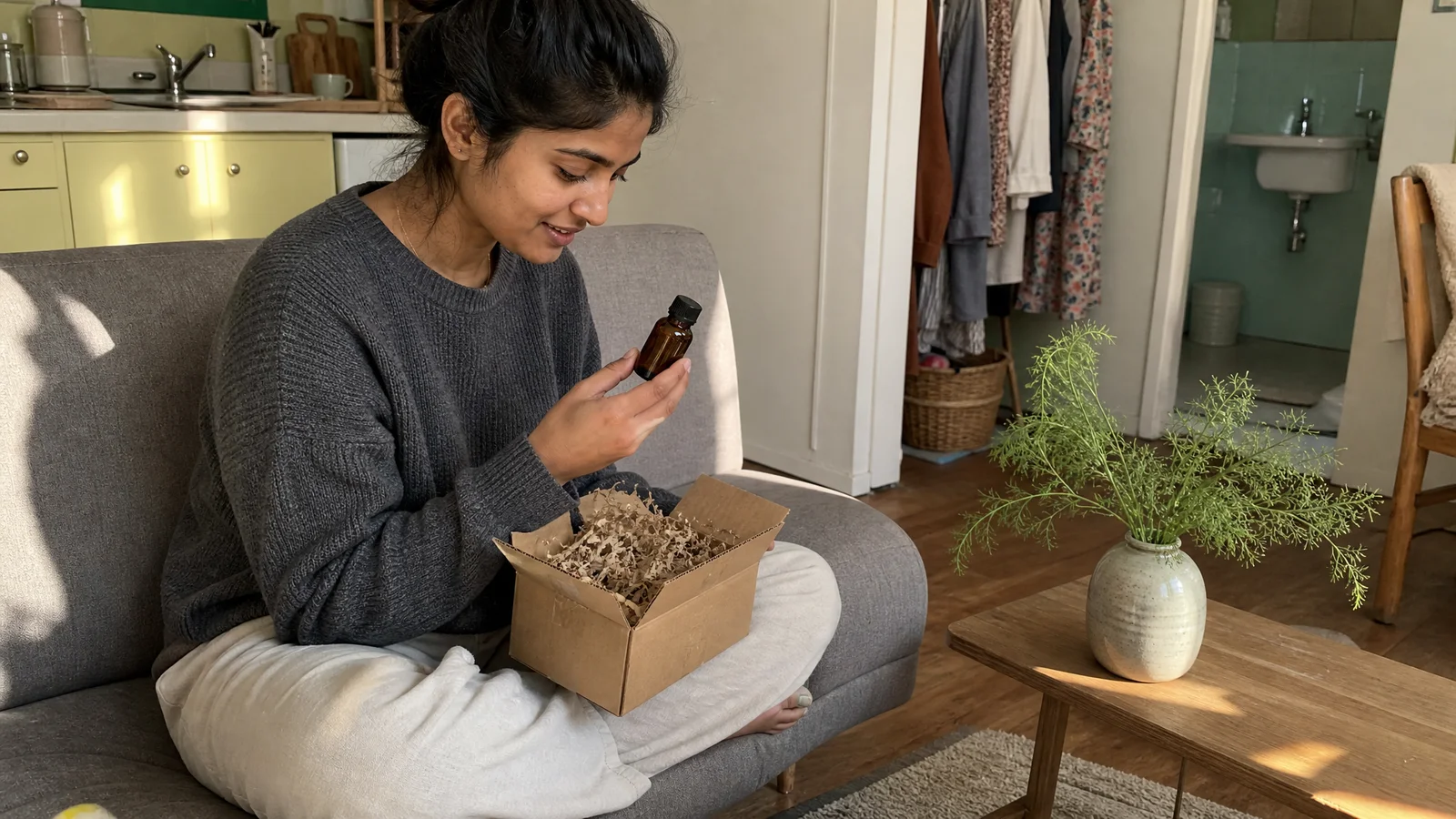
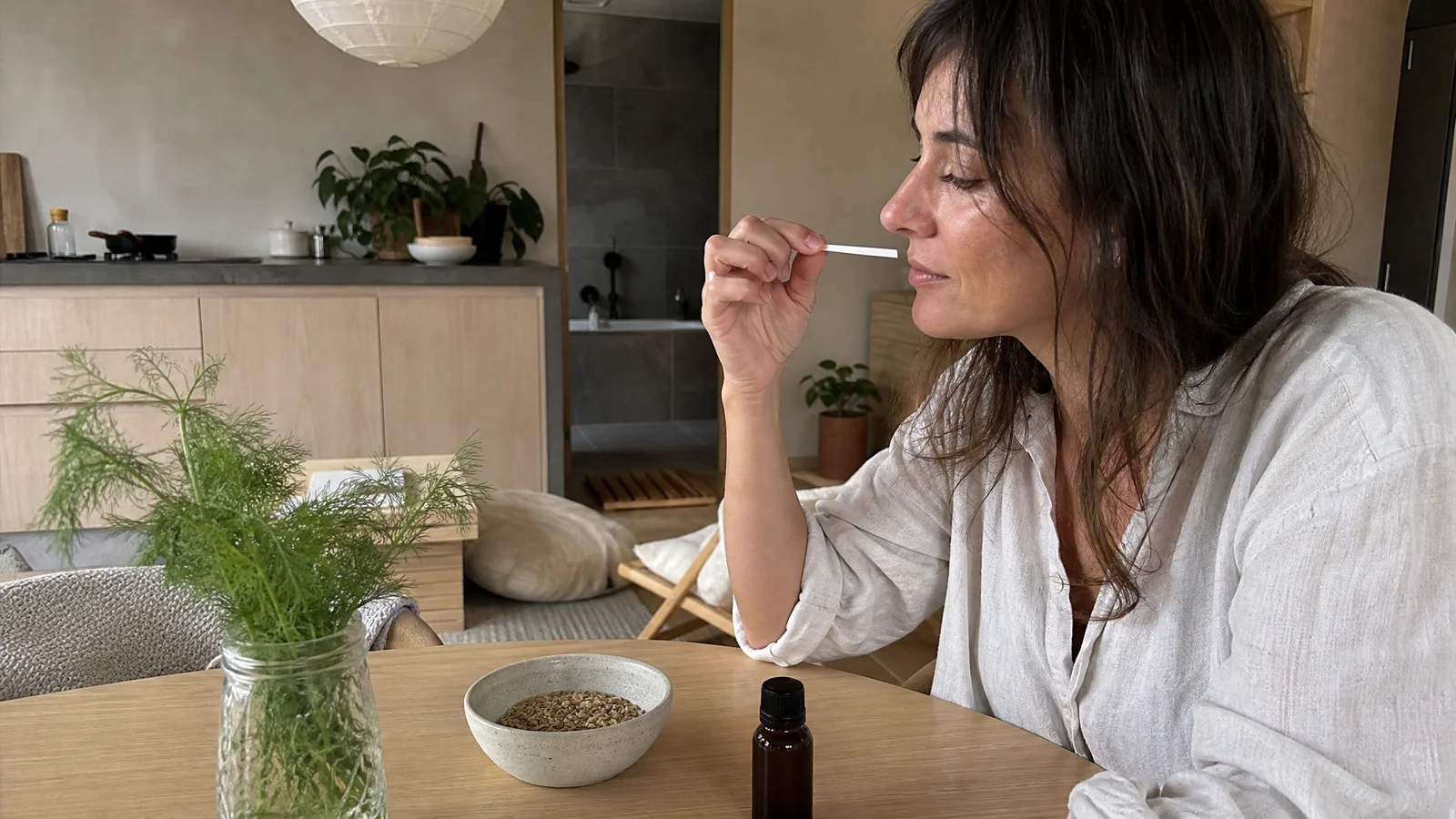
When the bottle arrives, open it and smell it, then compare it with how you remember it or how the seller describes it. Ours opens sweet and anise-like, then moves toward earthy and peppery. If anything about a bottle surprises you, write it down and ask.
Where that leaves our oil
We sell one fennel oil, steam-distilled from crushed seed, which we describe as sweet fennel. Our Certificate of Analysis covers one batch and lists appearance, smell, density and refractive index. It makes no organic or residue claim, and we make none. If you need certified organic oil, we are not your supplier, and we would rather say so than leave you guessing. If composition figures for a lot would help you decide, ask us in writing through the contact page before ordering. The complete quality guide lists the other documents worth asking for, and the price comparison post covers what drives the cost of a fair bottle.
One thing farming practice cannot change is the oil's own character. We advise avoiding fennel oil in pregnancy and while breastfeeding and with children, and anyone with an oestrogen-sensitive condition or epilepsy should leave it alone, whether the seed was organic or not. Your doctor or pharmacist can advise on your situation.
The seal tells you about the farm, and the lot report tells you about the bottle. It is worth wanting both.
Fennel Essential Oil
Fennel Essential Oil from our own shop, in sizes from 0.5 oz to bulk.
From $13.99
Shop Now →Sources & Further Reading
- 7 CFR 205.2. Terms defined (National Organic Program)
- 7 CFR 205.671. Exclusion from organic sale
- Klier B, Knödler M, Peschke J, Riegert U, Steinhoff B, 2015. Pesticide residues in essential oils: evaluation of a database
- Stefanelli P, Buratti FM, Girolimetti S, Testai E, 2025. Determination of pesticide residues in essential oils and related risk assessment for consumers: a pilot study
- EMA/HMPC, 2024. Assessment report on Foeniculum vulgare Miller subsp. vulgare var. vulgare, fructus and var. dulce, fructus (EMA/HMPC/240553/2016)