Fennel Oil Price: How to Compare Listings Fairly
Picture two listings for fennel oil side by side. One bottle costs noticeably less than the other, and both say "fennel essential oil." It is tempting to call the cheaper one a bargain. A better move is to turn both prices into the same unit and then ask one more question about what is in each bottle.
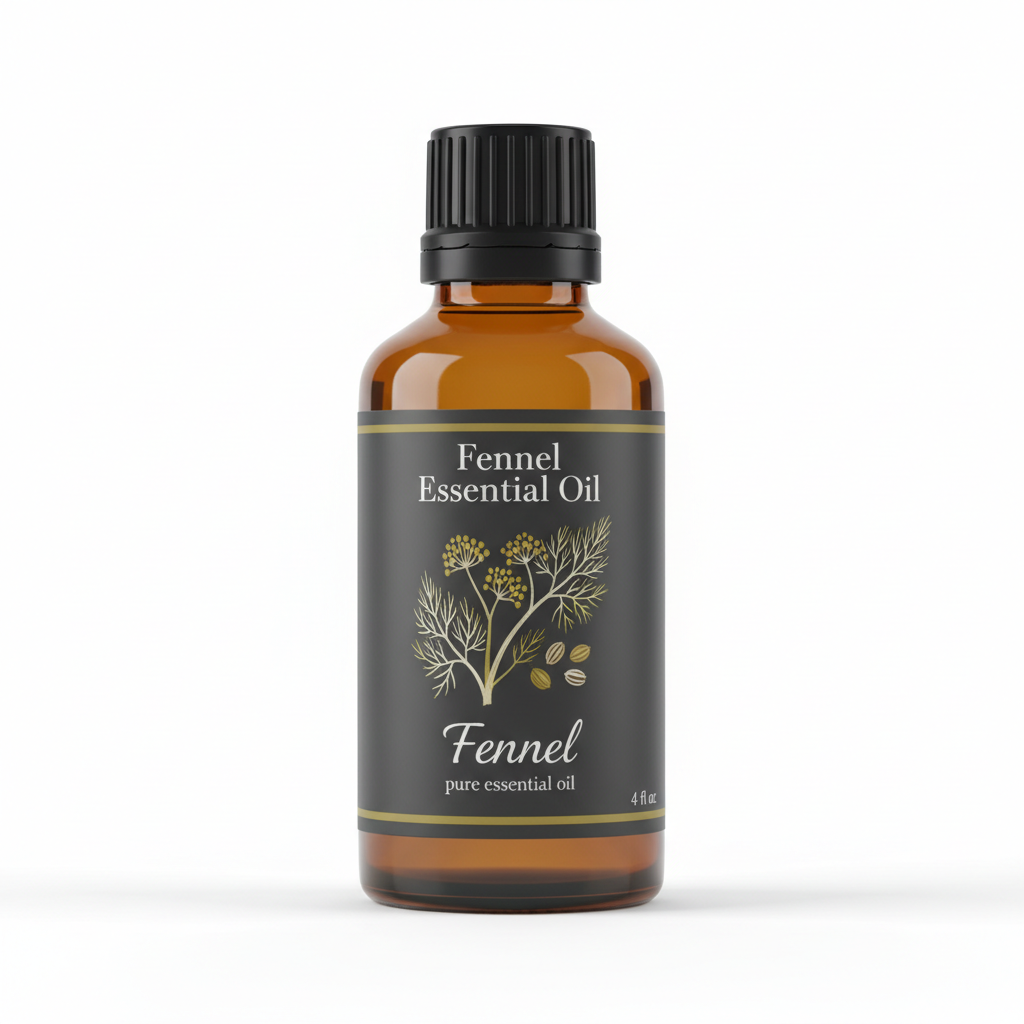
Fennel Essential Oil
Our own Fennel Essential Oil, in sizes from 0.5 oz to bulk.
From $13.99
Shop Now →Step one: put everything in milliliters
Fennel oil is sold in ounces, pounds and milliliters, sometimes all on one page, so the first job is converting. A US fluid ounce is 29.57 ml, which makes a 1 oz bottle about 29.6 ml, a 4 oz bottle about 118 ml and a 16 oz bottle about 473 ml. For sizes sold by weight, you need density. The one Certificate of Analysis we hold gives 0.975 at 20 degrees C for its batch, which puts a pound (453.6 g) at about 465 ml. Other lots can differ a little, so treat that as an estimate.
Divide each price by the milliliters, and add shipping if the seller charges it per order. A small sample and a big bottle now sit on the same scale, and you can see how much of any gap is container and how much is oil. We leave actual prices to our shop page, since they change.
Step two: ask how much of the liquid is fennel oil
This is where the cheapest listings stop being comparable. A 2024 study put 30 commercial anise, star anise and fennel oils through gas chromatography with mass spectrometry and isotope analysis, alongside authentic reference distillates. Three of the eleven fennel oils were flagged, including one with 43.2% triethyl citrate, an odorless carrier (Murphy et al., Plants, 2024). Eleven samples is not a market survey, so it says nothing about how common this is. It does show that cut fennel oil exists and that the cut can be large.
The arithmetic is worth seeing once. If 43.2% of a bottle is diluent, only 56.8% is oil. A bottle at about 57% of the price of an undiluted competitor delivers the same cost per milliliter of actual oil, which means a listing sitting far below the field is priced about where a half-and-half product would be. That is a pattern, not a verdict on any seller, since a low price can also come from an older lot, a different variety or a thin margin. But it is a good reason to read the paperwork before trusting the number.
Same name, different oil
"Fennel essential oil" can mean sweet fennel or bitter fennel, and they are not the same material. The ranges the authors cite from standards differ, and the regulators treat the two differently. The European Medicines Agency's committee has withdrawn its monograph on bitter fennel oil, citing questions about its estragole content (EMA/HMPC public statement, 2024). So a price comparison between a sweet and a bitter oil compares two different things, and a listing that does not name the variety leaves you guessing. We cover the difference in sweet versus bitter fennel oil.
What a label cannot tell you
The word "pure" has no regulatory definition behind it. The FDA notes that there is no regulatory definition of "essential oils" and that plant-derived cosmetic ingredients are treated like any other (FDA, Fragrances in Cosmetics). So the words on a listing do not do the work a document does.
Here is where we stand. We sell one product, a fennel oil steam-distilled from crushed seed, which we describe as sweet fennel. Our Certificate of Analysis for one batch lists appearance, smell, relative density and refractive index, each within its stated standard. It does not list the variety, anethole or estragole. If those figures matter to your decision, ask us in writing through the contact page before ordering, and put the same question to any other seller you are weighing us against.
A short routine for comparing listings
- Convert each size to milliliters and work out the price per milliliter, shipping included.
- Check that the variety is named. If a page says only "fennel," you do not know which one you are buying.
- Look for a lot-level report with anethole and estragole as percentages, and check that its batch number matches the product on sale. Our post on reading a label and GC-MS report walks through it.
- Treat a big gap as information and ask the seller to explain it.
- Choose a size you will finish. The cheapest milliliter is no bargain if the bottle sits for years, and our first-bottle post shows how far a small bottle goes.
When the bottle arrives
The comparison does not end at checkout. When a bottle lands on your doorstep, check that the lot number matches what the seller sent you, put a drop on a paper strip, and give it a moment. You are looking for a sweet, licorice-like opening that settles into something earthy and peppery. If it smells flat or off, write to the seller while the packaging is still on the table. Then label the bottle with the date and store it somewhere cool and dim, and you have protected whatever you spent on it.
For trade buyers, the lot-level documents matter more than the list price, and our bulk page and wholesale page describe the sample-first approach. Fennel oil is not for everyone: we advise avoiding it in pregnancy and while breastfeeding and with children, and a pharmacist or doctor can advise on your own situation.
Two minutes of division per listing will tell you more than any price tag ever will.
Fennel Essential Oil
Fennel Essential Oil from our own shop, in sizes from 0.5 oz to bulk.
From $13.99
Shop Now →