Buying Fennel Oil Online? Ask the Seller These 5 Things
The best place to buy fennel oil online is wherever a seller will answer a handful of plain questions before you pay. Photos, star ratings and the word "pure" are all easy to produce. Straight answers about what is in the bottle are not, and they are what separates one listing from another. Here are the five we would ask, in the order we would ask them.
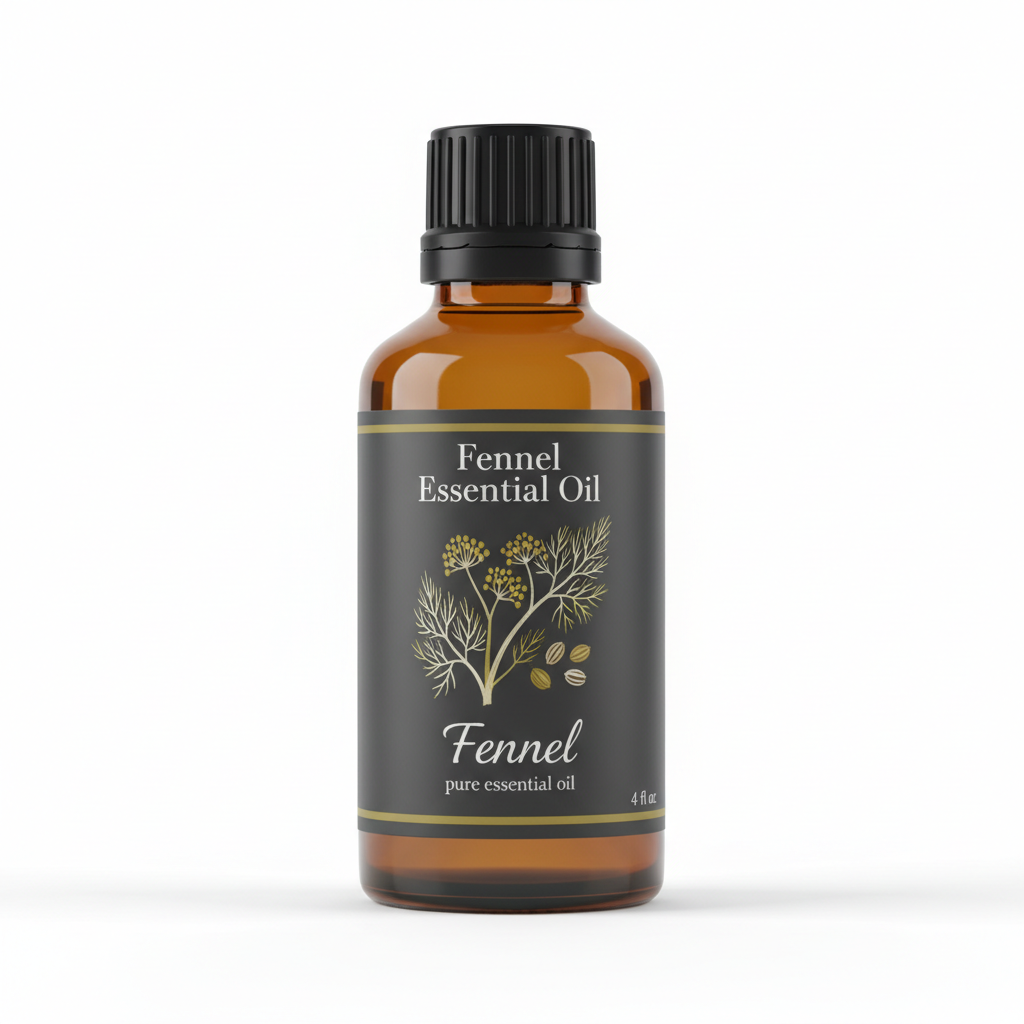
Fennel Essential Oil
Our own Fennel Essential Oil, in sizes from 0.5 oz to bulk.
From $13.99
Shop Now →1. What exactly is it?
A good listing names three things in words: the botanical name (Foeniculum vulgare), the part and process (seed, steam-distilled), and the variety, sweet or bitter. The variety is the one most often missing, and it matters because the two types are different oils. A 2024 authentication study cites a different composition range for each, with sweet fennel at higher anethole and bitter fennel at a higher fenchone floor (Murphy et al., Plants, 2024). A page that says only "fennel oil" tells you which type you are getting about as precisely as a menu that says "fish."
Check, too, that it is an essential oil at all. Fennel seed oil, a pressed fat, and fennel fragrance oil, a perfumery blend, share the name and not much else. Our posts on seed oil versus essential oil and essential oil versus fragrance oil sort those out.
2. What does the page promise?
Read the benefit language with some care. The FDA says aromatherapy products marketed with a disease-related intended use are treated as drugs, and notes that there is no regulatory definition of "essential oils" (FDA, Fragrances in Cosmetics). So a page that promises relief from a condition, or sells a mysterious "grade," is leaning on claims it cannot back. That does not make the oil bad, but it tells you how much weight to put on the rest of the page. We make no medical claims for our oil, and we do not describe it for internal use.
3. Is there a document for this lot?
This is the question where most listings run out of road. The document to look for is a GC/MS report whose batch number matches the bottle, showing anethole, estragole and fenchone as percentages and naming the laboratory. A certificate that lists only appearance, smell, density and refractive index is a real document, but those are properties of the liquid as a whole, so they cannot name a compound. Why that matters: in the 2024 study, three of eleven commercial fennel oils were flagged, one carrying 43.2% triethyl citrate. Our post on checking fennel oil before you pay goes through how that was found.

We apply the same standard to ourselves. Our Certificate of Analysis covers one batch and gives appearance, smell, a relative density of 0.975 and a refractive index of 1.546, each within its stated standard. It does not give the variety, anethole or estragole. If those matter to you, ask us in writing through the contact page before ordering, and ask any other seller you are considering the same thing. Then compare what comes back.
4. Does the price make sense per milliliter?
Convert each size to milliliters (a US fluid ounce is 29.57 ml) and divide. A lower figure only counts as a better deal once question 3 is answered, because a diluted bottle costs less per milliliter for a reason. Our price comparison post sets out the sums.
5. Which size, and what happens when it arrives?
Buy the size you will finish. A recent review of essential oil stability reports that oxygen drives oxidation, heat and light speed it up, and dark storage helps (Gcabashe, Silue and Fawole, 2026). It is a general review, not a fennel timeline, but it points to amber glass, a tight cap, and a bottle that leaves little air once you start using it. We bottle every size in amber glass and describe the oil as typically stable for 2 to 3 years when sealed and kept away from heat and sunlight. Our first-bottle post helps you pick a size.
A seller should also say who should skip it
Fennel oil is not suited to everyone. We advise avoiding it entirely in pregnancy and while breastfeeding, it is not for children, and anyone with an oestrogen-sensitive condition or epilepsy should leave it alone. For skin, our dilution guidance is 0.5% to 2% in a carrier oil with a patch test first, and for leave-on products the fragrance industry's estragole limits can call for less, so start low. A listing with no cautions at all is selling to people who have not been told. If a doctor or pharmacist has advised you to avoid fennel, then the answer to "where should I buy it" is nowhere.
Small habits that help
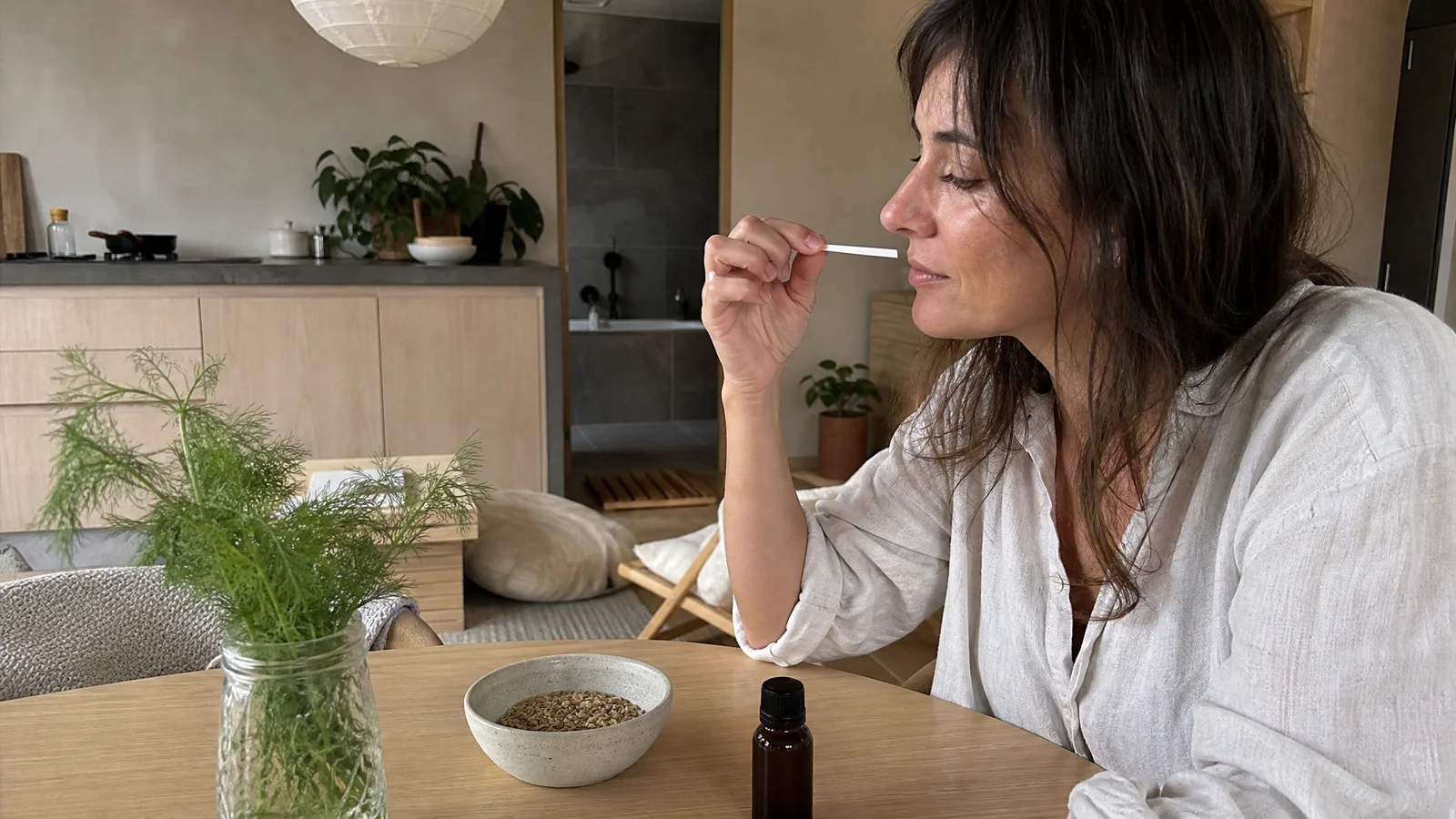
Before you order, write your questions down and send them all at once. A seller who replies in clear, specific sentences, rather than pasted marketing lines, is showing you how the rest of the relationship will go. When the bottle arrives, open it and take a moment with it. The aroma should read as sweet and anise-like with something earthy underneath, and the label should match what the listing promised. Keep the packing slip, and note the batch number if the bottle carries one, somewhere you can find it later.
Where we fit
We sell one product, a steam-distilled fennel oil that we describe as sweet fennel, in sizes from 0.5 oz up to 400 lb, and nothing else. No carrier oils, no blends, no soap supplies. A pharmacy, grocery or craft supplier has those. Makers can start with a 0.5 oz sample before a larger order, and the bulk page and wholesale page describe the consultation and private-label routes.
A seller who welcomes these questions is a good sign, and the answers are worth more than the photos.
Fennel Essential Oil
Fennel Essential Oil from our own shop, in sizes from 0.5 oz to bulk.
From $13.99
Shop Now →Sources & Further Reading
- Murphy et al., 2024. Authentication of fennel, star anise, and anise essential oils by GC/MS and GC/IRMS. Plants 13(2)
- US Food and Drug Administration. Fragrances in Cosmetics
- Gcabashe NH, Silue Y, Fawole OA, 2026. Innovative approaches for enhancing the stability and functionality of essential oils in food systems. Plants 15(12)