Autumn Diffuser Blends With Fennel: 3 Orchard Ideas
Autumn diffuser blends usually lean on cinnamon, clove and orange. Fennel is a different kind of seasonal oil: not the spice, but the sweet thread that ties a bright citrus top to a deeper, warmer base. Used that way it gives a fall blend a baked-orchard softness that spice oils alone often lack.
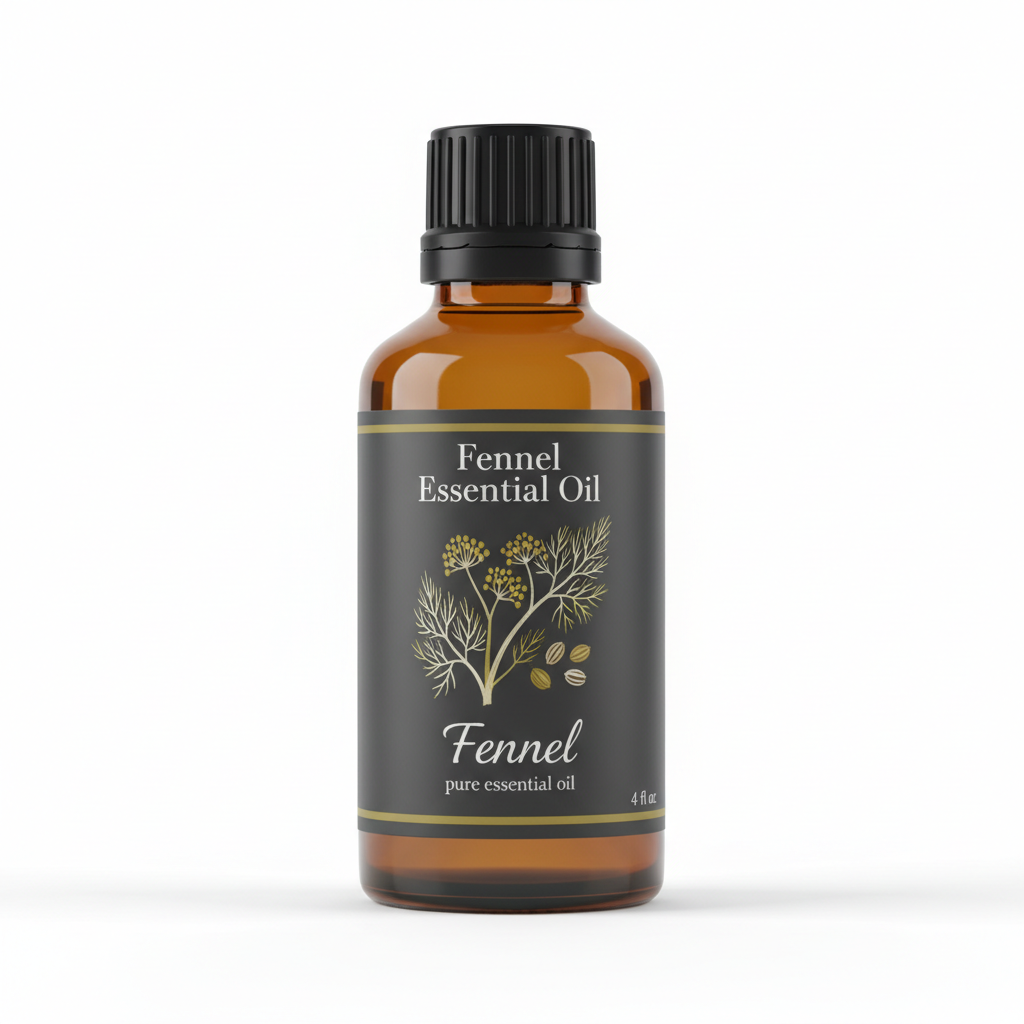
Fennel Essential Oil
Our own Fennel Essential Oil, in sizes from 0.5 oz to bulk.
From $13.99
Shop Now →What fennel brings to the season
We describe fennel oil as sweet and anise-like, turning earthy and peppery, a top to middle note. Sweet fennel oil is mostly one molecule, trans-anethole, at 60 to 82 percent in the European Food Safety Authority's specification (EFSA FEEDAP Panel, 2023). Reasoning from that, fennel behaves like a single clear note rather than a chord. A little shows through a blend, and a lot flattens whatever stands beside it, so we think of it as the sweetener, not the lead.
It will not supply baked-spice character on its own. If you want cinnamon or clove in the room, those oils need to be in the blend, and you will find them at an aromatherapy supplier since we sell only fennel.
Three autumn ideas, written in parts
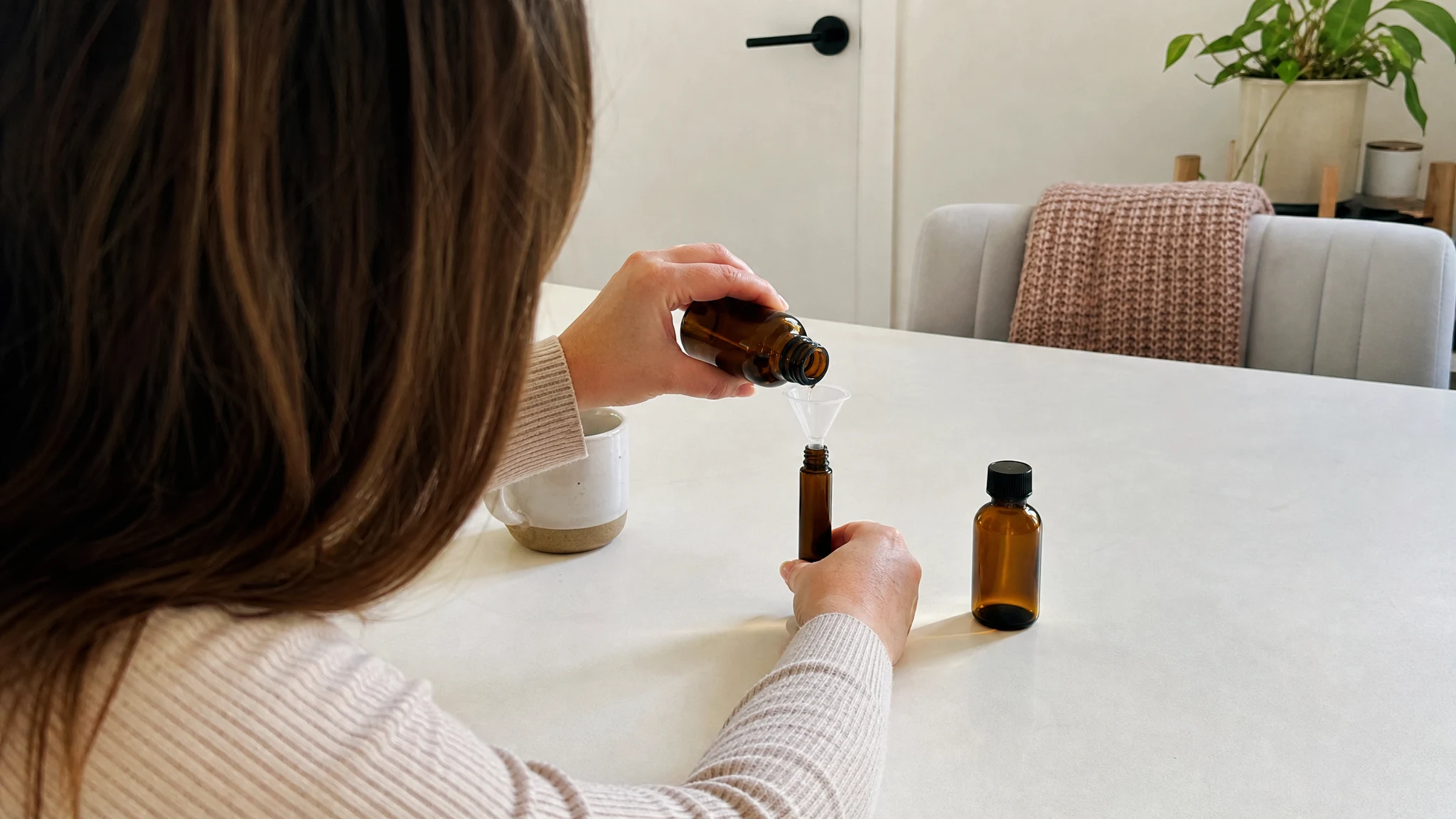
Drops are an unreliable unit. The Tisserand Institute summarised three measurements in which a drop of essential oil ranged from about 20 to 40 per ml (Tisserand Institute, How big is a drop?). So a recipe that says "3 drops" can mean double the oil from one dropper to the next. Writing blends in parts and using one dropper for everything keeps the balance steady, whichever dropper you own.
| Blend | Parts | What to expect |
|---|---|---|
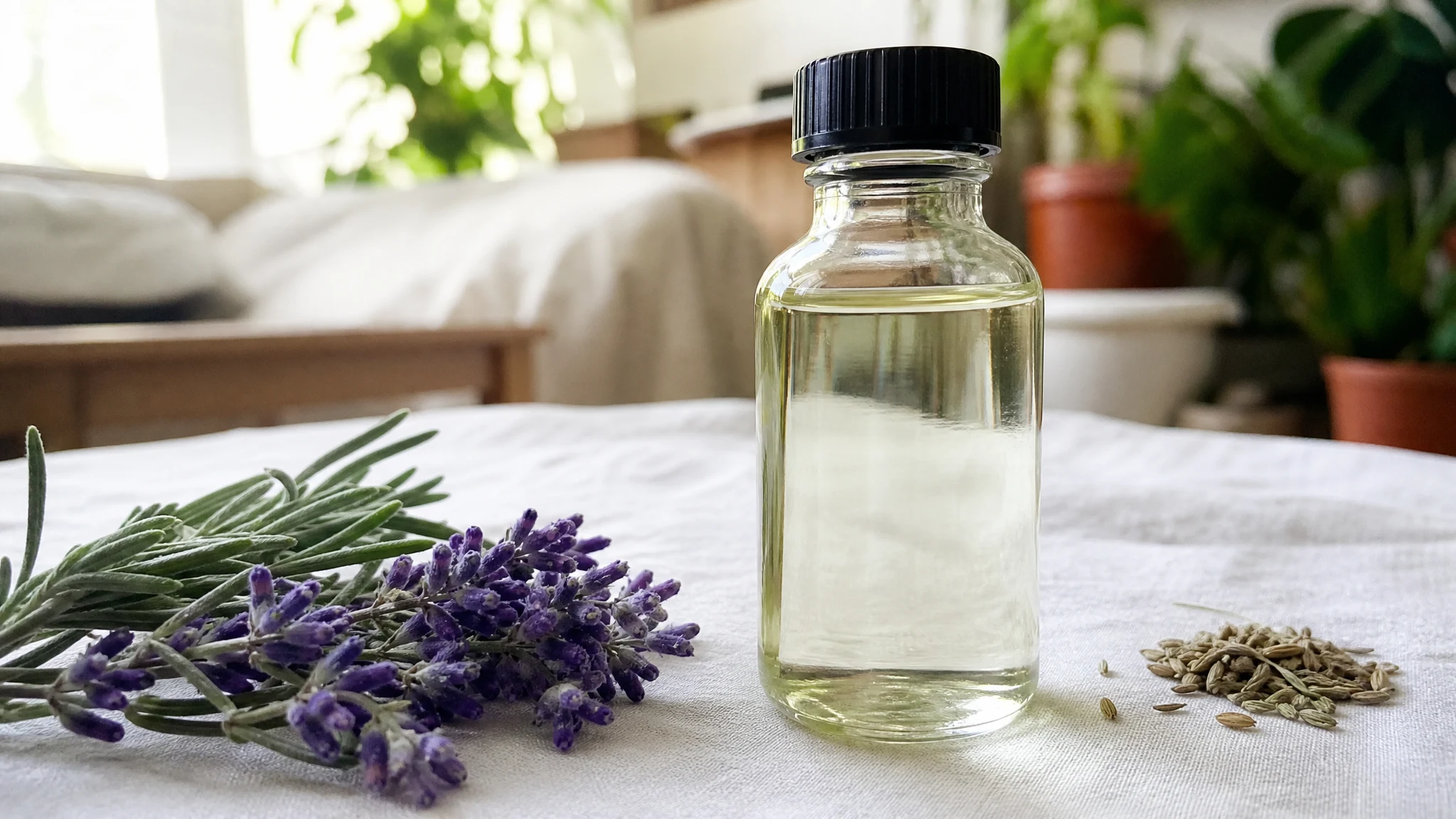
| Orchard | 1 fennel, 5 sweet orange | Bright and juicy, with fennel as a sweet undertone |
| Hedgerow | 1 fennel, 3 sweet orange, 2 lavender | Citrus lift, floral middle, a herbal finish |
| Spice market | 1 fennel, 4 sweet orange, 1 small share of a spice oil | Warm and familiar, with fennel rounding the edges |
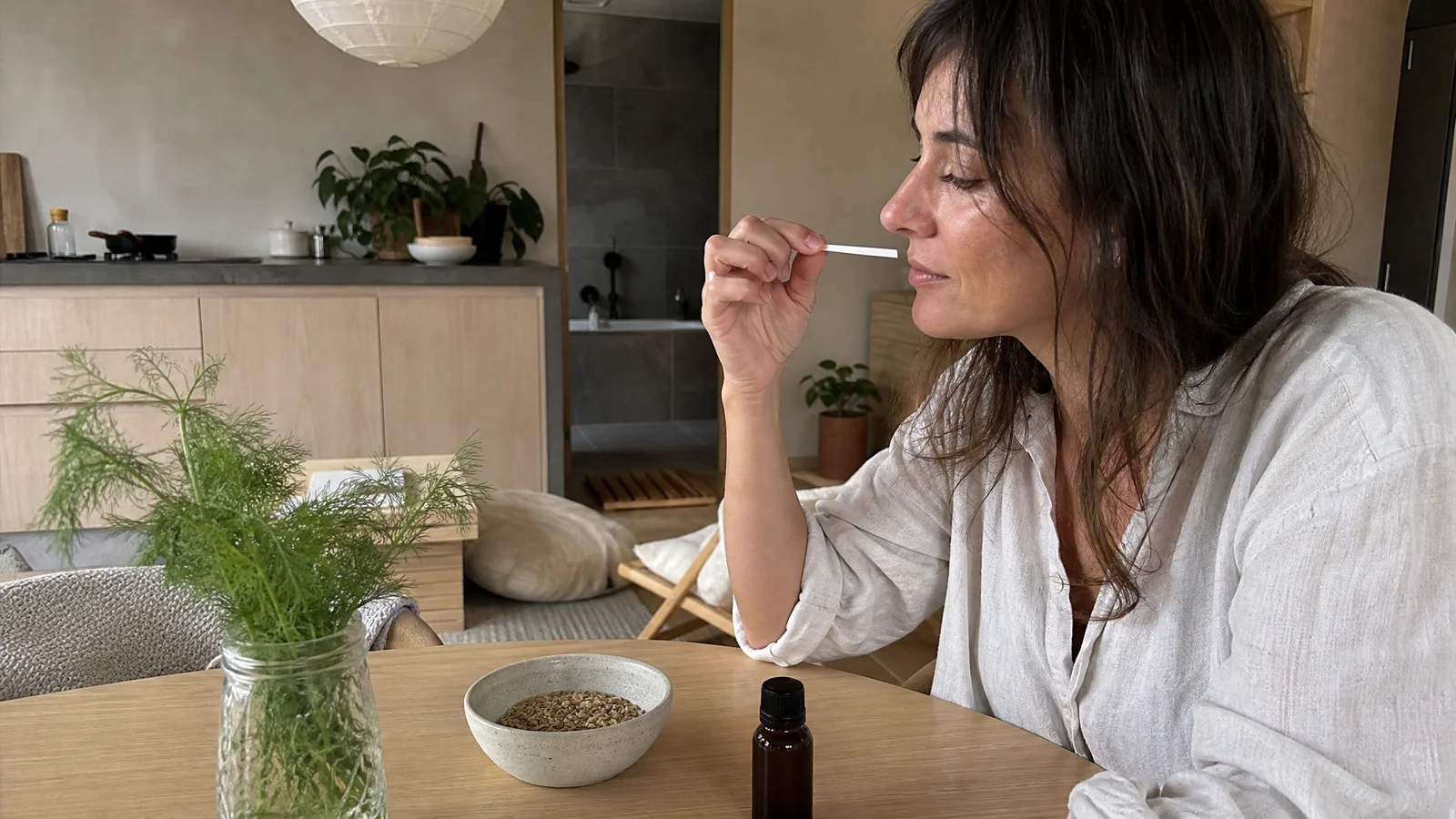
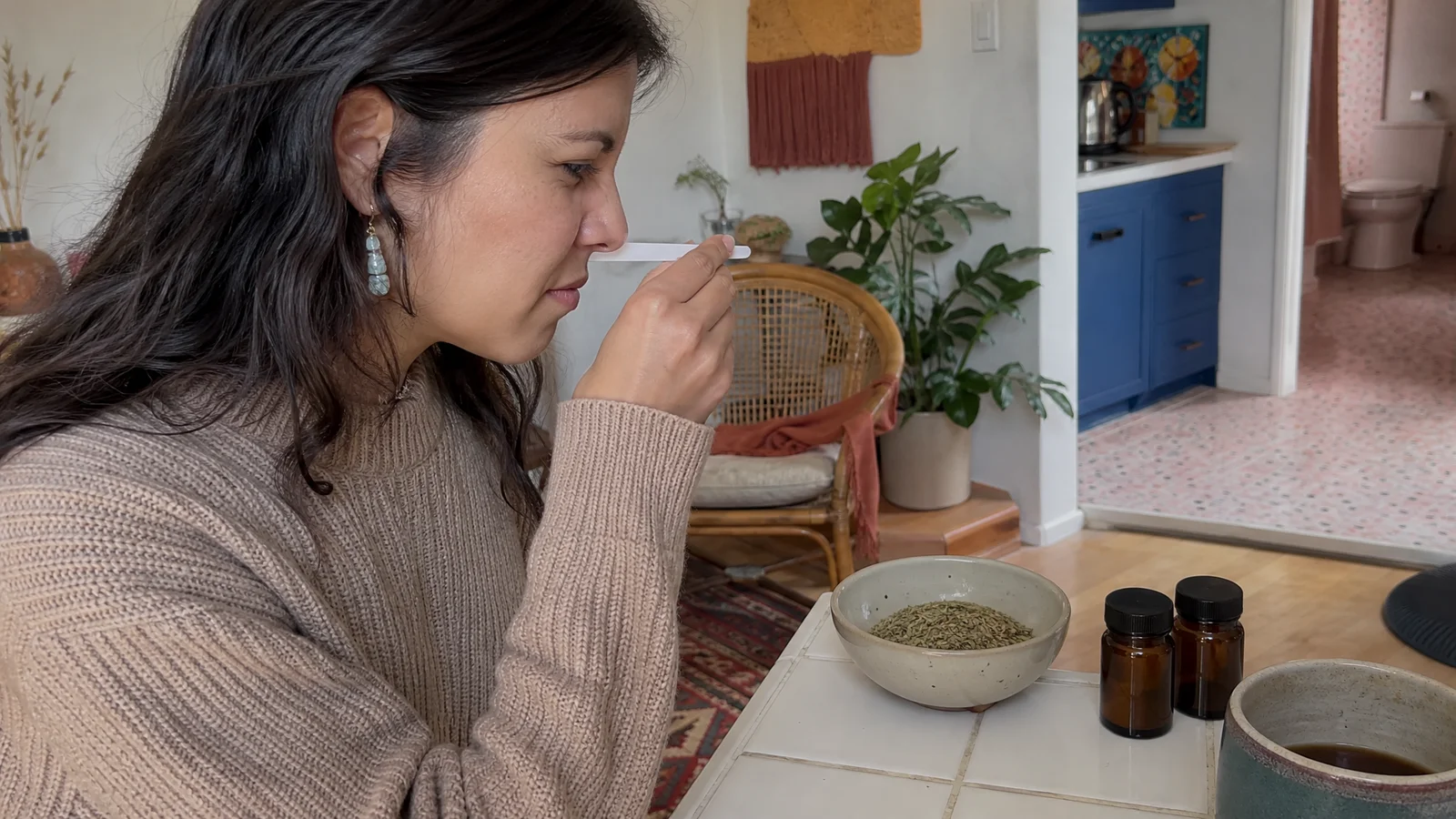
These ratios are our own reasoning from fennel's anethole content, built to keep fennel at roughly a sixth of the blend or less. Start by sniffing the mixture from a paper strip before it goes in the diffuser. If fennel is the first thing you notice, halve it.
Know your partners
Sweet orange is almost all limonene, 93 to 97 percent in EFSA's specification for the expressed oil (EFSA FEEDAP Panel, 2021). It is cheerful, and the Tisserand Institute describes sweet orange as generally thought not to be phototoxic even when expressed (Tisserand Institute, citrus comparison). Limonene and linalool, the main molecule in lavender, both form sensitising hydroperoxides as they oxidise in air, so a fresh bottle of each beats one that has been open for months (Botvid et al., 2026).
Cinnamon bark and clove deserve a lighter hand. The Tisserand Institute names them, with lemongrass, among the oils more likely to cause skin reactions (Tisserand Institute, safety guidelines). In a diffuser that mostly means a spilled reservoir or wet fingers, so keep their share small and take their dilution guidance from whoever sells them to you.
Setting the scene
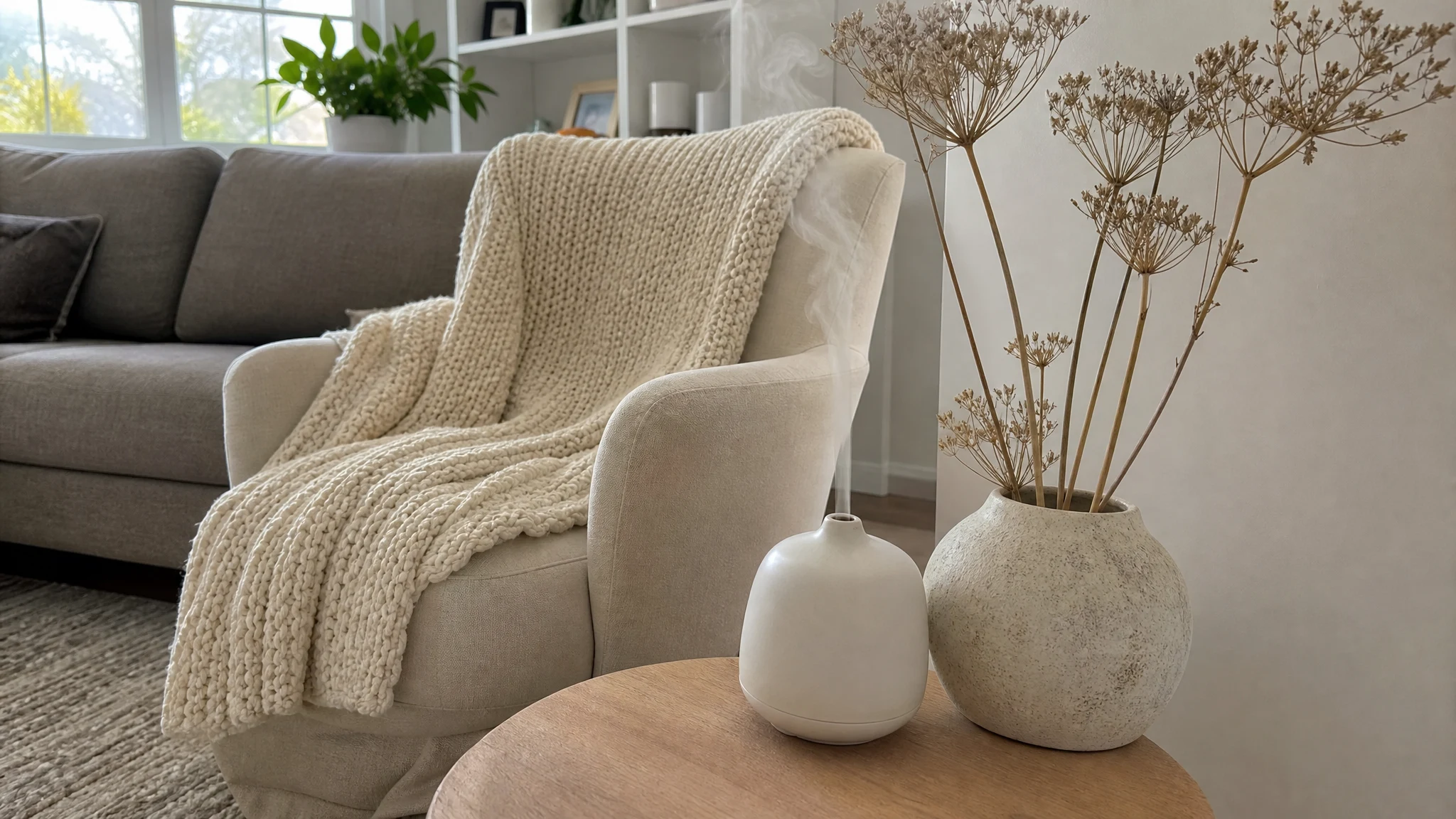
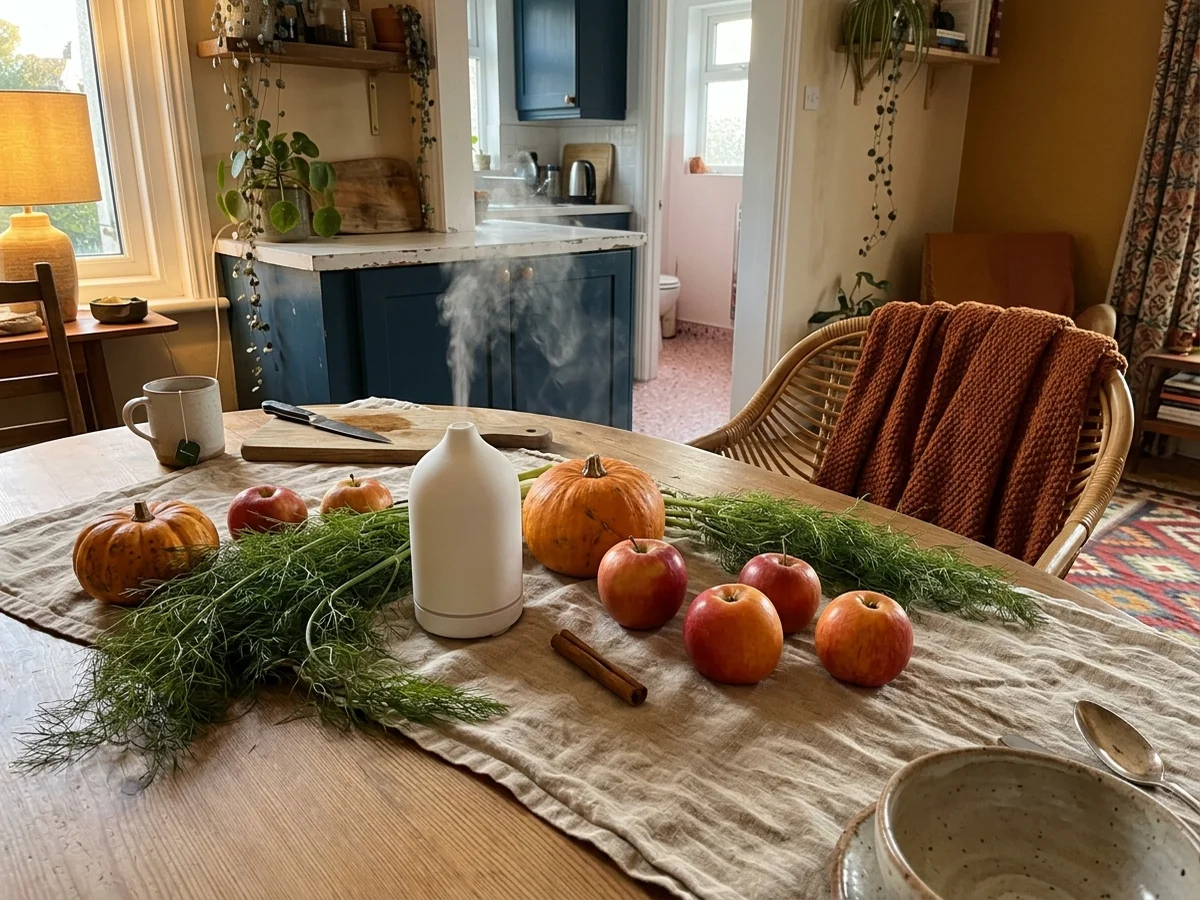
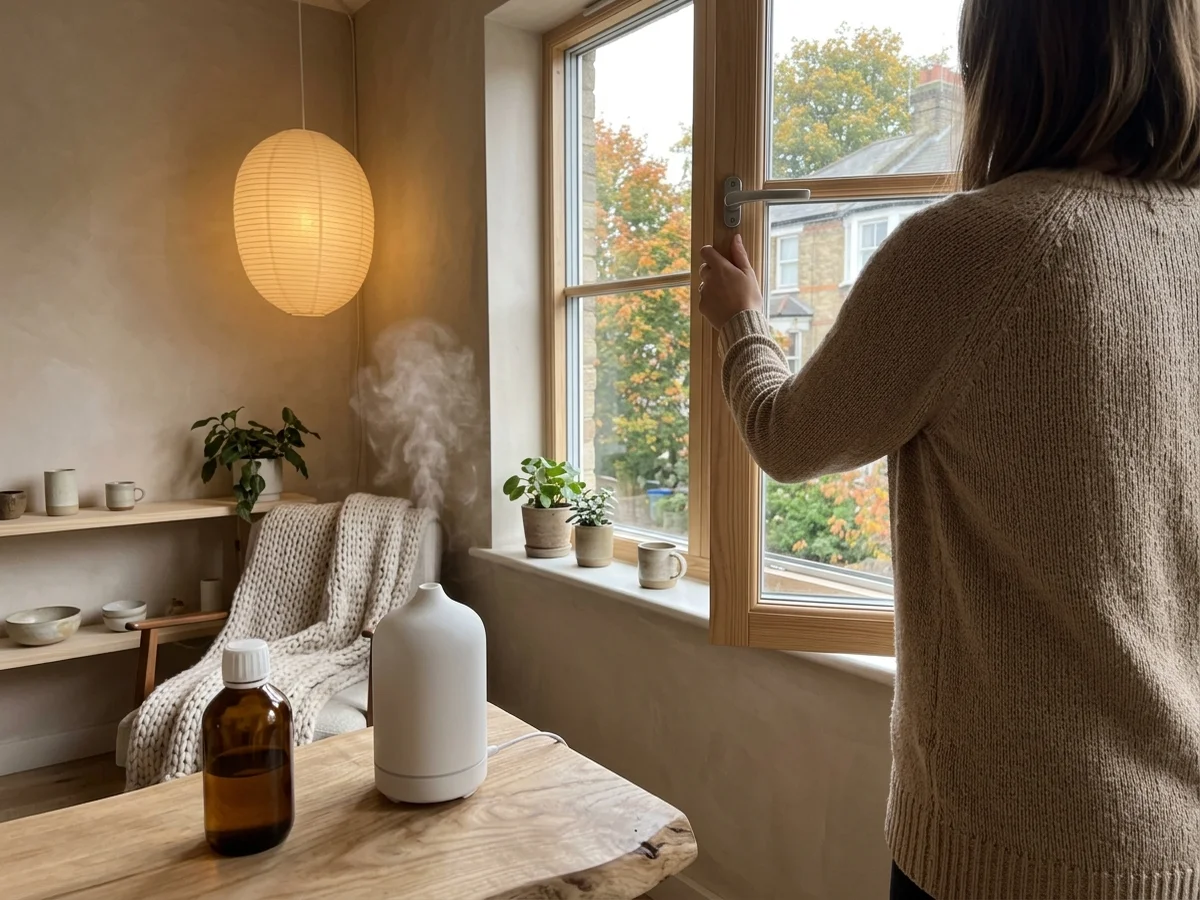
An autumn blend lands best when the room is ready for it. Open a window for a few minutes first so the air is fresh, then close it, switch on a lamp and start the diffuser. Early in a session the orange comes first, bright and juicy, and the fennel arrives a little later as a soft sweetness underneath. That slow reveal is the whole charm of using fennel as a thread rather than a lead.
A few small ideas for making the most of it:
- Keep the vial of finished blend beside the diffuser with the parts and date on the label, so you can repeat a mix you liked.
- Run short sessions in a room you are sitting in. You will notice the scent most in the first few minutes, and a nose adjusts quickly.
- If a blend feels heavy by the end of an afternoon, cut the fennel in half next time rather than adding more orange.
Running the diffuser
Follow your device's instructions for drops per volume of water. The Tisserand Institute suggests diffusing 30 to 60 minutes on and 30 to 60 minutes off with some fresh air, and notes that people with asthma may find certain oils trigger symptoms (Tisserand Institute, safety guidelines). Treat the first session as a test of the room. Shared living rooms matter here: our How It's Made page says fennel oil should be avoided entirely in pregnancy and breastfeeding, is not appropriate for children, and should be left alone by anyone with an oestrogen-sensitive condition or epilepsy. Pets are covered in fennel oil and pets.
Keep the bottle as seasonal as the blend
Anethole is a bit delicate. A review of essential oil stability reports that sweet fennel oil's trans-anethole converted to anisaldehyde or cis-anethole within two months at room temperature in light (Turek and Stintzing, 2013). A bottle left on a sunny shelf all autumn will not smell the way it started, so keep it capped and in the dark, as in how to store fennel oil.
For more fennel ideas, fennel diffuser blends by ratio turns this approach into a method, and what blends well with fennel covers more partners. Fennel will not make a room smell like a bakery, but a small amount can make an autumn blend taste, in scent terms, a little more like harvest.
Fennel Essential Oil
Fennel Essential Oil from our own shop, in sizes from 0.5 oz to bulk.
From $13.99
Shop Now →Sources & Further Reading
- EFSA FEEDAP Panel, 2023. Safety and efficacy of feed additives from Foeniculum vulgare (bitter and sweet fennel oil)
- EFSA FEEDAP Panel, 2021. Safety and efficacy of expressed sweet orange peel oil and its fractions from Citrus sinensis
- Tisserand Institute. Citruses: a comparison of different oils
- Tisserand Institute. How big is a drop?
- Tisserand Institute. Safety guidelines
- Botvid S, Sogaard R, Schwensen JFB, Johansen JD, 2026. Ten years of patch testing to hydroperoxides of limonene and linalool. Contact Dermatitis 94(5):504-514
- Turek C, Stintzing FC, 2013. Stability of essential oils: a review. Compr Rev Food Sci Food Saf 12