Fennel Diffuser Blends: Six Ratios Worth Trying
Why do so many diffuser recipes say "3 drops of this, 5 drops of that"? Because drops are easy to say. They are also surprisingly loose, and with an oil as characterful as fennel the difference between a pleasant hint and a room that smells entirely of licorice can be one extra squeeze.
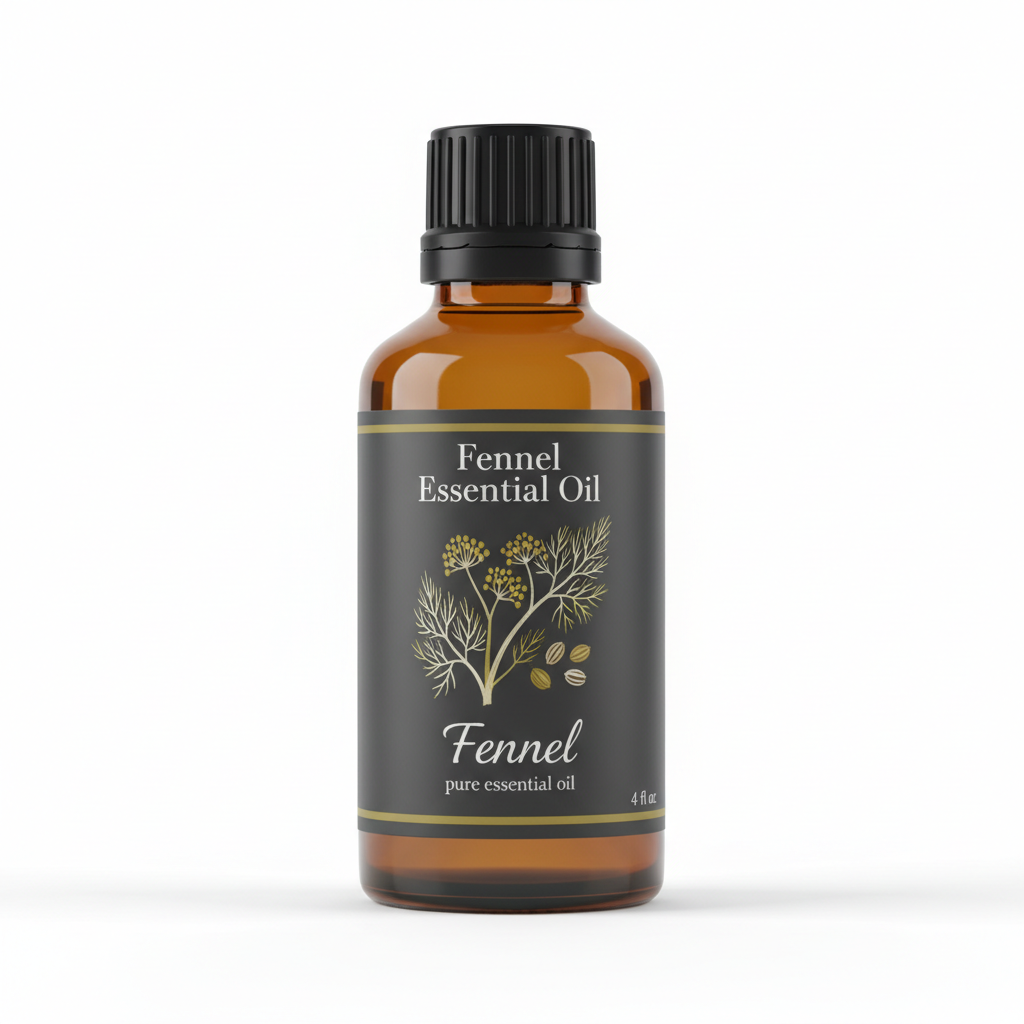
Fennel Essential Oil
Our own Fennel Essential Oil, in sizes from 0.5 oz to bulk.
From $13.99
Shop Now →Fix the share, then count the drops
The Tisserand Institute reports three measurement studies in which essential oil drops ranged from about 20 to 40 per ml depending on the oil and the dispenser (Tisserand Institute, How big is a drop?). So the same recipe can carry twice as much fennel from one bottle to the next.
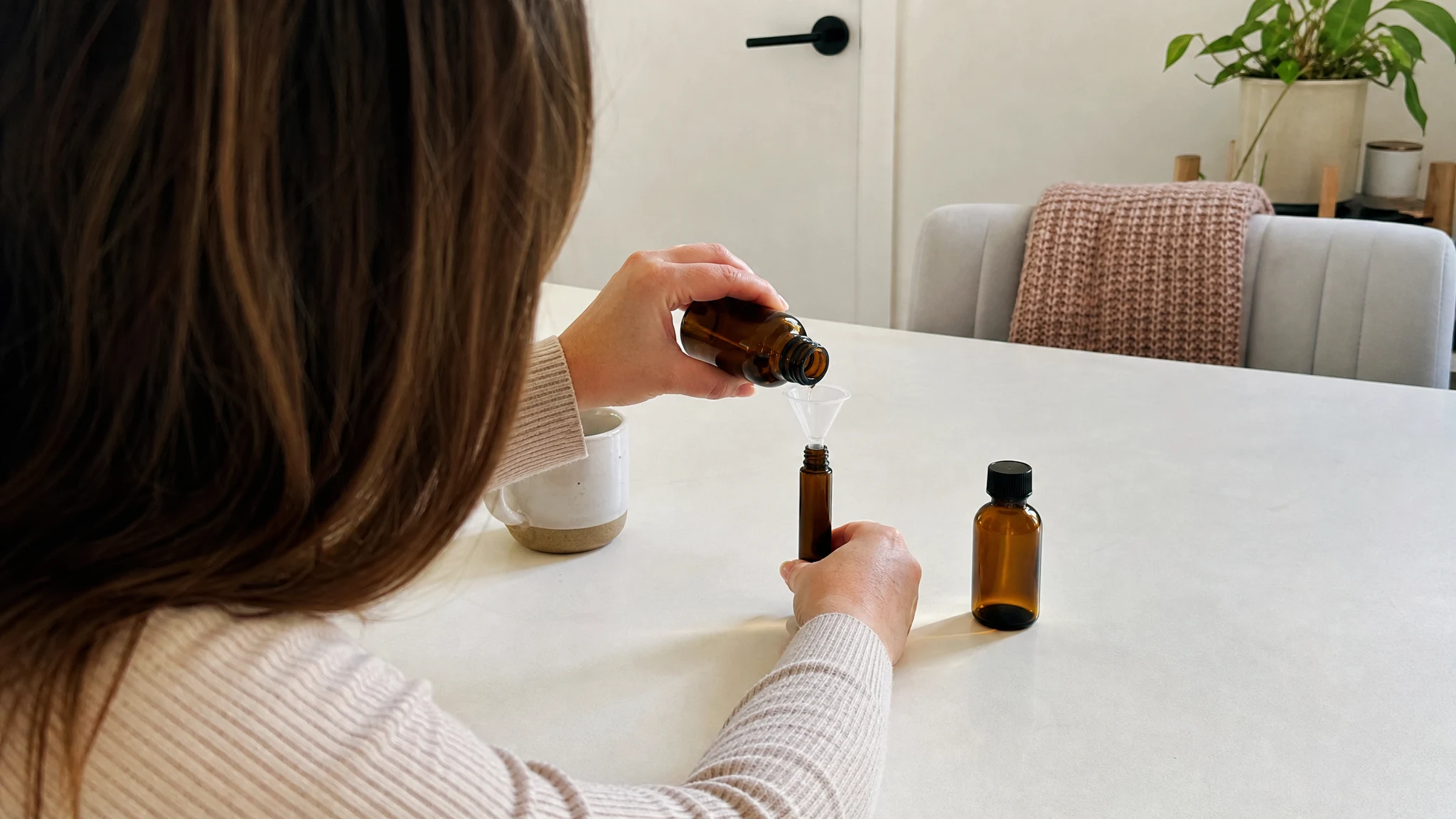
A small vial solves it. Measure one part fennel and five parts partner oils into a dark glass vial, and fennel is one sixth of the blend whatever your dropper does. Then the dropper only sets how much of the finished blend goes into the diffuser, following your device's instructions for drops per volume of water.
How much fennel is the right amount?
Sweet fennel oil is dominated by trans-anethole, at 60 to 82 percent in the EFSA specification (EFSA FEEDAP Panel, 2023). One dominant molecule means the fennel share largely decides how the whole blend smells. That is our reasoning from the composition, and it is why we would begin small:
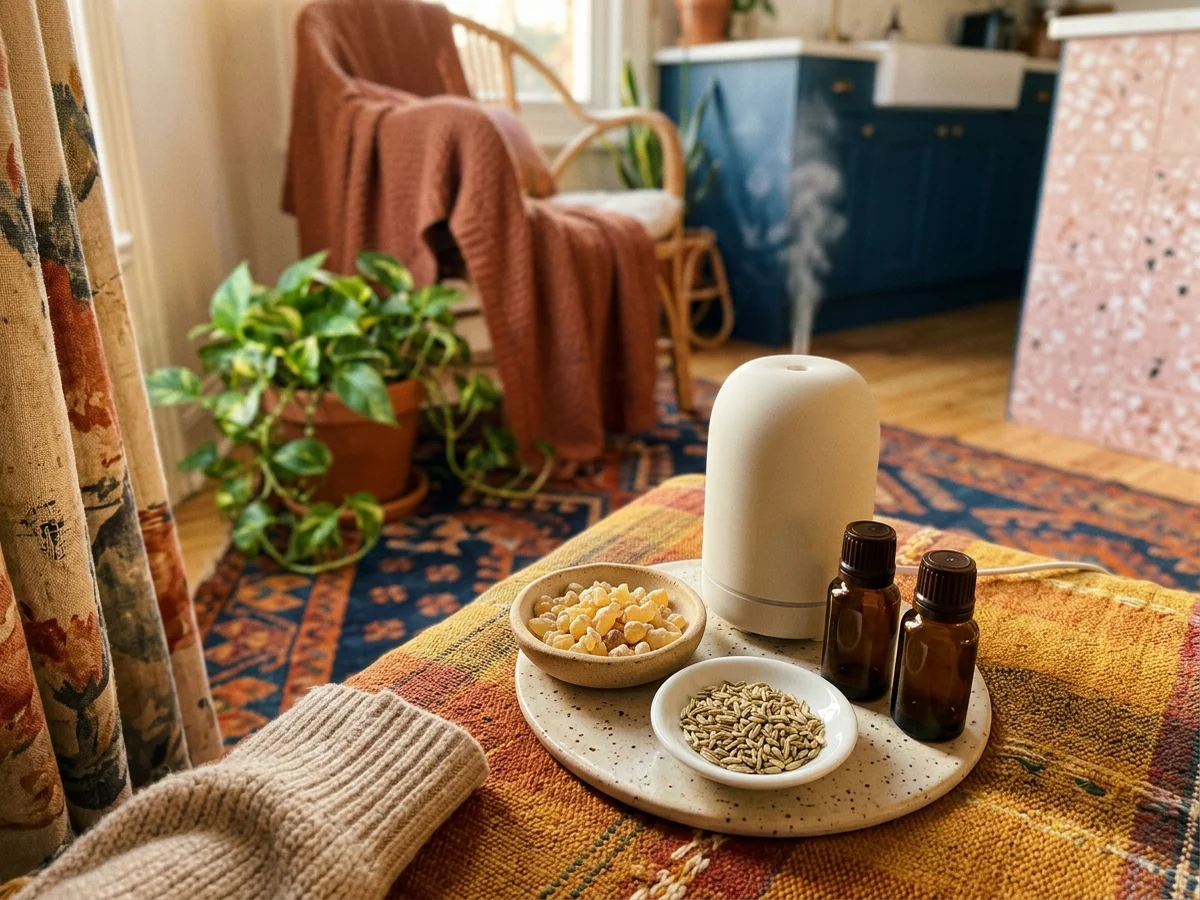
- One third (1 part fennel to 2 of partners): fennel leads. Beautiful if you love licorice, and a lot of fennel in the air.
- One quarter (1 to 3): a confident middle position.
- One sixth (1 to 5): fennel as a thread running through the blend. Our usual place to start.
- One tenth (1 to 9): a faint sweetness under a citrus or floral lead.
If fennel dominates when you smell the vial, move down a row instead of adding drops. If it has vanished, move up one.
Six blends to try, in parts
Our own pairing list for fennel is lavender, rose, sandalwood, bergamot, black pepper and geranium, along with citrus oils. We sell only fennel, so these partners come from another supplier. Here is that list as blends, with fennel kept at about a sixth or less:
| Parts (fennel, then others) | Partners | Character |
|---|---|---|
| 1 : 5 | Bergamot | Fresh and sparkling, anise underneath |
| 1 : 4 : 1 | Sweet orange, black pepper | Juicy with a dry, spicy finish |
| 1 : 3 : 2 | Lavender, geranium | Floral and green, rounded by herbal fennel |
| 1 : 3 : 2 | Rose, sandalwood | Soft, creamy and gently sweet |
| 1 : 6 | Sweet orange | A simple, bright kitchen scent |
| 1 : 4 : 2 | Lavender, bergamot | Airy, floral citrus with a herbal thread |
These are formulations worked out from the ratios above, so adjust them to your nose. Two quick buying notes: the Tisserand Institute says bergamot FCF, the furocoumarin-free type, is not phototoxic, whereas expressed grapefruit oil generally contains bergapten and is slightly phototoxic (Tisserand Institute, citrus comparison). If a diffuser spill touches your skin, that is worth knowing. And "rose" on a small, inexpensive bottle may be an absolute, an otto or a fragrance oil, so ask your supplier which it is.
A sniff test, in order
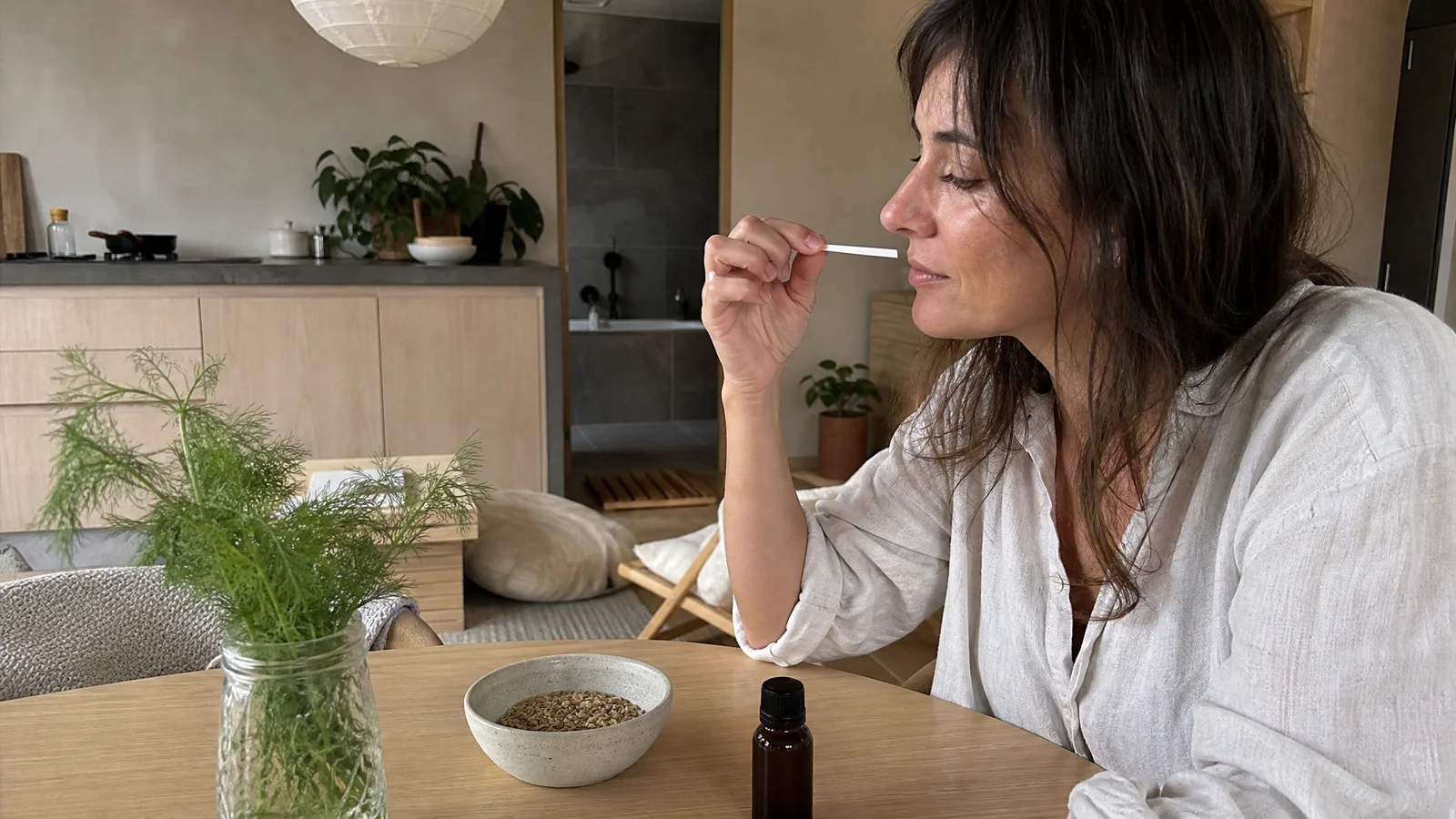
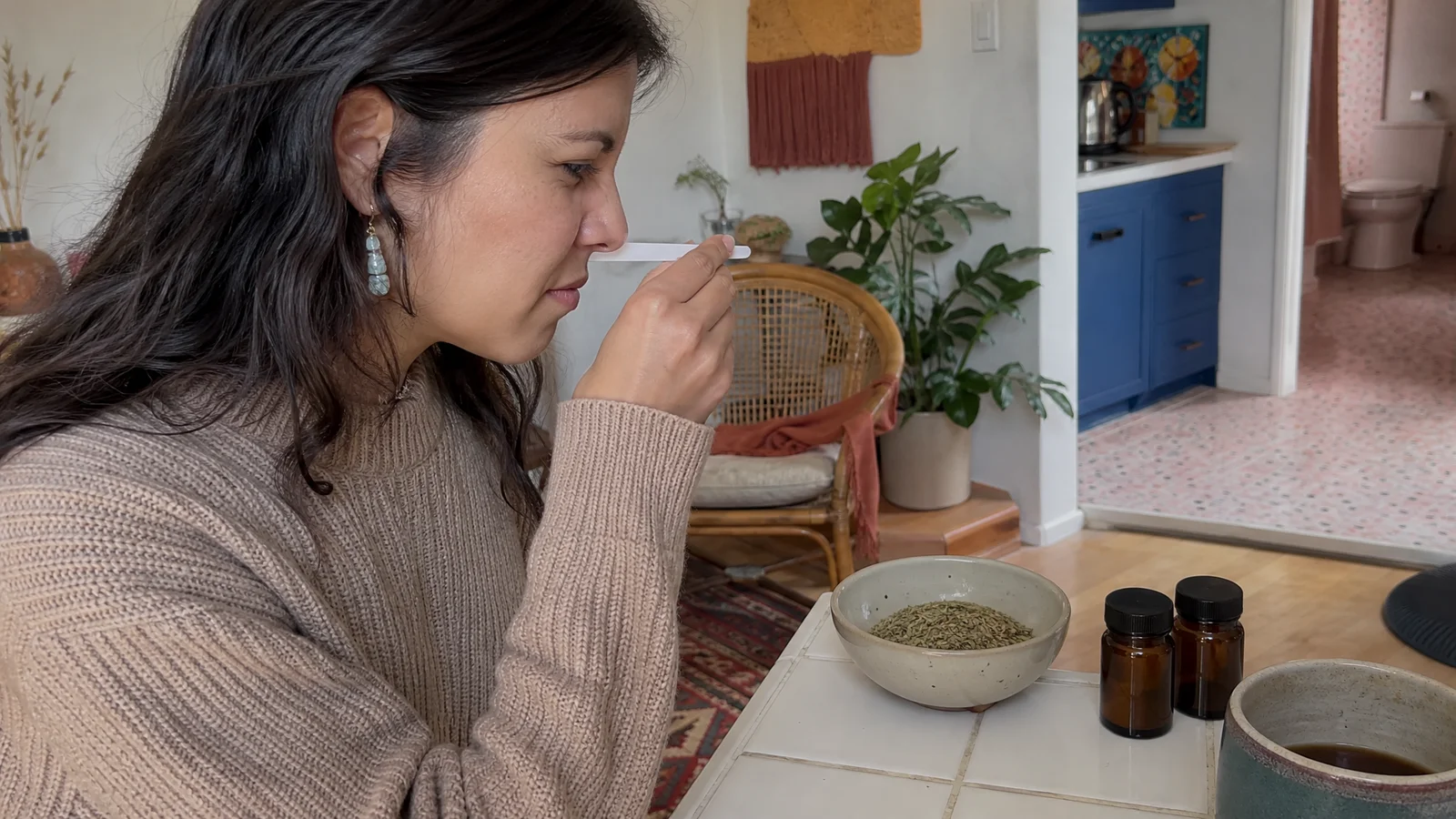
- Put one drop of the vial on a paper strip and smell the strip rather than the vial.
- Wait a minute. Fennel is a top to middle note, so you should notice it early on.
- Adjust the share, then write the parts and the date on the vial.
Rotate your blends with the weather and the room. A brighter 1:5 bergamot mix suits a morning in the kitchen, while the rose and sandalwood mix feels more at home in a quiet corner at the end of the day. Having two or three favourites on hand beats one recipe you tire of.
Naming and keeping your blends
Once you have a ratio you like, give it a name and put it on the vial. "Bergamot 1:5" is not romantic, but it tells you exactly what is inside, and that matters more at 9 pm than a clever title. Keep a small card in the box with the vials listing each blend, the date you made it and a few words on how it smelled to you. When a friend asks for the recipe, you can hand over the card.
Keep it fresh and keep it short
Make about 6 ml at a time and use it within a few weeks. A stability review reports that sweet fennel oil's trans-anethole converted to anisaldehyde or cis-anethole within two months at room temperature in light (Turek and Stintzing, 2013). Linalool and limonene, found in lavender and citrus, also form sensitising hydroperoxides in air, which is another reason to date your bottles (Botvid et al., 2026).
The Tisserand Institute suggests 30 to 60 minutes on and 30 to 60 minutes off with some fresh air, and advises anyone with asthma to ask a doctor about essential oils (Tisserand Institute, safety guidelines). Our How It's Made page says to avoid fennel oil entirely in pregnancy and breastfeeding, that it is not appropriate for children, and that anyone with an oestrogen-sensitive condition or epilepsy should leave it alone. See fennel oil and pets and fennel oil, babies and children if those apply at home.
For a seasonal take on the same method, see fennel in autumn blends, and for single pairings, what blends well with fennel. Once you have a ratio you like, you can make it again the same way every time, which no drop count will do for you. Our shop lists the sizes we sell, and for larger batches there are bulk sizes, with our guide to buying fennel essential oil in bulk covering what to check first.
Fennel Essential Oil
Fennel Essential Oil from our own shop, in sizes from 0.5 oz to bulk.
From $13.99
Shop Now →Sources & Further Reading
- Tisserand Institute. How big is a drop?
- EFSA FEEDAP Panel, 2023. Safety and efficacy of feed additives from Foeniculum vulgare (bitter and sweet fennel oil)
- Tisserand Institute. Citruses: a comparison of different oils
- Botvid S, Sogaard R, Schwensen JFB, Johansen JD, 2026. Ten years of patch testing to hydroperoxides of limonene and linalool. Contact Dermatitis 94(5):504-514
- Tisserand Institute. Safety guidelines
- Turek C, Stintzing FC, 2013. Stability of essential oils: a review. Compr Rev Food Sci Food Saf 12