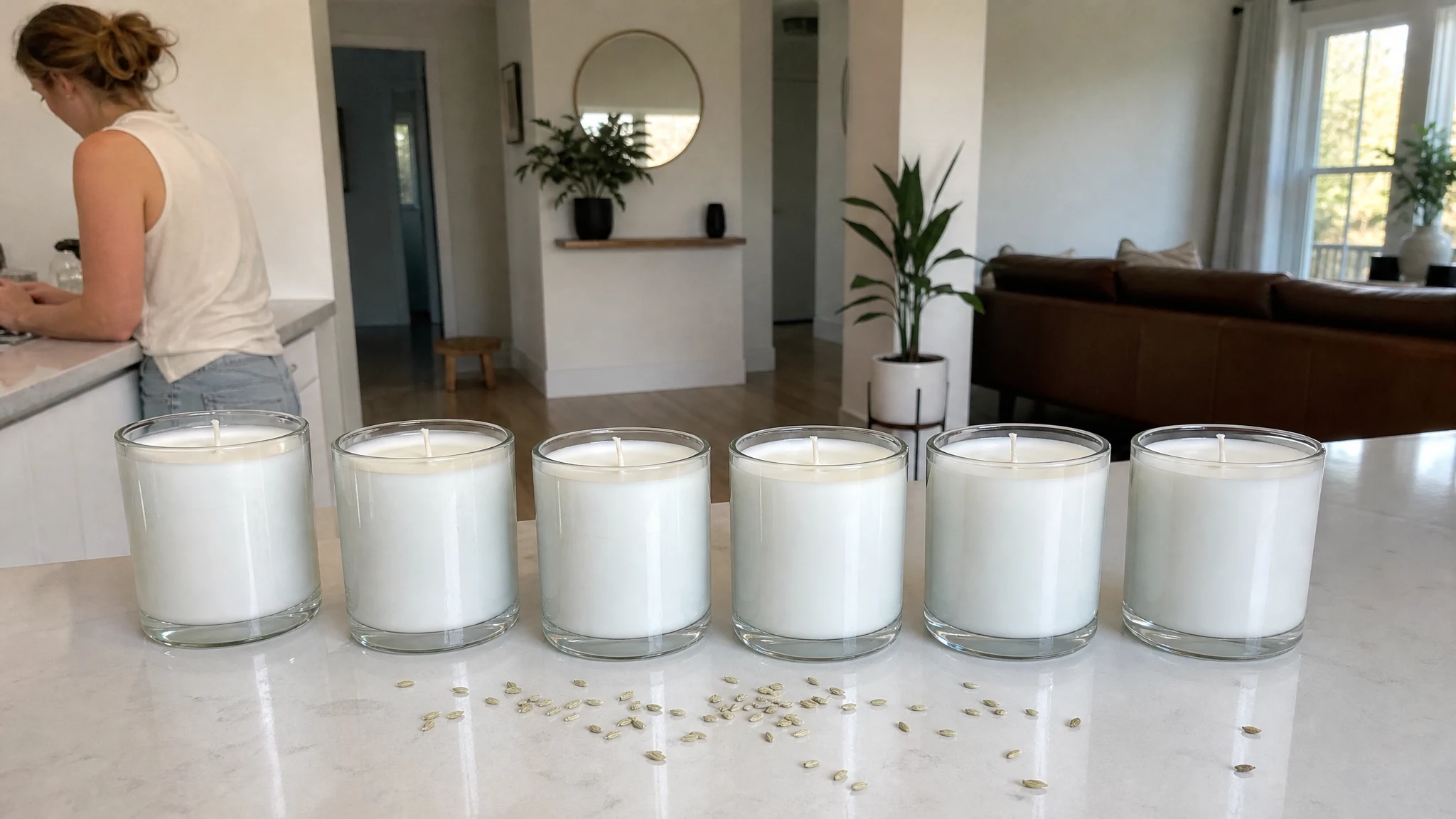
Can You Use Fennel Oil in Soy Candles? A Maker's Guide
Fennel is not the first oil most candle makers reach for, which is part of what makes the question interesting. Its sweet, anise-like top note is easy to love, but the compounds behind it behave differently from a citrus or a lavender once they meet hot wax. Candles are not one of the uses we list for our oil, and we do not sell wax, wicks or containers, but for makers who are curious, three numbers decide how far you can take it: the wax's load limit, the oil's estragole content, and the temperature you add it at.
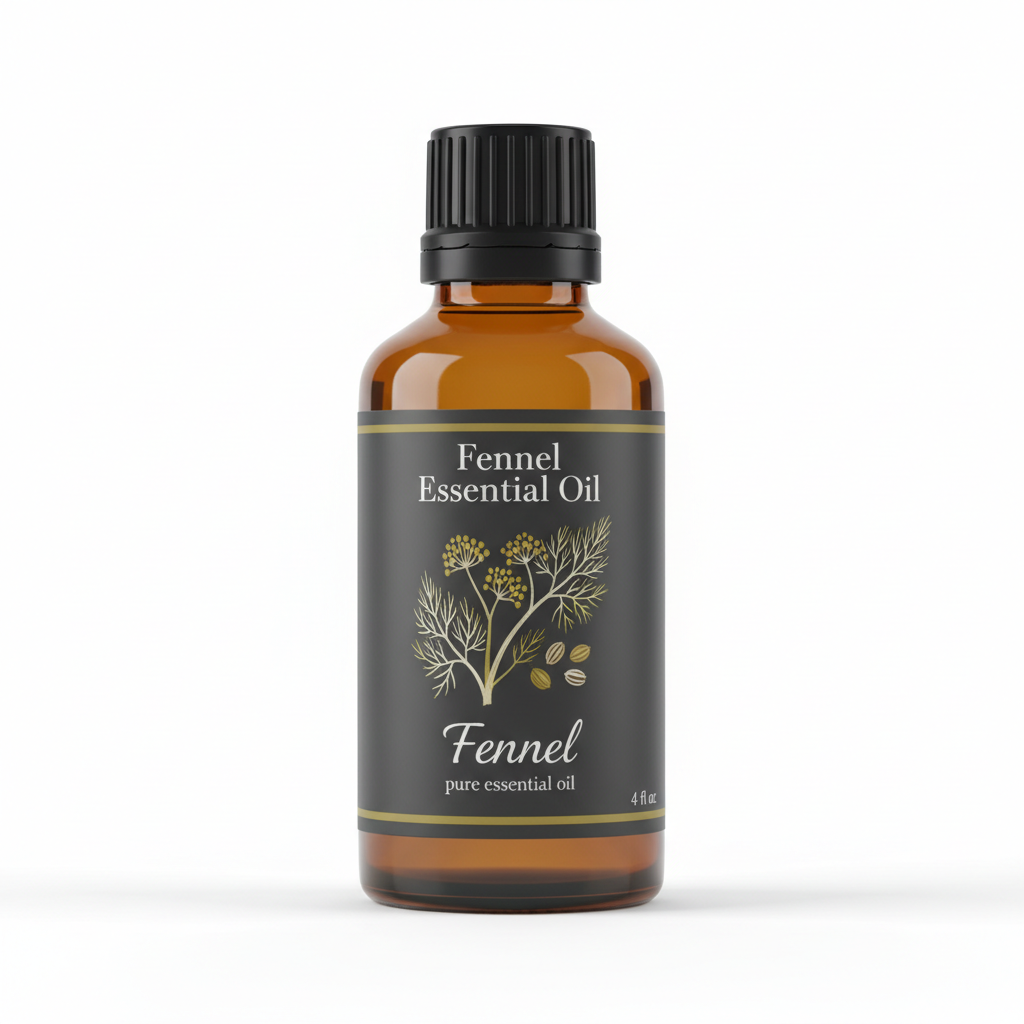
Fennel Essential Oil
Our own Fennel Essential Oil, in sizes from 0.5 oz to bulk.
From $13.99
Shop Now →Your wax sets the load
How much oil a candle can hold comes from the wax maker, not the oil seller. The sheet for one soy container wax we looked at, Golden Brands 464, prints an 8 to 10 percent fragrance load, a 10 percent maximum, adding fragrance at 170 degrees F and pouring at 140 degrees F. Other waxes and other suppliers print different ranges, so use the sheet for the exact wax in your hands and ask whether the percentage is by weight.
That sheet describes how much the wax can hold before oil starts to weep out. It is not a statement about what any particular oil can be used at, which is the next question.
The estragole ceiling, in plain arithmetic
Fennel oil carries a little estragole, and the fragrance industry's IFRA standard for estragole sets limits by product category. Candles fall under Category 12, with a limit of 1.5 percent estragole in the finished product. Whatever other oils you blend in count toward the same total.
What matters is how much estragole is in your lot, and published numbers vary. EFSA's specification for sweet fennel oil is 2 to 6 percent, and five batches it analysed averaged 3.76 percent. A 2024 study of five authentic fennel distillates from Europe, Sicily and Tasmania found an average of 17 percent. Multiply load by estragole share and you have the answer:
| Fennel oil in the wax | Oil at 3.76% estragole | Oil at 6% | Oil at 17% |
|---|---|---|---|
| 6% | 0.23% | 0.36% | 1.02% |
| 10% | 0.38% | 0.60% | 1.70% |
Those are our own calculations, not measurements of a candle. They show something useful: with an oil near the specification, even a full load stays far under 1.5 percent, while an oil at the top of the published range crosses it at a 10 percent load. That is exactly why we suggest asking for the estragole figure for your lot in writing, through our contact page, before you plan a product around any fennel oil. The certificate we publish for one batch lists density, refractive index, appearance and smell, so you could not run this table from it. If fennel is one oil in a blend, subtract whatever estragole the others bring. For the regulators' wider view of the compound, see what regulators have said about estragole.
Add it cool, keep the bottle full
Fennel's main compound, trans-anethole, is sensitive. A review of essential oil stability reports that in sweet fennel oil kept two months at room temperature under light, trans-anethole had oxidised to anisaldehyde or shifted to its cis form, and that fennel oil was quite stable under nitrogen. The Tisserand Institute adds that heat, light and moisture encourage oxidation and that oxidised oils are more likely to bother skin.
None of that was measured in molten wax, so what follows is reasoning rather than a result: add the oil at the lowest temperature your wax sheet allows, keep the bottle capped and nearly full between pours (our storage guide covers this), and use a fresh bottle for anything people will breathe daily.
Setting up your bench
Candle testing rewards tidiness. Keep a notebook open on the bench, write the date and lot number on every test jar, and gather a thermometer, a scale and labels before you melt anything. Sniff your fennel oil on a strip beside the jar of wax first, so you remember what you are aiming for. It is a small ritual, and it makes the results readable weeks later.
Testing your own
Scent throw is the one thing arithmetic cannot predict, because it depends on wax, wick, vessel and cure time. A sensible small-batch plan changes one thing at a time: one wax, one wick, three loads below the sheet's maximum, a note of the oil lot and the date you opened the bottle, and a cure for as long as the wax maker states. Judge each cold and hot, and never leave a test candle burning unattended.
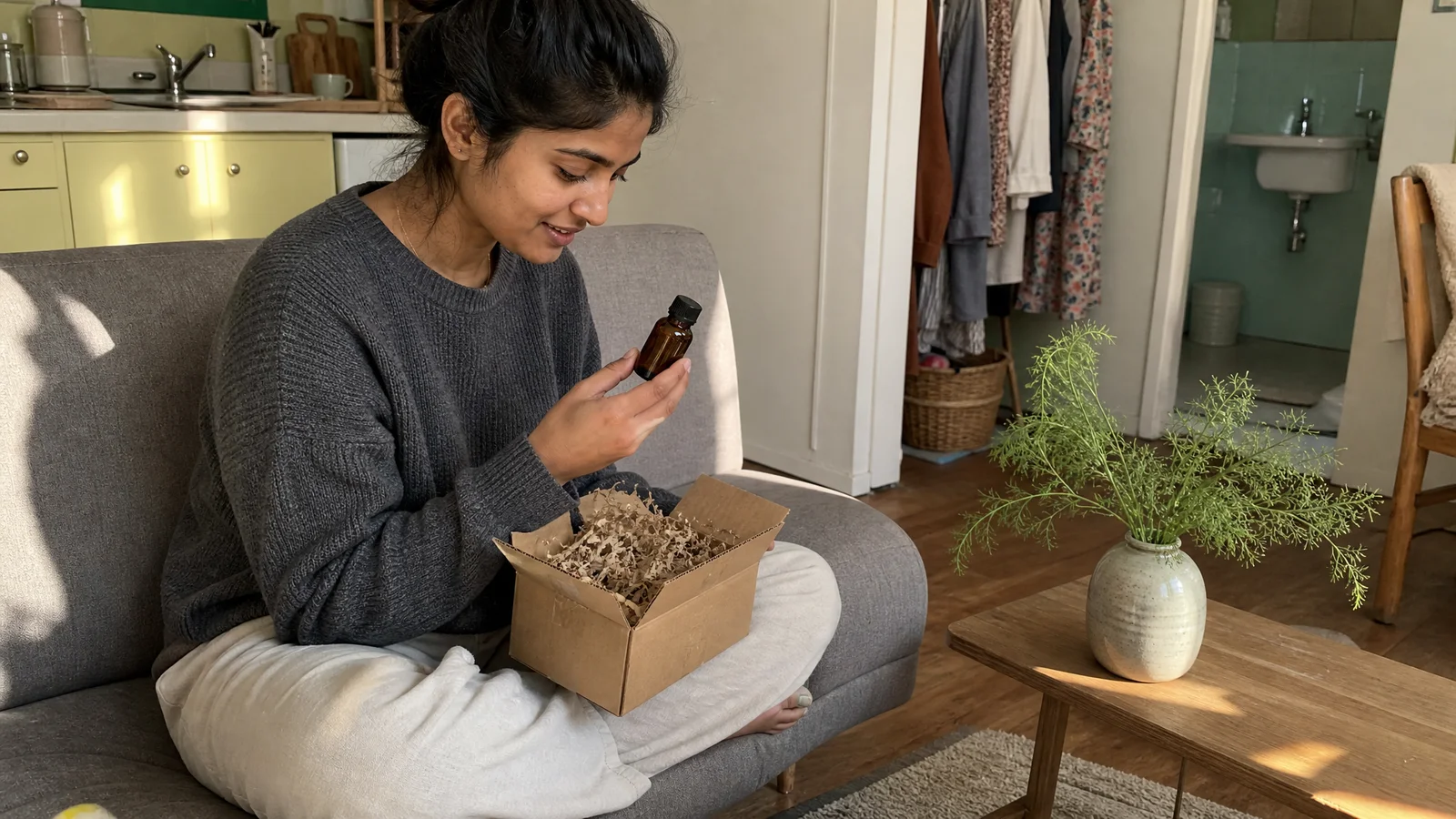
One thing you may notice when you compare a cold candle with a lit one is that the sweet licorice note tends to read differently once the wax warms. Smell each at the same distance, give your nose a break between them, and take notes for every load, since the scent you prefer may not be the strongest one.
Who might choose something else
We recommend avoiding fennel oil entirely in pregnancy and while breastfeeding, around children, and with an estrogen-sensitive condition or epilepsy, and a candle is no exception we can vouch for. Your obstetrician, pharmacist or physician is the right person to ask. Households with pets should read our pets page and check with a veterinarian. And if you need a dependable scent every pour, a fragrance oil is built for wax; this comparison explains the trade.
Fennel can work in a candle for a maker who likes to measure. The wax decides the load, your lot's estragole decides the ceiling, and your own small batches decide how it smells.
Fennel Essential Oil
Fennel Essential Oil from our own shop, in sizes from 0.5 oz to bulk.
From $13.99
Shop Now →Sources & Further Reading
- Cal Candle Supply. Golden Brands 464 (instructions page)
- IFRA, 2020. IFRA Standard Estragole (Amendment 49) (hosted copy)
- IFRA, 2019. Guidance for the use of IFRA Standards, Table 12: List of IFRA categories and subcategories (hosted copy)
- EFSA FEEDAP Panel, 2023. Safety and efficacy of feed additives consisting of essential oils from the fruit and stems of Foeniculum vulgare Mill. ssp. vulgare: Bitter fennel oil for use in all animal species and sweet fennel oil for use in dogs and cats (FEFANA asbl)
- Murphy et al., 2024. Authentication of Fennel, Star Anise, and Anise Essential Oils by Gas Chromatography (GC/MS) and Stable Isotope Ratio (GC/IRMS) Analyses
- Turek and Stintzing, 2013. Stability of Essential Oils: A Review. Compr Rev Food Sci Food Saf 12
- Tisserand Institute. Is my bottle of essential oil oxidized or no longer good to use?