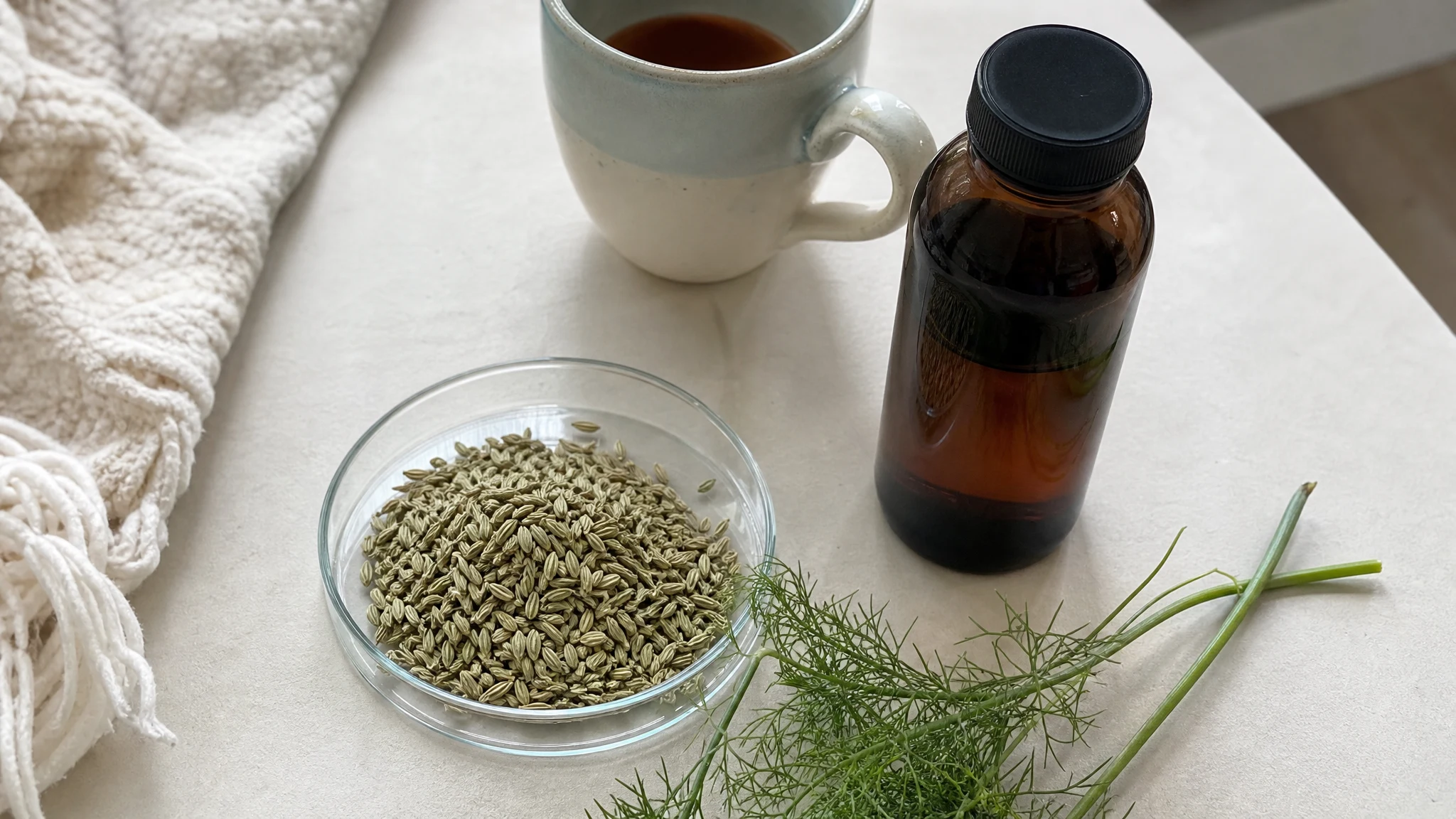
Is Fennel Oil Good for Coughs? Why We Skip Steam
Fennel has been tied to chests and coughs for a very long time, and it is easy to see why a bottle that smells so sweet and airy would seem to belong in a cold-season routine. Before reaching for a bowl of hot water, it is worth looking at where the tradition comes from and where the real hazard lies.
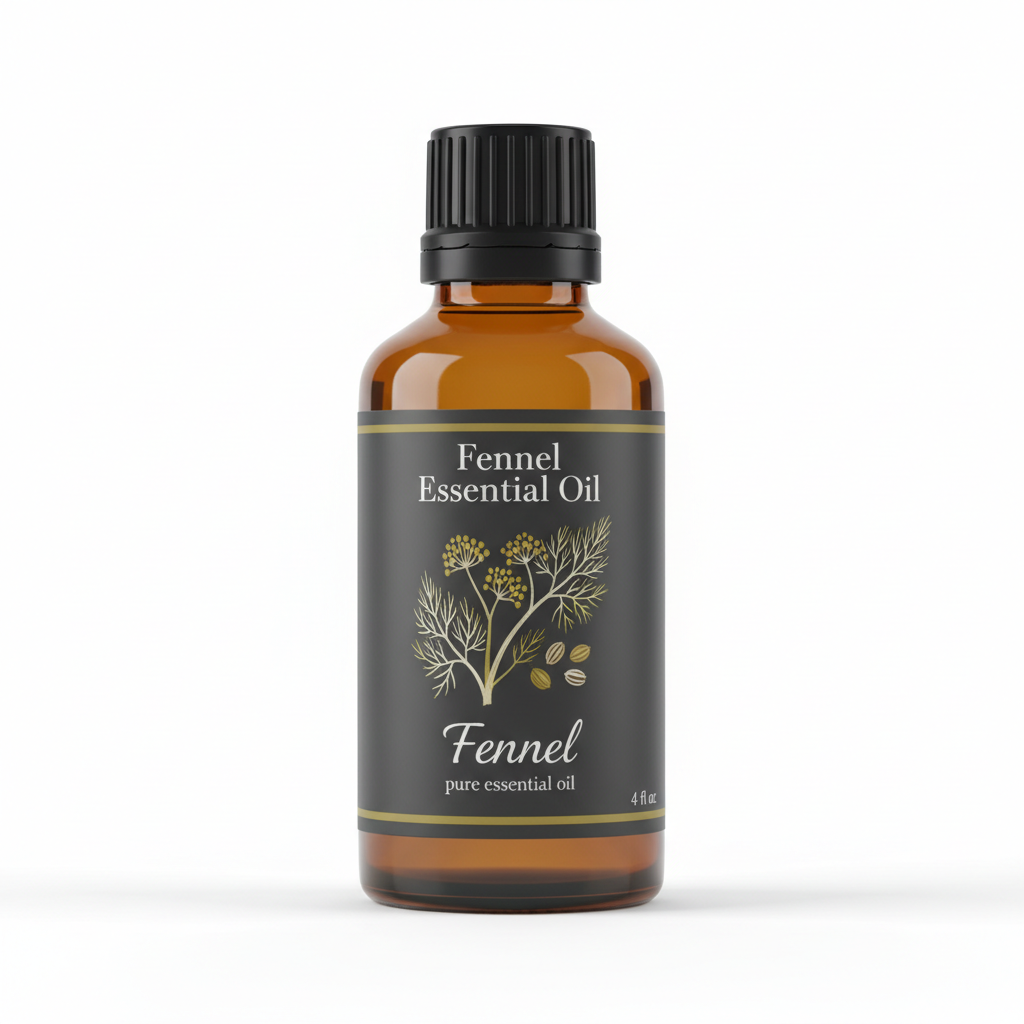
Fennel Essential Oil
Our own Fennel Essential Oil, in sizes from 0.5 oz to bulk.
From $13.99
Shop Now →A tea tradition, not an oil one
The European Medicines Agency's herbal committee did once have a monograph for bitter fennel oil with a traditional expectorant use. In 2024 it withdrew support, citing concerns about estragole's genotoxicity and carcinogenicity at the traditional dose, and noting that no carcinogenicity studies had been done on the oil itself (EMA/HMPC public statement, 2024). So even the oil's old cough label has been set aside by the agency that wrote it. We sell a sweet fennel oil, steam-distilled from crushed seed, and we do not offer it for coughs. Our sweet versus bitter guide explains why the variety matters when you read any fennel claim.
What the research on the bottle looks like
The evidence for fennel oil vapour is a handful of experiments on animals and isolated tissue, not studies of people with coughs. We have not found a human trial of fennel oil in a diffuser for a cough, so we say nothing either way about it. Mixed findings on tissue in a dish are interesting to a pharmacologist and not a guide to what a room fragrance does.
Where steam really bites
The advice to lean over a bowl of hot water with a few drops of oil is the part with documented injuries. A London burns centre admitted 19 people over two years with scalds from steam inhalation, aged from 2 weeks to 91 years, and six needed surgery. National records over the same period showed 201 cases (Scarborough et al., 2021). Hot water spills, and so do bowls on laps. We do not suggest steam bowls with any oil, and adding a concentrated oil is an extra, unmeasured step on top of a known injury risk.
What the air in a room is like
Fennel is surprisingly present in the air. A few drops go a long way, and the sweet, licorice-like opening fills a small room faster than many people expect. If you can smell it strongly from across the room, that is more than you needed. Using less is the simplest habit you can adopt.
If you simply like the scent
A diffuser is the one setting where we would talk about fennel, and purely as an aroma choice, for healthy adults, in a ventilated room. EFSA's 2023 opinion describes fennel oils as respiratory sensitisers (EFSA FEEDAP Panel, 2023), so keep sessions short and stop at the first throat tickle, wheeze or cough. Anyone with asthma should ask a physician first. It is not for infants, or for a child with a cold, and our guide to babies and children has the age lines. Our diffuser blends are scent ideas, and nothing more.
Using a diffuser sensibly
If you do enjoy fennel in a diffuser, a few plain habits make it nicer. Follow your diffuser's manual for how many drops to use, and begin with fewer. Keep the session short, crack a window, and keep the bottle and the diffuser out of reach of children and pets. Rinse the diffuser out afterward, because old oil left sitting in the reservoir smells stale.
When someone in the house is under the weather, we would simply leave the diffuser off. A day like that is better suited to fresh air, a quiet room and plain comfort than to any fragrance. Fennel can wait for a day when you're feeling well and want to enjoy a scent for its own sake.
Keeping fennel a fragrance
That is where we land on it. We love the aroma, sweet and anise-like at first and then earthy and peppery, and we would rather you enjoy it on those terms than ask it to do a job it was never built for.
A word on bowls and kettles
If you remember a grandparent leaning over a steaming bowl with a towel on their head, we understand the appeal. It feels like care. Our suggestion is to let that memory stay a memory, and to keep hot water well away from small hands and wobbly tables. A cup of something warm to hold is a far kinder ritual, and it doesn't need an oil in it.
When a cough deserves a professional
The NHS advises seeing a GP if a cough lasts more than three weeks, if you are losing weight for no clear reason, or if your immune system is weakened. It says to seek urgent help or call 111 for a severe or rapidly worsening cough, feeling seriously unwell, chest pain, a swollen and painful side of the neck, difficulty breathing, or coughing up blood (NHS, Cough). In the United States those questions go to a physician or pharmacist. A bottle of oil cannot tell a cold from something that needs attention.
We recommend avoiding fennel oil entirely in pregnancy and breastfeeding. Our short history of fennel tells the kitchen and cupboard story more fully.
Enjoy fennel for its warm, sweet scent, and leave the coughs to the people trained to look after them.
Fennel Essential Oil
Fennel Essential Oil from our own shop, in sizes from 0.5 oz to bulk.
From $13.99
Shop Now →Sources & Further Reading
- EMA/HMPC public statement on Foeniculum vulgare subsp. vulgare var. vulgare, aetheroleum (revision 1)
- Scarborough A et al., 2021. Steam inhalation: more harm than good? Perspective from a UK burns centre (Europe PMC record)
- EFSA FEEDAP Panel, 2023. Safety and efficacy of essential oils from Foeniculum vulgare
- NHS. Cough