Fennel Oil Lab Studies: What an MIC Number Means
Somewhere on the internet right now a page is claiming fennel oil wipes out germs, with a study attached. The study is probably real. What it measured, though, is a narrower thing than the headline suggests, and one small term, the MIC, explains most of the gap.
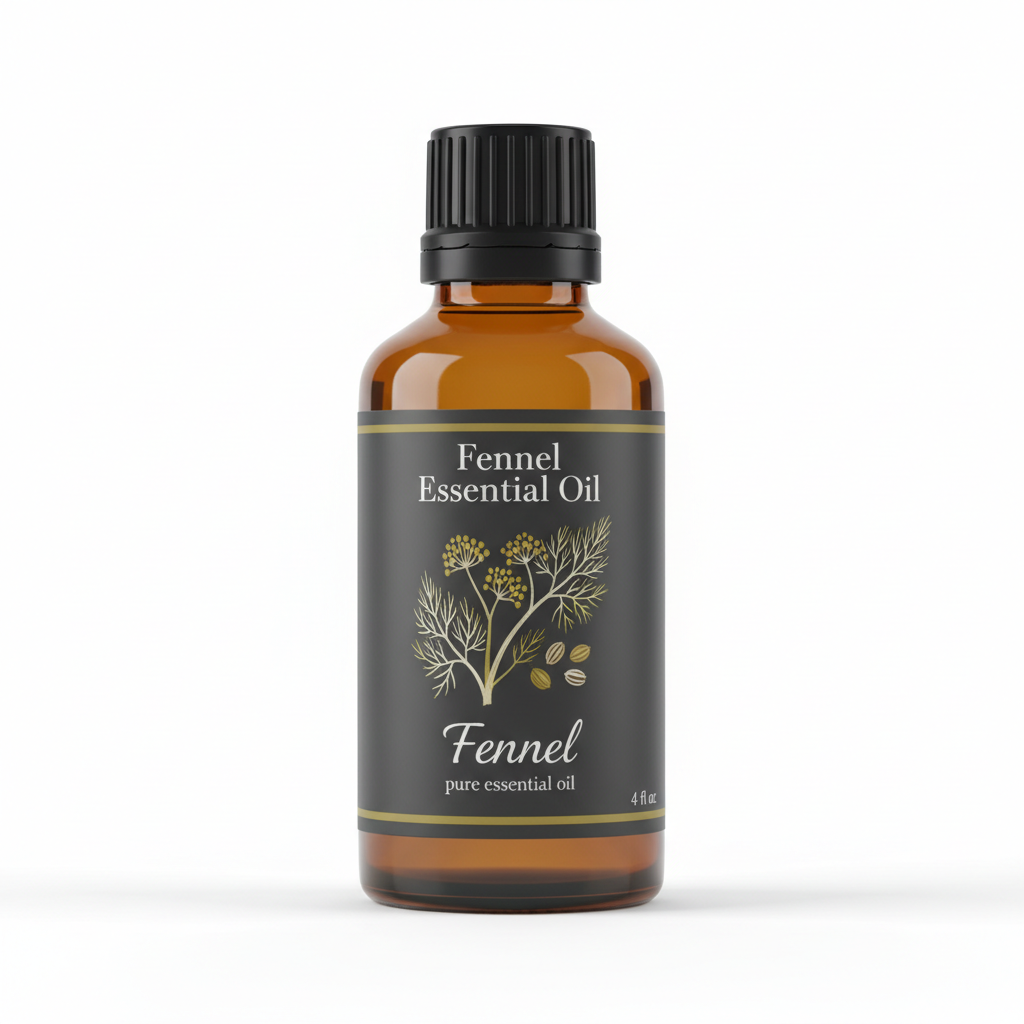
Fennel Essential Oil
Our own Fennel Essential Oil, in sizes from 0.5 oz to bulk.
From $13.99
Shop Now →If you have ever felt a flicker of doubt at a confident headline, you already have the right instinct. This page is here to give that instinct some tools.
What an MIC is
MIC stands for minimum inhibitory concentration. A lab dilutes a substance in steps, adds a fixed number of microbes in broth, and waits. The MIC is the weakest dilution at which no growth is visible. It tells you how much it took to hold something back in a sealed well, not whether anything was destroyed, which is a separate figure called the minimum bactericidal concentration.
Same oil family, very different numbers
Look at two recent papers and you will see why a single number means little. A 2025 study tested seed oil dominated by estragole at about 53%, and reported MICs of 50 micrograms per millilitre for Staphylococcus aureus, 100 for E. coli and 200 for the yeast Candida albicans. The oil had no effect on the mould Aspergillus niger. The paper's units are not consistent between its methods and its tables, so the figures are best read as a pattern (Elkiran and Telhuner, 2025).
A 2024 study tested a different oil and found it held back the biofilm-forming bacteria MRSA, E. coli and Pseudomonas aeruginosa, with E. coli the most sensitive and Pseudomonas the most resistant (Nagy-Radványi et al., 2024). Different organisms, methods and oils, so the results cannot be lined up neatly. Which compounds lead matters too: a fennel oil heavy in estragole and one heavy in anethole are not interchangeable.
Why a dish is not a kitchen
A 2026 review of how plant antimicrobials move toward topical use spells out the gaps nicely. Essential oils can produce clear zones on agar partly through volatility rather than true diffusion. Solvent controls have to match the test wells exactly. The concentration range separating antimicrobial effect from harm to cells can be very narrow. Oils that have oxidised in storage change in activity and become more irritating, and the authors say that dish activity on its own is not enough to justify a safe, effective product (Pelea et al., 2026).
Add what happens in real life. Oil on a counter or skin meets grease, moisture and dead cells instead of clean broth, and it evaporates. Those are our reasoned differences rather than measurements, but they match the review's general point.
A short checklist for any headline
When a page tells you an essential oil does something wonderful, you can slow it down with a few plain questions.
- Which oil exactly, from which plant part, and was the variety named?
- What was measured: growth in a dish, a lab score, or something in people?
- Was anyone, human or animal, actually involved, or only a plate?
- Who ran and who paid for the work, and has anyone else repeated it?
- Does the page you are reading link to the study itself, so you can look?
You do not need a science degree for any of that. You need a little patience, and the willingness to say "that is interesting, and it is not the same as what the headline claims".
Why we still love the plant
None of this makes fennel any less appealing to us. Open a bottle and the sweetness arrives first, then something herbal and peppery settles underneath, and it reminds you of a spice drawer in an old kitchen. That is plenty of reason to keep a bottle around, with no need to ask a lab result to do the work of a recommendation.
Reading with a friend
One habit we recommend is reading a study alongside someone else. Pick out the sentence you think matters most, and ask them what they would take from it. Two people nearly always notice different things, and the one who says "wait, was that in a dish?" has usually saved you from a wrong turn. Keep a note of the page you read and the date, so you can come back when someone sends you the same claim again next year.
It is also fine to leave a question unanswered. Some things simply have not been studied in the way a headline implies, and saying so is an honest place to stop.
How we use all this
We enjoy the chemistry, and we sell our oil for its aroma and for diluted cosmetic use, not as a disinfectant or a remedy. Nothing here is a suggestion to put it on a cut, a rash, a nail or a mouth sore. Our skin guidance is 0.5% to 2% in a carrier, patch test first, and no internal use. Anyone worried about an infection or a wound should see a physician, and a pharmacist can point to suitable products for minor problems.
Storage connects to the review's point about oxidation. We suggest keeping the bottle tightly capped and away from heat and light, and our guide to storing fennel oil goes into it. For how this fits among every claim made about fennel, our benefits evidence review lines them up side by side, and our safety overview covers cautions.
The next time you meet a lab study on a bottle, ask which oil it was, what was measured, and whether a person was ever involved.
Fennel Essential Oil
Fennel Essential Oil from our own shop, in sizes from 0.5 oz to bulk.
From $13.99
Shop Now →Sources & Further Reading
- Elkiran O, Telhuner O, 2025. Chemical profiles and antimicrobial activities of essential oil from different plant parts of fennel
- Nagy-Radványi L et al., 2024. Biofilm inhibition activity of fennel honey, fennel essential oil and their combination
- Pelea DC et al., 2026. From antimicrobial activity to topical translation (Pharmaceutics 18(9):1111)